
Gardenscapes Review: The Garden Gives the Puzzles a Purpose



A cleared puzzle board disappears. A repaired garden bench remains part of somewhere you recognize. Gardenscapes connects those two forms of progress, giving a succession of match-three levels a place to lead. That connection is its strongest design argument, and the source of a possible frustration: wanting the next improvement can make a difficult puzzle feel like a locked gate.
This review evaluates the game's documented structure rather than reporting a hands-on test. It is aimed at readers choosing between a puzzle game with a continuing story and a decorating game with few restrictions. Gardenscapes belongs much closer to the former, even when the garden is what first catches your attention.
Enjoy the board before investing in the garden
Playrix explains the basic exchange clearly: complete match-three objectives, earn stars and use them for garden tasks. Coins have a separate role, including purchasing boosters and extra moves. The distinction is worth understanding early because progress in the garden and help on the board are not the same resource. Playrix's how-to-play guide.
The useful question is not whether you like matching colorful pieces. It is whether you enjoy choosing a move in relation to a specific objective. A match that looks satisfying can be less valuable than a quieter move that opens access to something the level actually requires. Reading the goal before chasing a large cascade is a habit worth carrying into any match-three game.
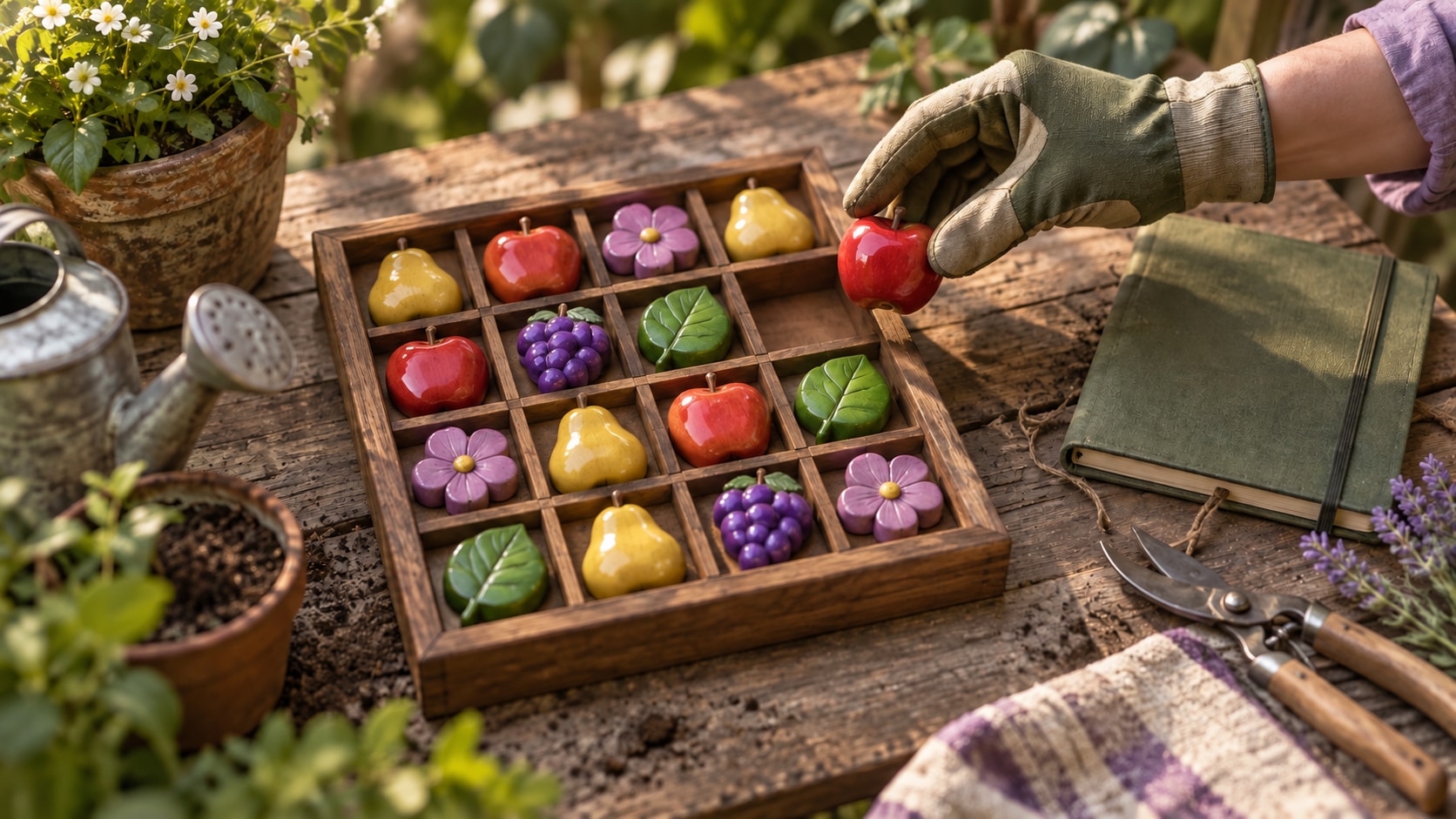
A tabletop arrangement illustrates planning a match; it does not reproduce a Gardenscapes level.
Think about the next move as well as the present one. If two options appear equally helpful, consider which leaves more room to work afterward. This is general puzzle reasoning, not a guaranteed solution to a particular board. It gives you a more useful standard for judging an attempt than simply asking whether the pieces happened to fall favorably.
That distinction helps set expectations. There will be players who love the garden but would rather skip the repeated matching. They should take that reaction seriously. The renovation does not replace the puzzle game; it gives the puzzle game a continuing reason to exist.
Restoration makes small rewards visible
The official listing presents Austin, garden restoration and an ongoing story as central parts of the experience. It also advertises additional activities such as expeditions and competitions. These are features to check in the current app, not a promise that every named activity will be running when you install it. Official Android listing.
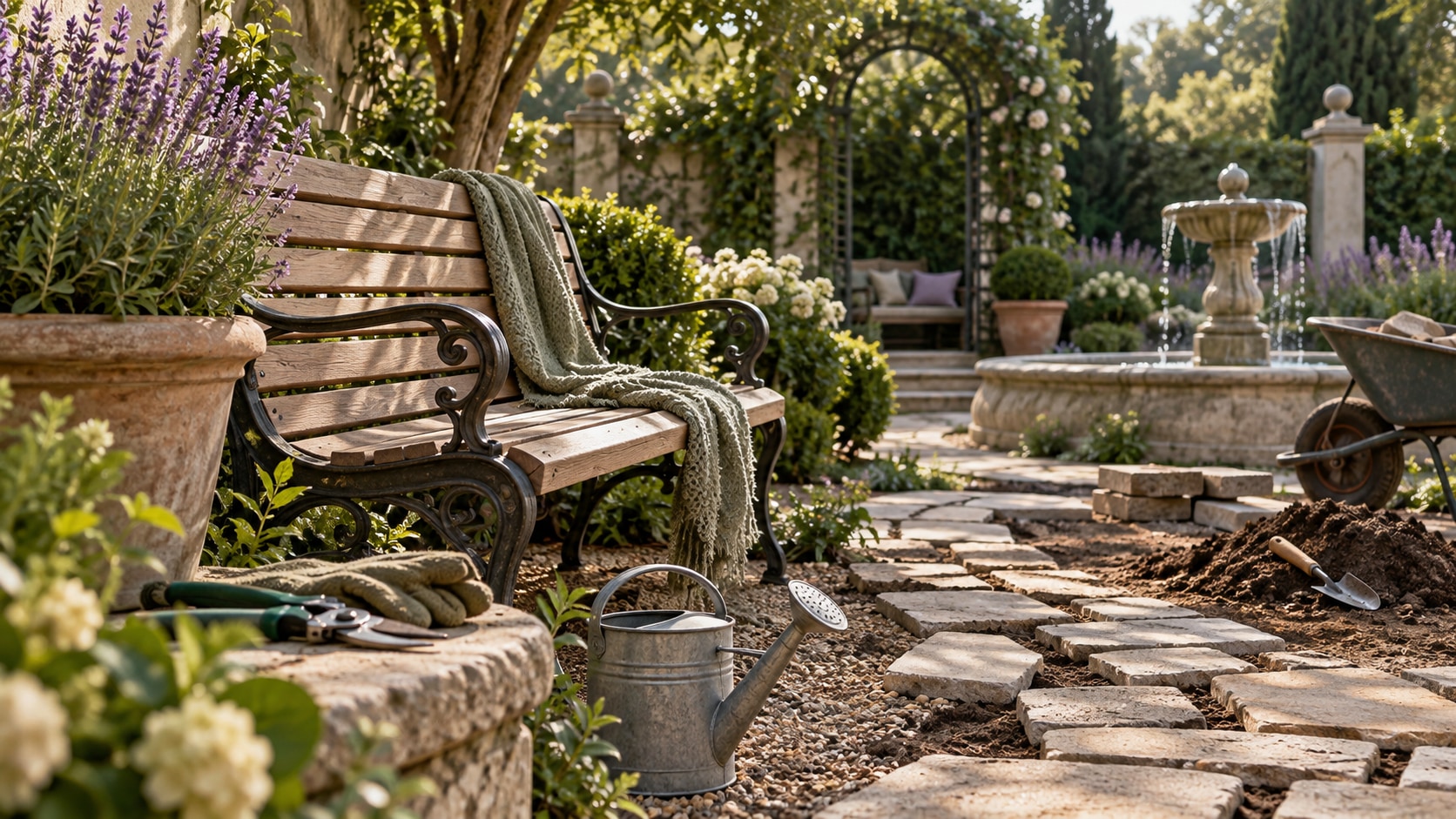
A partly restored garden captures the appeal of seeing local improvements accumulate.
The garden provides continuity between otherwise separate challenges. A changed corner can remind you of earlier sessions without requiring you to remember a score. For someone who finds abstract level numbers unmotivating, that is a substantial advantage. The progress has a setting, and the setting gradually becomes familiar.
There is a limitation built into the same relationship. If you are impatient to complete a restoration task, the next board may become a toll rather than an enjoyable puzzle. That is the moment to separate the two sources of satisfaction. Would the level still be worth playing if the next decorative change were postponed? If the answer is consistently no, your interest is probably in a different type of game.
The best audience is comfortable with incremental change. Enjoying a small improvement is more sustainable than treating the entire property as an unfinished obligation. A garden that is always awaiting another task can be inviting, but only if the unfinished work feels like an option.
Resource choices deserve a cooler head
Stars, coins and consumable help have different purposes. Playrix's guide confirms that ordinary progression through matching supplies the stars used for tasks, while coins can buy assistance on levels. Exact rewards can depend on the level category, so there is little value in assuming every completed board pays out identically. Playrix's how-to-play guide.

The still life represents choosing where to direct effort, not the game's actual currency interface.
Before using assistance, try to describe what it would solve. Is one remaining obstacle preventing completion, or is the whole board still far from the target? This will not produce a universal spending rule, but it changes the decision from a reflex into an assessment. A near miss can feel persuasive even when there is no clear plan for the extra opportunity.
It is also worth keeping purchases separate from a bad mood. The listing discloses optional purchases, including random items. That is enough reason to set a limit before a frustrating level, without pretending to know every offer or price you will see. Availability and pricing can differ by account and region. Official Android listing.
A gentle setting does not guarantee a gentle schedule
Gardenscapes has an inviting premise, but a peaceful theme and an unhurried player routine are different things. The latter depends partly on which activities you choose to pursue. A sensible first-session goal is to learn the relationship between the board and the garden, not to participate in everything shown around them.

Pausing after a puzzle is a practical boundary; the image is an out-of-game editorial scene.
Choose an endpoint that does not depend on winning. For example, stop after exploring a new obstacle or after a small number of deliberate attempts. If stopping requires a victory, one stubborn board can decide the length of the session for you. Returning later is often a better way to preserve enjoyment than turning a decorative goal into a deadline.
For travel, the official listing distinguishes the core offline experience from competitions and other features that require connectivity. Check the modes you care about before relying on the game somewhere without a connection. This review does not include airplane-mode testing. Official Android listing.
Verdict
Gardenscapes is worth considering if you want match-three puzzles to contribute to a recognizable place and an ongoing story. The renovation gives small successes a visible consequence, which can be more appealing than clearing an isolated sequence of boards.
It is a weaker match for someone seeking unrestricted landscaping or a puzzle game with no resource decisions. Start with the board: if planning matches is enjoyable in its own right, the garden has something solid to build on. If the garden is merely an incentive to endure the matching, no amount of beautiful restoration is likely to fix that mismatch.
Editorial disclosure: Based on official information checked on September 26, 2026, without a hands-on device or purchase test. The artwork is AI-generated thematic illustration, not official art, screenshots or evidence of available decorations.

.jpg?x-oss-process=image/resize,w_80/format,webp)


.webp?x-oss-process=image/resize,w_80/format,webp)