
Mini Metro Review: A Beautiful Map Can Still Be a Bad Railway

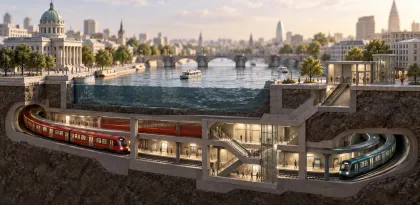

A clean route diagram is easy to admire. Keeping passengers moving through it is another matter. Mini Metro asks you to draw connections, then reconsider those connections as the city grows. The appeal comes from watching a plan meet a demand it no longer quite fits, and deciding how much of the plan you are willing to change.
Dinosaur Polo Club describes a subway-network game in which new stations require you to redraw lines and allocate limited resources. This source-based review examines that design rather than presenting a personal score or a tested optimal network. Developer overview.
Read the network as a service
The first temptation in a map-making game is to make something tidy. A short line looks efficient; a symmetrical interchange looks deliberate. Neither tells you how well the network serves the journeys that passengers need to make. The meaningful question is where people can go and how much pressure they place on the same connections.
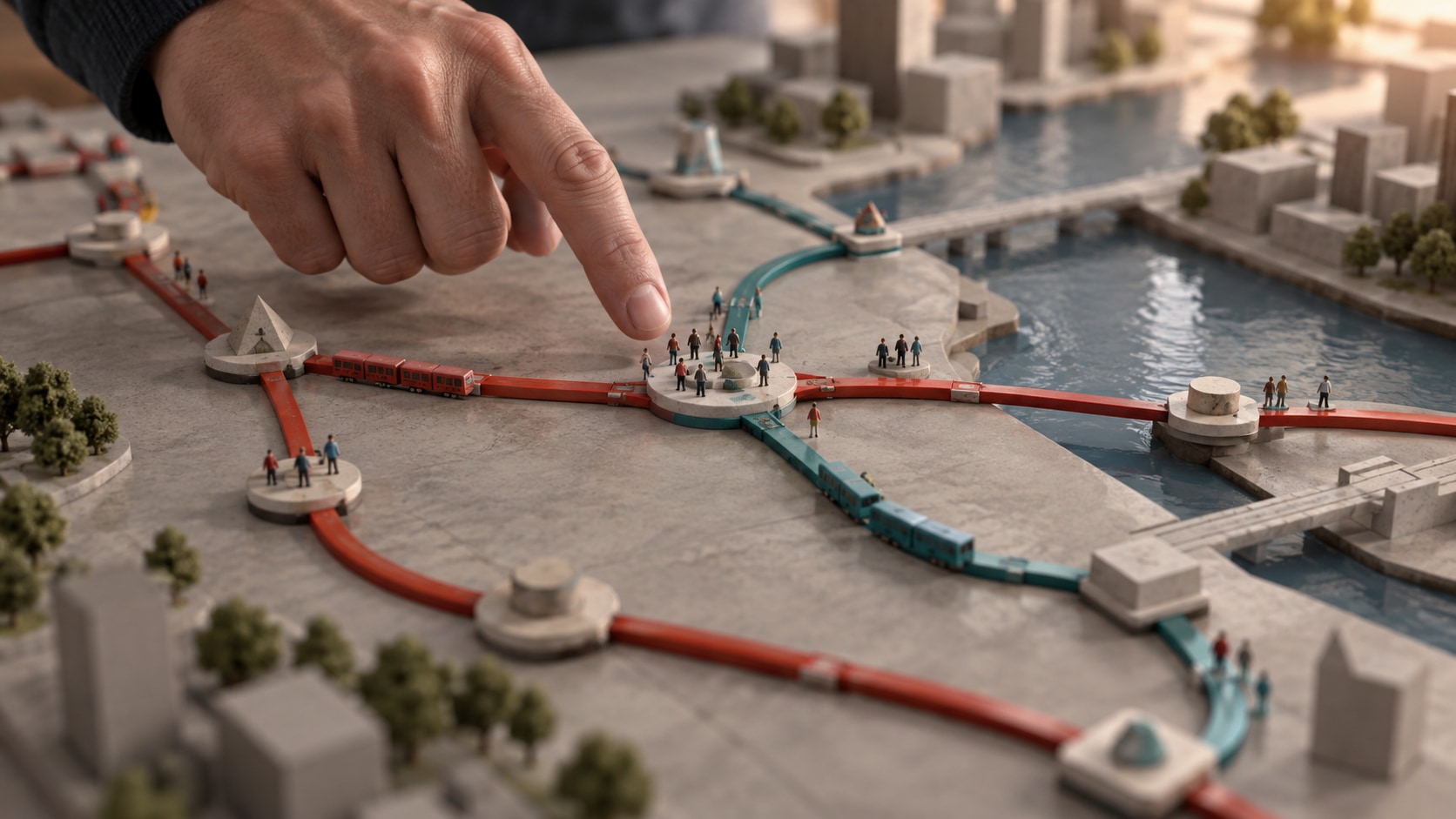
A realistic architectural model explains the planning problem. Mini Metro itself uses abstract map graphics.
Think about a passenger's journey instead of looking only at the line you just drew. A station can appear connected while depending on an awkward sequence of transfers. Adding another stop to an existing line may look economical, yet the extra travel can affect people elsewhere on that route.
That is a useful source of depth for a small-screen strategy game. You do not need an elaborate visual world to face a difficult decision. The relationships between a handful of stations can already produce several competing priorities, and you can see the consequences in the same place where you made the change.
The abstract presentation also asks for a particular kind of imagination. Readers who enjoy translating a diagram into movement will have a reason to care about a few lines. Readers who want to build individual stations, inspect rolling stock or develop a detailed city should understand the narrower focus before buying.
A queue has a cause
The developer's press material describes the challenge as keeping an efficient subway network ahead of a growing city's changing demands. That framing matters: a plan can work at one stage and become inadequate later without having been foolish at the start. Official press kit.
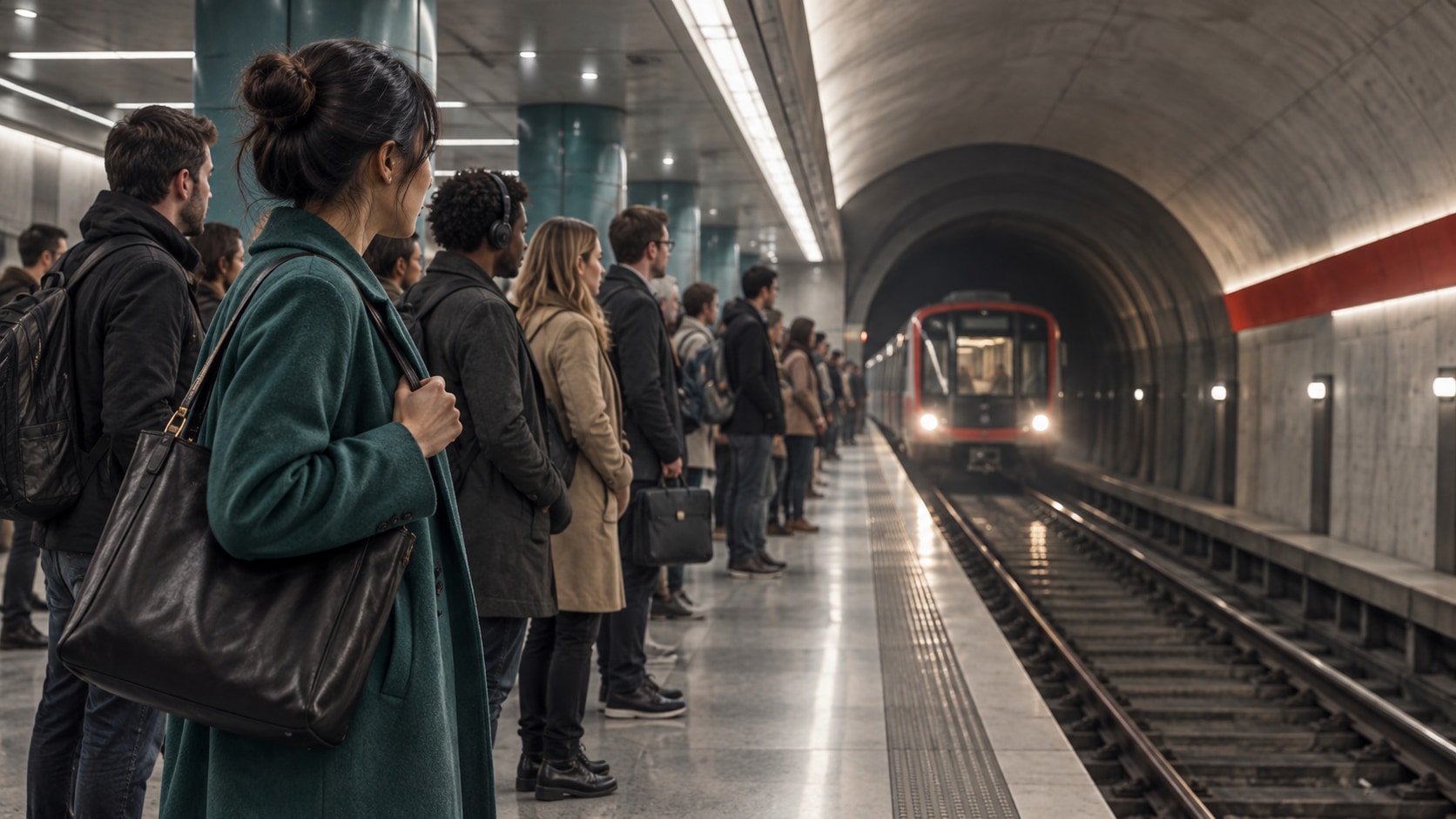
A crowded platform represents pressure on capacity, not the game's rendered view.
Before responding to a queue, consider what kind of problem you are seeing. A train might lack room, take too long to return or carry passengers through an inconvenient route. Those are different diagnoses. Adding capacity can help one problem while leaving another untouched.
Use a change to test a theory. If you believe an overlong route is the issue, consider how to shorten the relevant journey. If you think several journeys depend on the same transfer point, look at the connections feeding it. You will learn more from a deliberate adjustment than from several simultaneous alterations whose effects you cannot distinguish.
There is no universal layout promised here. A strategy that ignores the current geography and demand may produce a handsome diagram with poor service. The game's strongest design argument is that you must remain willing to revise a solution after you understand why it once made sense.
That can create a satisfying form of attachment. You care about the network because you remember the decisions that produced it. It can also create resistance: dismantling a favorite line feels wasteful. The relevant comparison is the service it provides now, not the effort you invested in drawing it earlier.
Growth makes resource choices meaningful
The official Android listing advertises random city growth, different cities and upgrades for the network. Variation gives you a reason to assess the current map rather than apply one memorized sequence of moves. Official Android listing.
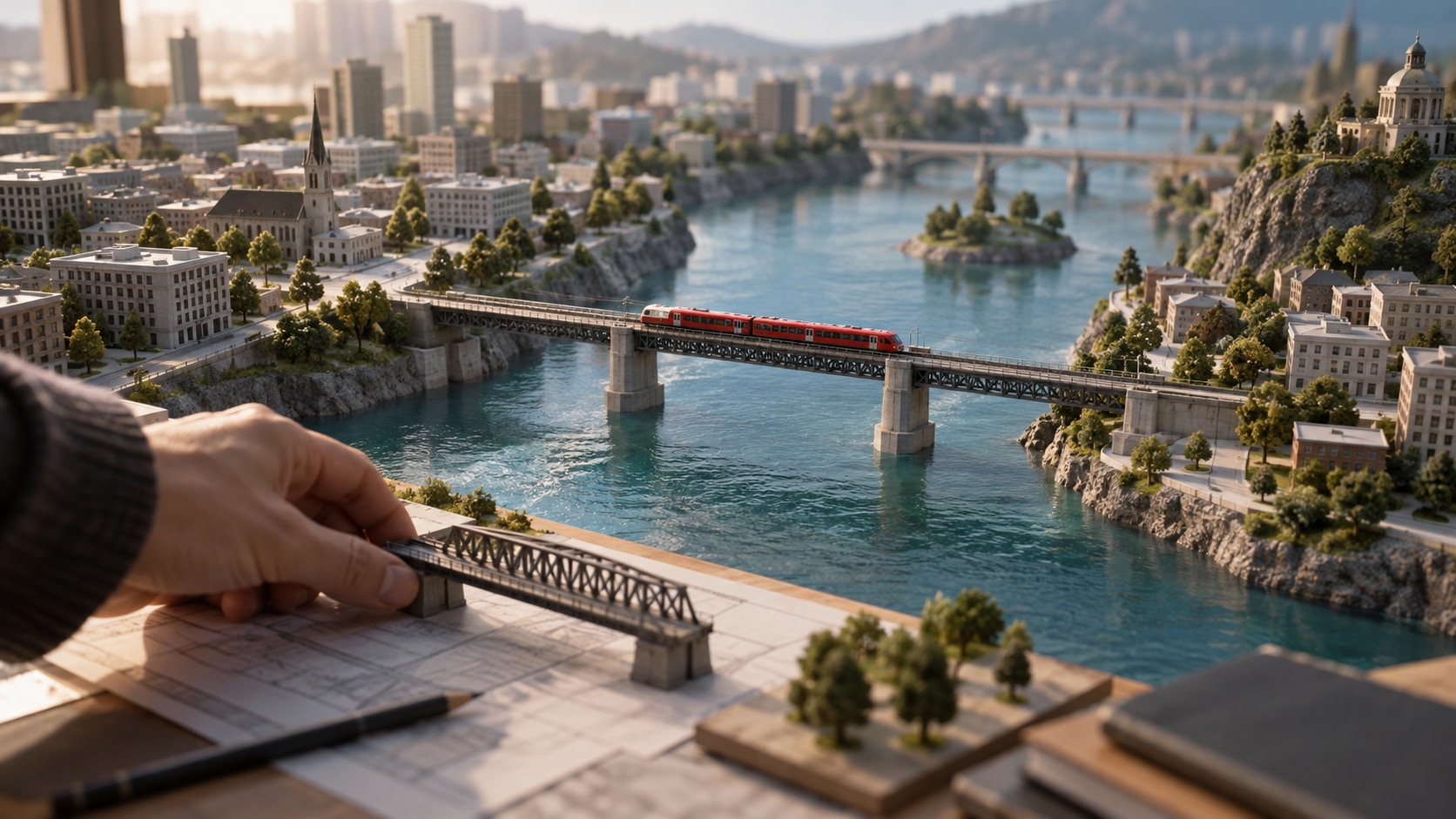
The model illustrates geographic constraints. It is not an exact Mini Metro city or resource menu.
A river is an easy way to picture the problem: stations on opposite sides may look close while relying on a limited crossing. The important planning question is what else depends on that connection. Solving one local issue can leave you with fewer options when the next station appears.
Keep some attention on flexibility. A network that uses its resources to solve the immediate problem may give you little room to respond to a new one. That is an editorial planning principle rather than a formula for the game's resource economy. The point is to consider both current demand and your ability to adapt.
Random growth can also produce frustration if you expect a fair comparison between any two attempts. A final result reflects the circumstances as well as your decisions. Review a specific choice you could have changed rather than assigning all the credit or blame to the score.
Choose the mode that matches your mood
The Android listing distinguishes Normal, Endless, Extreme and Creative modes, and includes a Daily Challenge. It also advertises colorblind and night modes, a responsive soundtrack, and no advertisements or in-app purchases. These are useful differences from a strategy app organized around resource sales. Official Android listing.

A planning desk represents experimentation; it does not depict the Creative mode interface.
Select a mode for the experience you want rather than treating the hardest option as the most legitimate one. A scored attempt can make a capacity problem urgent. A more relaxed setting can give you space to understand how a change affects the network. Both can support learning, but they place different demands on your attention.
The store also notes that some Bluetooth headphones can have audio compatibility problems. That is a specific caveat worth checking if you intend to play with headphones; this review does not claim to have reproduced or ruled it out. Follow the developer's current advice for your setup. Official Android listing.
Verdict
Mini Metro looks like a strong fit for players who enjoy revising a plan in response to visible pressure. Its scope is compact enough for a phone, while the relationship between route length, demand and scarce resources offers room for thought.
It is a less obvious choice for anyone seeking detailed railway simulation or a city they can finish and preserve unchanged. Expect to rethink your work. If studying a queue and finding a better connection sounds satisfying, the game has a clearer reason to remain installed than its attractive map alone.
Editorial disclosure: Official information checked on September 26, 2026. No personal high score, network benchmark or device test is claimed. AI-generated photographic-style illustrations interpret the concepts; they do not represent Mini Metro's abstract graphics.


.webp?x-oss-process=image/resize,w_80/format,webp)