
Clash Royale Review: Short Battles Built on Deck Discipline

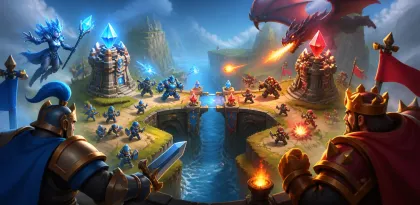

Clash Royale turns a card deck into a real-time battlefield. You spend Elixir to deploy troops, spells, and buildings, then protect your towers while attacking the opponent's side. A match lasts only a few minutes, yet each card choice affects the pace, defense, and counterattack.
The game rewards quick decisions and long-term deck knowledge. Progression adds card levels, currencies, seasonal rewards, clans, and optional purchases. Players who treat every new card as an upgrade can waste resources and weaken the deck they already understand.
Elixir Creates the Central Trade-Off
Each card costs Elixir, which returns over time. A large push can overwhelm an opponent, but it can leave you unable to defend the other lane. A cheap response preserves Elixir for a counterattack.
Count broad ranges rather than chasing perfect arithmetic. If an opponent commits an expensive tank, they have less room for another costly card. If you spend more Elixir on defense than the attack cost, you may survive but lose control of the next exchange.
Do not deploy at the bridge without a plan. Use the travel time from the back of the arena to rebuild Elixir and support a push. Pressure at the bridge works when you know the opponent lacks a useful counter.
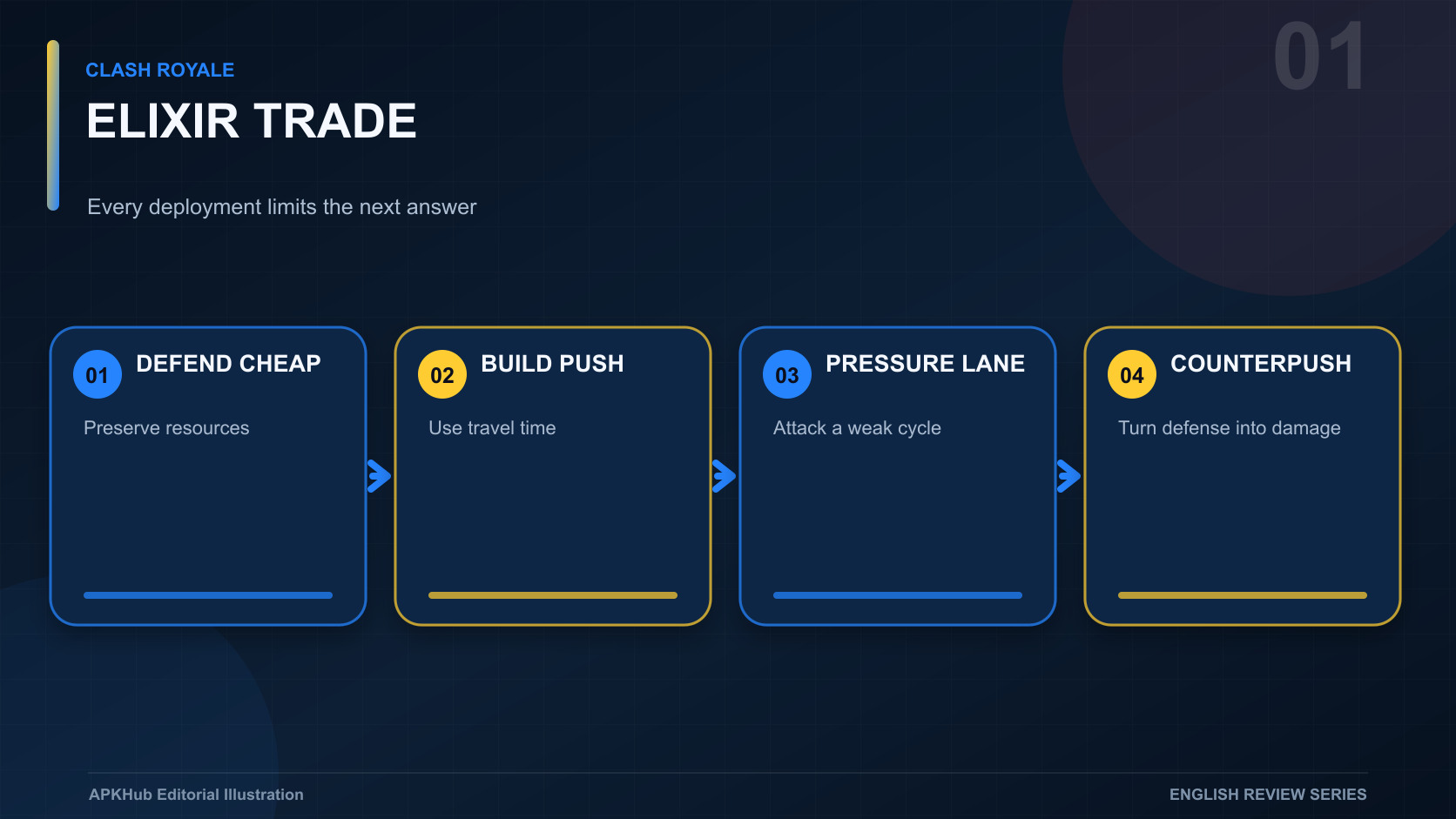
Editorial illustration: Elixir spent on one lane limits the options available on the other.
A Deck Needs Roles, Not Eight Favorites
A useful deck covers win conditions, defense, air targets, swarm control, and a range of Elixir costs. Eight strong cards can fail when they all need the same situation.
Choose one clear route to tower damage. Build the rest of the deck around protecting or enabling that route. A heavy deck needs patience and sturdy defense. A fast cycle deck needs accurate small trades and repeated pressure.
Change one card after several matches. Replacing half the deck resets your knowledge of timing and matchups. Review replays to identify the card that sat unused or the threat you could not answer.
Placement Separates Good Counters From Waste
The same defensive unit can produce different results depending on tile placement. Central buildings pull attackers away from a tower. A ranged unit placed too close can enter splash damage. A troop deployed late may allow unnecessary tower hits.
Practice common pulls and spacing in low-pressure modes. Learn which cards cross the river, target buildings, or ignore ground units. Exact balance and card behavior change through updates, so use the current in-game descriptions over old videos.
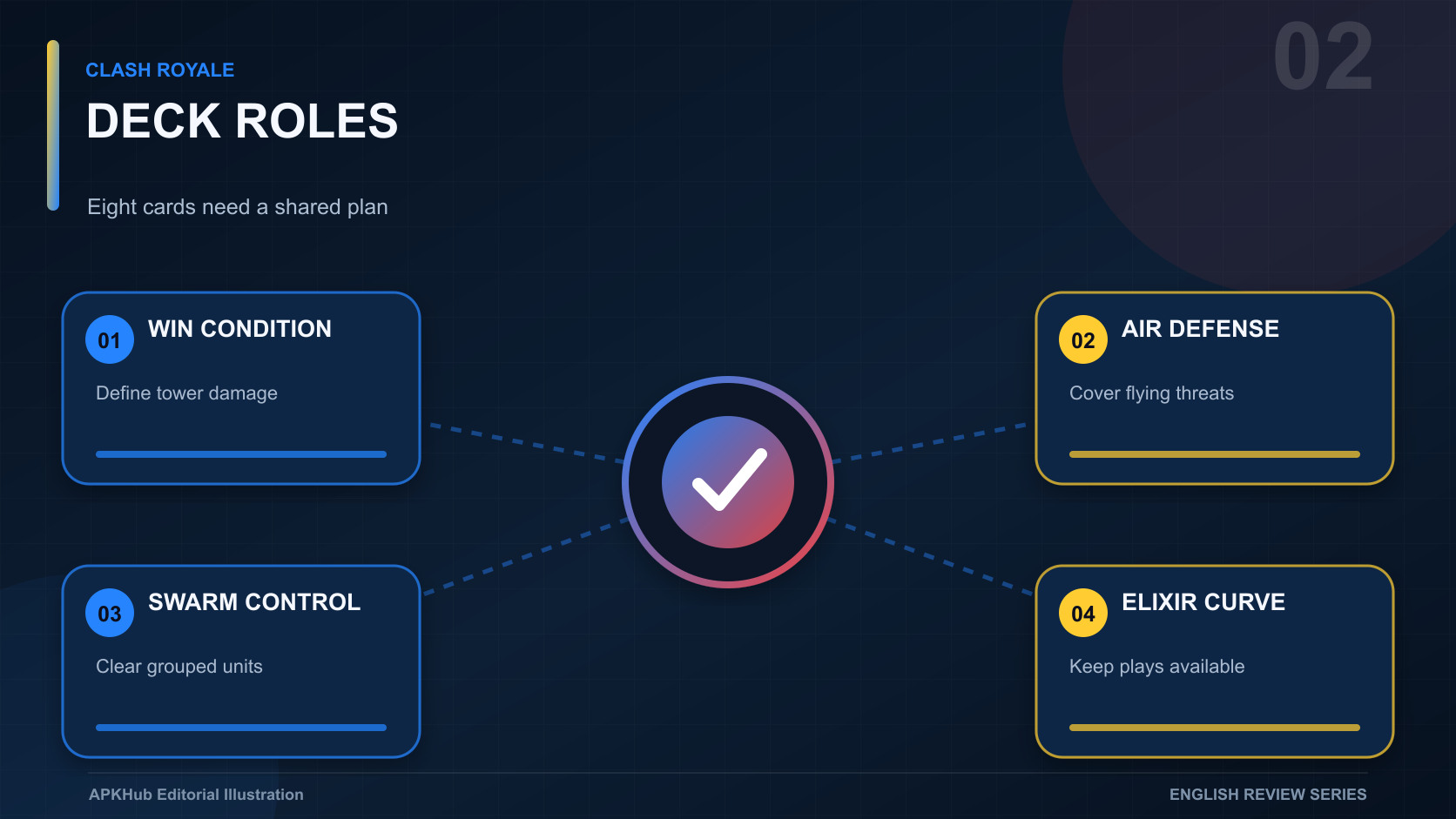
Editorial illustration: each card should solve a defined problem inside the deck.
Progression Rewards Focus
Players collect and upgrade more than one hundred cards under the current official description. Trophies, leagues, events, challenges, clan activity, and seasons provide several goals.
Upgrade a playable deck before spreading resources across the full collection. Balance changes can affect card strength, but knowledge of a stable archetype survives more updates than a rushed collection.
Clans support card sharing and group competition. Chat and social features require the same privacy habits as other online games. Use reporting tools and keep personal contact information out of public conversation.
Optional purchases and season offers can speed progression or add cosmetics. Set a budget before entering the shop. Random or rotating rewards should not create pressure to recover prior spending.
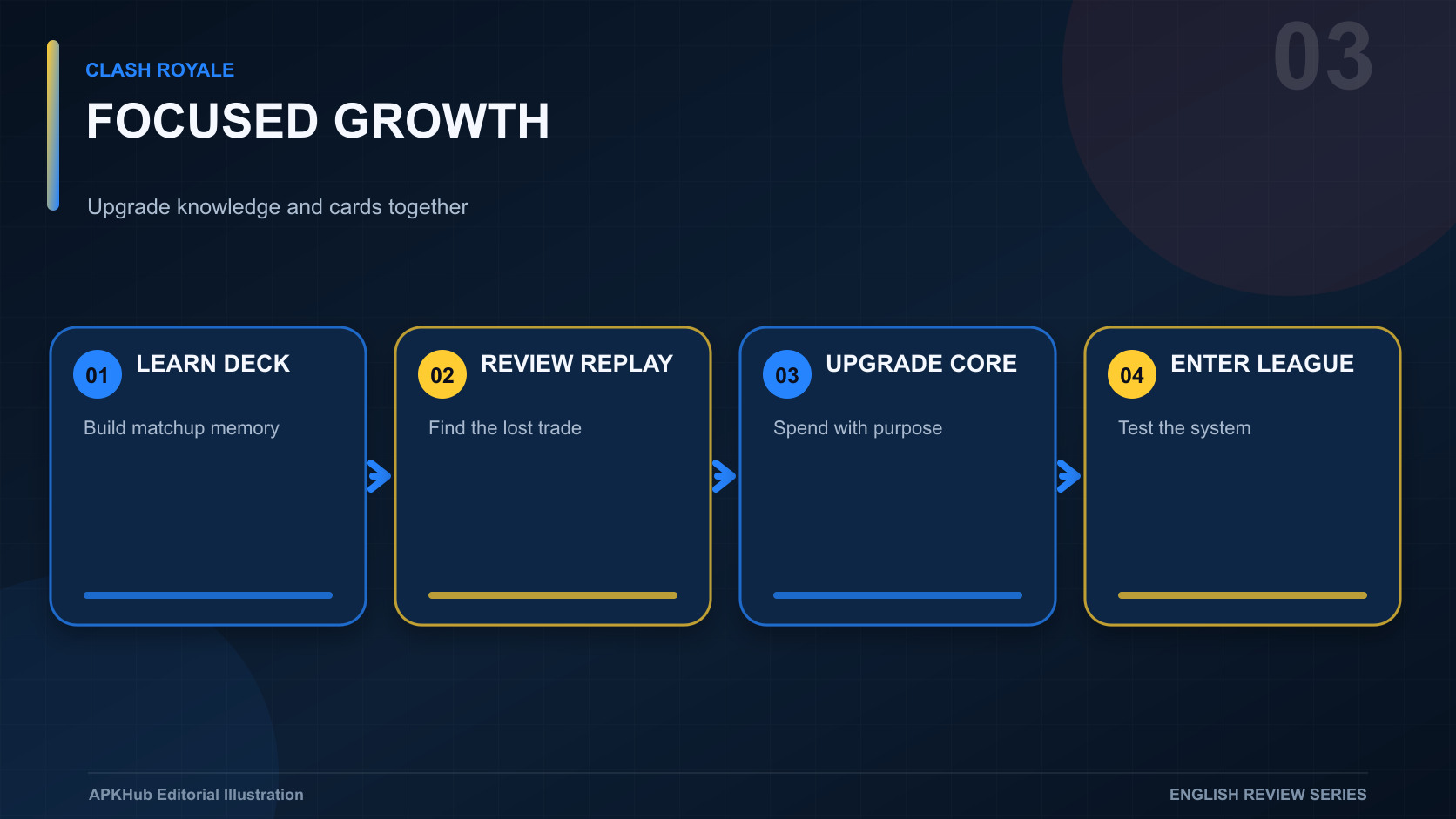
Editorial illustration: focused upgrades make one deck reliable before the collection expands.
Strengths and Weaknesses
Strengths
- Short matches contain clear tactical trade-offs.
- Deck building and placement reward study.
- Replays make mistakes easier to inspect.
- Clans and events support different competitive goals.
Weaknesses
- Card levels can affect fair-feeling competition.
- Balance changes may reduce the value of prior upgrades.
- A losing streak can lead to rushed rematches.
- Store and season systems add pressure outside battle.
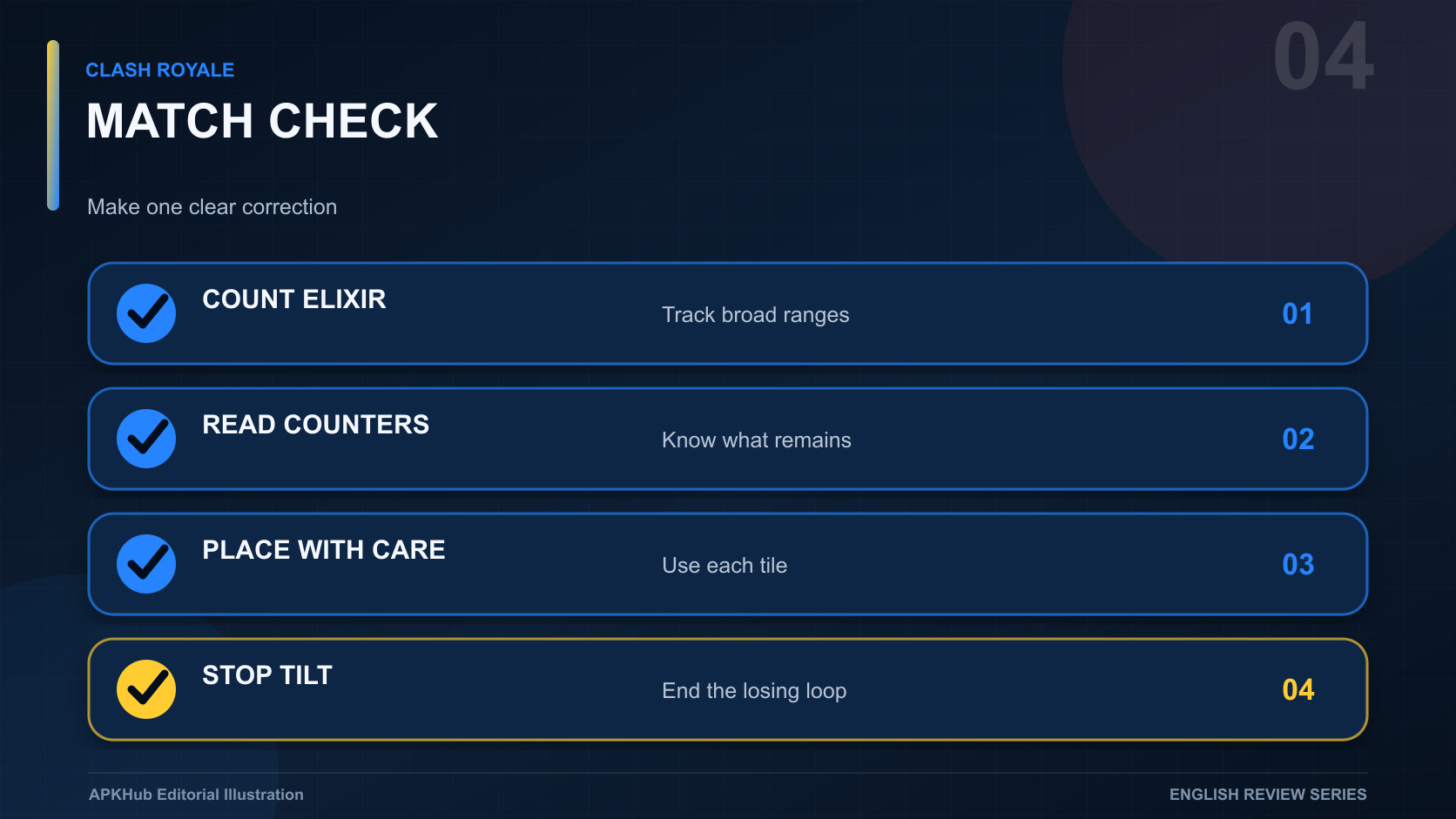
Editorial illustration: a short review after each match creates more value than an angry rematch.
Final Verdict
Clash Royale remains a strong mobile strategy game because it makes every deployment visible and expensive. Elixir, card roles, and tile placement turn a short battle into a chain of trade-offs.
The progression system rewards a focused plan and punishes scattered upgrades. Learn one deck, review losses, and stop a session before frustration changes your timing. Players who accept the live balance and upgrade economy will find a competitive game with real tactical depth.


.webp?x-oss-process=image/resize,w_80/format,webp)