
Gacha Club Review: Creation First, Battles Second



Gacha Club is two products sharing one colorful interface: a broad character-and-scene creator and a collection-based battle game. Google Play lists more than 50 million downloads, an Everyone 10+ rating, ads, offline play, and no in-app purchases in the developer description. Google Play currently shows 50M+ downloads and a Everyone 10+ content rating. The listing was updated on Aug 15, 2023, so features and offers should still be checked in the installed version.
Popularity is a useful discovery signal, not proof of quality. This review therefore focuses on the decisions the game repeatedly asks you to make, the systems that support or distract from those decisions, and the practical limits around money, privacy, age, and hardware.
The Core Loop
The creative loop starts with a cast. You customize main and extra characters, tune colors and poses, assemble a Studio scene, add objects or text boxes, and save layouts for later revision. The battle loop uses earned gems and materials to obtain units, build teams, and improve them across Story, Training, Tower, and Shadows of Corruption modes.
The first hour should be used to learn feedback rather than to maximize rewards. Notice what the game communicates clearly, what it hides behind menus, and which mistakes create knowledge for the next attempt. A healthy loop makes failure or delay informative; a weak loop merely asks for another tap, another ad, or another purchase.
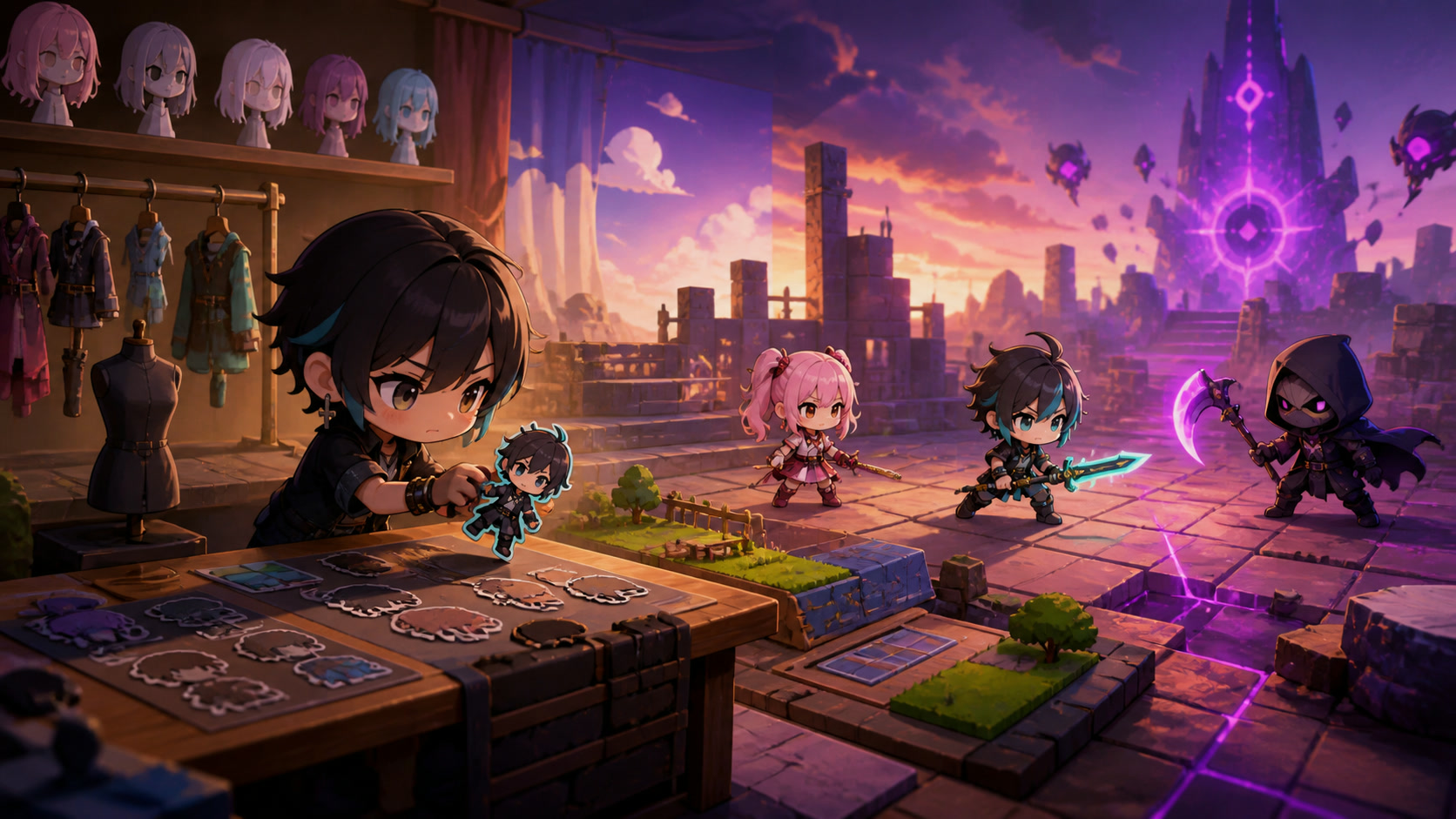
Editorial illustration: the loop is easiest to understand when every action has a visible consequence.
The Systems Around the Main Mechanic
The official description advertises 10 main character slots, 90 extra slots, 600 poses, up to 10 characters in a Studio scene, 15 saved scenes, more than 180 battle units, 150 pets, four battle modes, and several mini-games. Those numbers explain why the app can function as a hobby toolbox rather than a short campaign.
These supporting systems matter because they shape the pace between active moments. The best ones create a meaningful decision before the next round. The weaker ones add collection, notifications, or currency without changing how the player thinks. New users should learn the central mechanic first and add optional systems only when their purpose is clear.
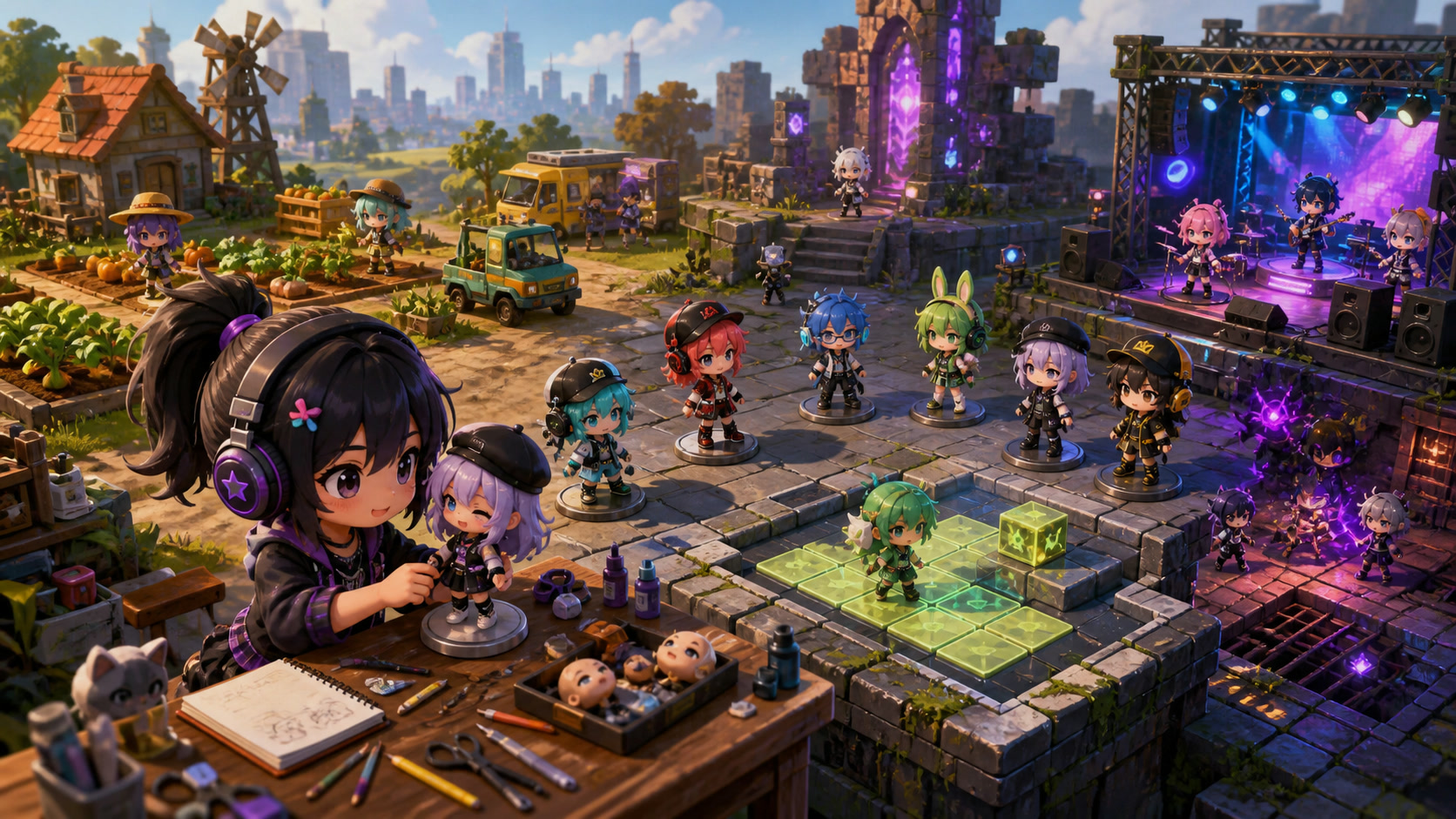
Editorial illustration: separate the central mechanic from the progression systems wrapped around it.
Progression: A Better Way to Improve
Creative progress is measured by stronger designs and clearer scenes; battle progress is measured by units, materials, awakening, and skill levels. Keep those goals separate. Farming a battle mode is useful when it supports a team you enjoy, but it should not displace the creator if storytelling was the original reason to install.
A useful routine is to choose one measurable goal for a session, stop when attention falls, and review one mistake before starting again. This avoids confusing time spent with skill gained. Event calendars, streaks, or daily rewards may be convenient, but they should not decide whether a session continues after it stops being enjoyable.
Ads, Purchases, and Random Rewards
The name includes “Gacha,” but the official description says there are no in-app purchases and that gems can be farmed through play. Google Play still labels the app as containing ads. Randomized unit acquisition can encourage repetitive checking even without paid draws, so time limits remain more useful than a spending warning alone.
Store labels describe the current distribution page, not every screen a player may see after a future update. Before paying, confirm the exact item, currency, renewal rule, refund route, and whether the benefit survives account loss or a service shutdown. Randomized rewards deserve a lower budget than direct purchases because the desired result is not guaranteed.

Editorial illustration: enjoyment improves when money, time, and device constraints are decided in advance.
Device and Performance Expectations
The developer notes possible lag on older devices and devices with 4K screens, recommends restarting after extended lag, and asks users to keep storage available. The app can work offline, but large scene collections and exports still benefit from routine local backups.
Compatibility on Google Play means the store allows installation; it does not promise identical frame rate, battery use, controller support, or network quality on every model. Keep the operating system and app current, use official downloads, and avoid third-party “performance” tools that request excessive permissions.
Privacy, Younger Players, and Healthy Sessions
Custom text boxes, imported characters, exported images, and community sharing can carry material the base content rating does not predict. Younger users should keep personal information out of profiles and scenes, and a caregiver should review any external group or social platform before participation.
Use a unique password when an account is required, enable platform purchase authentication, and do not share recovery codes. For a child’s device, review permissions and social features together with the child. A content rating addresses themes such as violence or language; it is not a complete judgment about spending design, chat, advertising, or privacy.

Editorial illustration: the best recommendation depends on fit, not popularity alone.
Who Is It For?
This is a strong fit for players who enjoy character design, dress-up systems, visual storytelling, team collection, mini-games, and offline experimentation. It is a weaker recommendation for players who want polished real-time combat, realistic art, a guided creative curriculum, or a completely ad-free workspace.
Strengths and Weaknesses
Strengths
- Exceptionally broad free customization
- Creator and battle modes support different moods
- Offline play reduces dependence on a live service
- No in-app purchases according to the official description
Weaknesses
- Menus and options can overwhelm new users
- Random unit collection can become repetitive
- Older hardware may lag
- External sharing needs privacy supervision
Final Verdict
Gacha Club earns its popularity by giving creation more room than its title implies. The battle modes provide goals, but the durable value is the ability to design a reusable cast and stage scenes without a purchase ladder. It is strongest as an offline creative sandbox with optional collection mechanics, not as a competitive RPG.
The practical recommendation is to install from an official source, test the first session without spending, and decide in advance what would make the game worth keeping. A popular title earns attention; it still has to earn time, storage, money, and trust on the player’s own device.


.webp?x-oss-process=image/resize,w_80/format,webp)