
Car Parking Multiplayer 2 Review: An Ambitious Driving Sandbox Beyond the Parking Lines


Car Parking Multiplayer 2 sounds like a narrowly focused parking simulator, but the current Android game is much broader. The official Google Play listing describes an open world where players can leave the car, meet other users, race, exchange vehicles, customize an avatar, enter role-based modes, and tune mechanical systems.
The parking challenges remain important because they teach low-speed control. Yet the sequel's identity comes from the combination of driving, collecting, social interaction, and experimentation. With 160 listed cars, 82 parking and driving challenges, manual transmission with a clutch, and a growing set of modes, it is closer to a mobile automotive sandbox than a sequence of parking puzzles.
That ambition has trade-offs. More systems create more menus, more reasons to spend, and more opportunities for social friction. The vehicle exchange and voice-chat features are useful only when players keep transactions inside the game's supported tools and protect their personal information.
The Open World Changes the Purpose of Parking
Traditional parking games present a start point, a narrow obstacle course, and a marked destination. Car Parking Multiplayer 2 still supports precision driving, but it places that skill inside a larger environment. Players can drive between locations, exit the vehicle, enter building interiors, meet friends, or choose another activity.
This freedom makes ordinary driving meaningful. A tight turn into a garage tests steering and spatial judgment. Navigating city streets introduces traffic and route decisions. Walking changes the sense of scale and lets the environment function as a social space instead of a painted background.
The open world can also feel unfocused. A player who wants a clear sequence of lessons may spend time deciding what to do next, while a user attracted by the social map may ignore the careful parking model entirely. The best approach is to treat the challenges as structured practice and the open world as the place to apply what was learned.
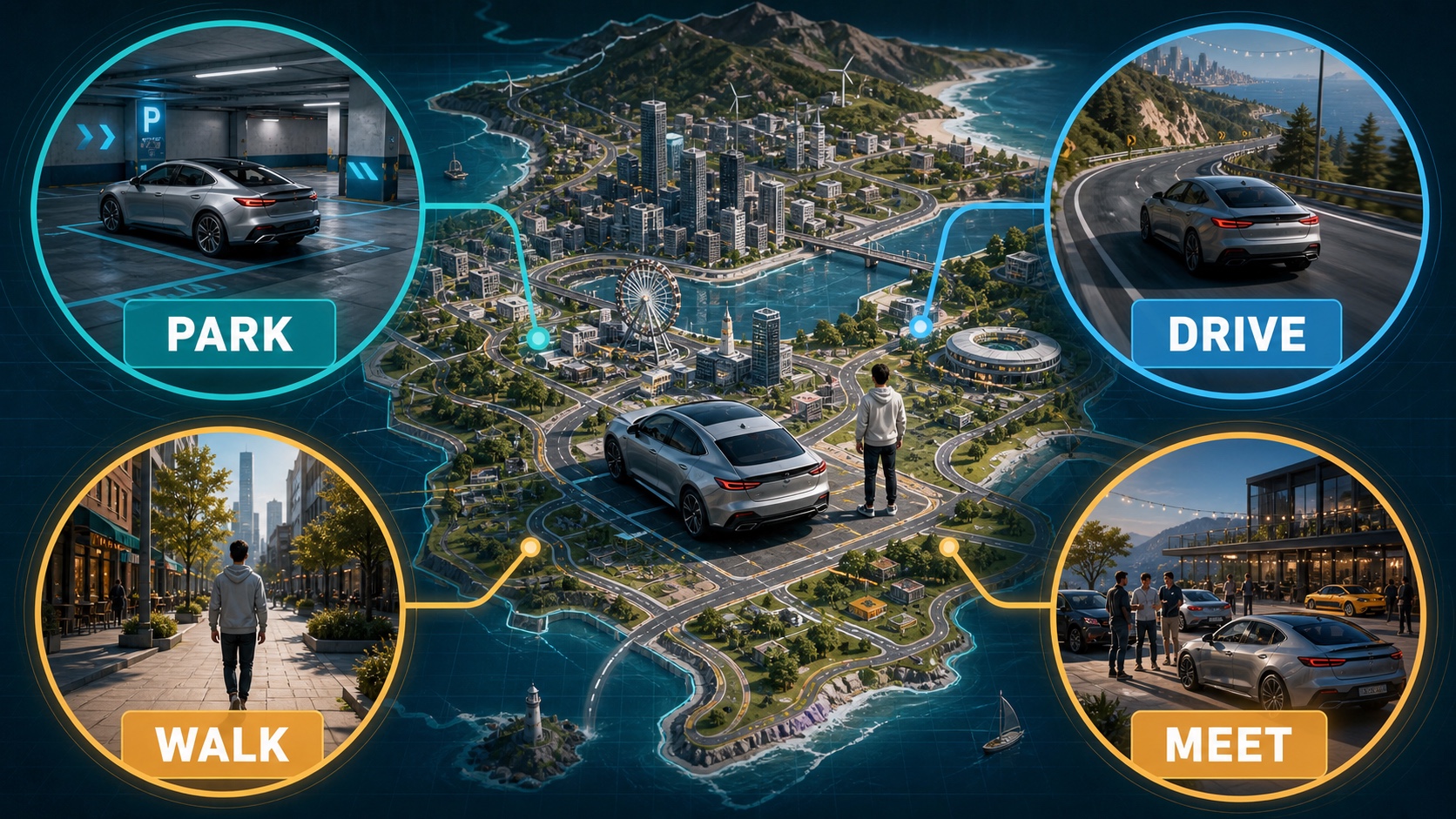
Editorial illustration: Car Parking Multiplayer 2 expands a precision-driving foundation into a space for exploration and social play.
Manual Controls Reward Deliberate Driving
The official listing includes a manual transmission with a clutch. This matters because it asks for more than steering and tapping an automatic accelerator. Managing gear selection while positioning a car can make a slow maneuver more demanding, especially on an incline or in a narrow space.
Players who prefer simplicity can begin with easier control options, learn the dimensions of one vehicle, and then move toward manual input. Changing several settings at once makes it difficult to identify why a car suddenly feels unfamiliar.
The driving model also includes fuel and suspension systems. These mechanics help the vehicle feel like a machine with operating limits rather than a camera moving through a city. They are still game systems, not a substitute for professional driving instruction. Real clutch behavior, stopping distance, and vehicle weight vary far more than a phone simulation can reproduce.
Touch controls impose their own limitations. A flat screen cannot provide pedal resistance or steering feedback. Good interface placement and a stable frame rate may matter more than selecting the most visually demanding graphics preset.
Tuning Provides Depth, but Numbers Need Context
Engine, turbo, gearbox, exhaust, and suspension adjustments give players multiple ways to change a car. Dyno Run provides a setting for observing a tuned build, while livery tools address appearance.
The important question is not whether every value is higher. Gear ratios that improve acceleration can reduce comfort at higher speeds. A very low suspension may look dramatic but make rough roads more difficult. More power can expose weak throttle control rather than automatically improving every result.
A disciplined tuning process changes one category, tests the car on a familiar route, and records whether the behavior improved for the intended activity. A drag build, rally setup, and precise parking configuration should not be expected to feel identical.
The listing advertises 160 cars with interiors. Variety is attractive, but a large collection can encourage rapid switching before the player understands any one vehicle. Learning the turning radius, braking response, view position, and gearing of a smaller garage often produces better driving than collecting without practice.
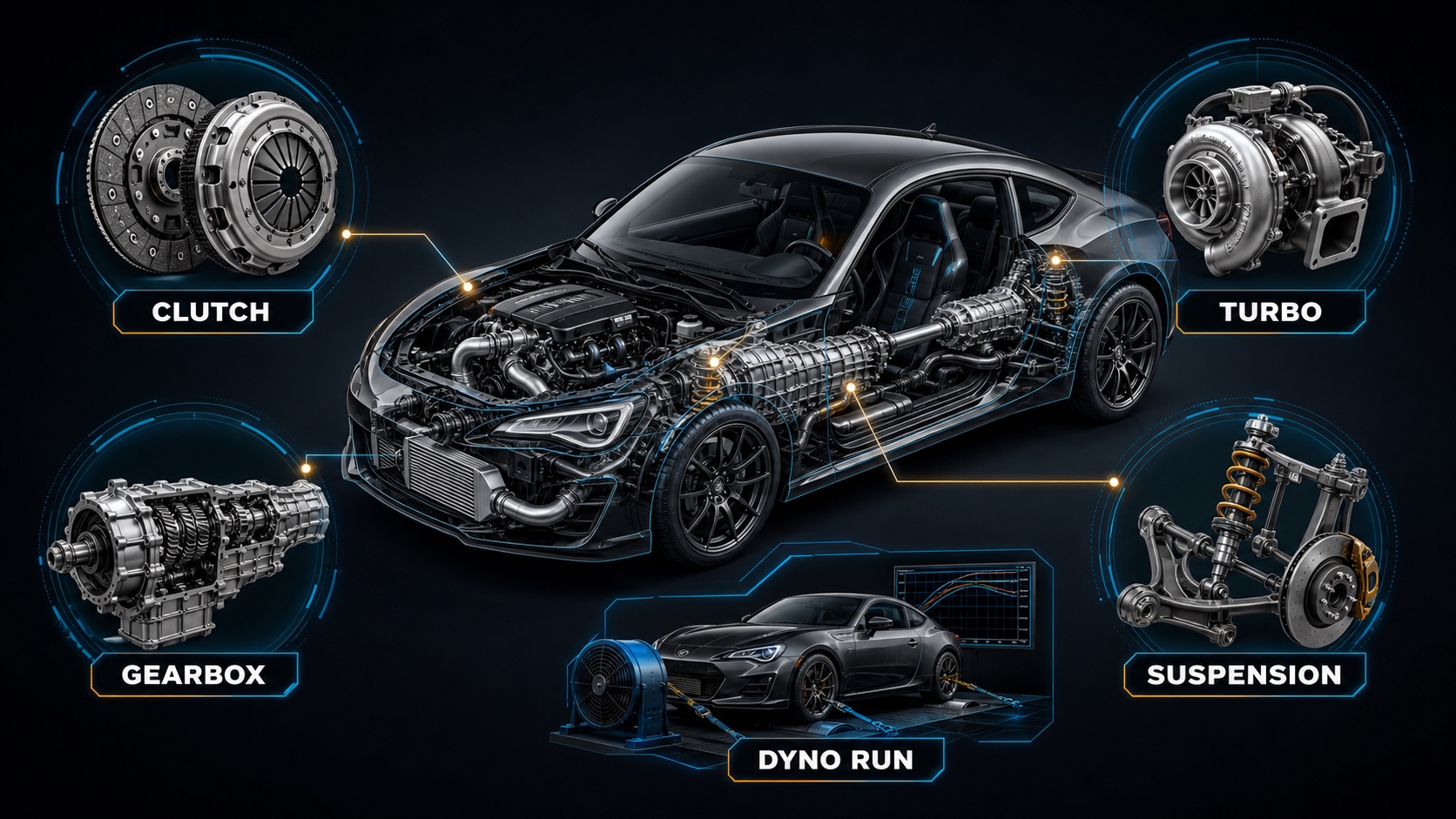
Editorial illustration: tuning is most useful when each change serves a defined purpose and is tested independently.
Eighty-Two Challenges Give the Sandbox Structure
Google Play lists 82 real-life parking and driving challenges. These missions provide measurable goals inside a world that could otherwise become an unstructured chat room with cars.
Early tasks can establish steering precision, braking discipline, and camera awareness. Later scenarios can combine narrow clearances with more complex routes. A failed attempt is useful when it reveals a repeatable mistake: turning too early, using too much throttle, or relying on only one camera angle.
The game also includes police, drone, taxi, drag, and livery modes. The June 2026 update added Rally Mode and a new Italian environment while improving physics, optimization, and fixing bugs. These additions widen the experience beyond static parking bays.
Each mode emphasizes a different skill. Rally favors momentum and recovery on loose surfaces. Drag racing isolates acceleration and shifting. Taxi activity encourages route execution, while police play changes the social role. Breadth is valuable, although not every mode will have the depth of a dedicated standalone simulation.
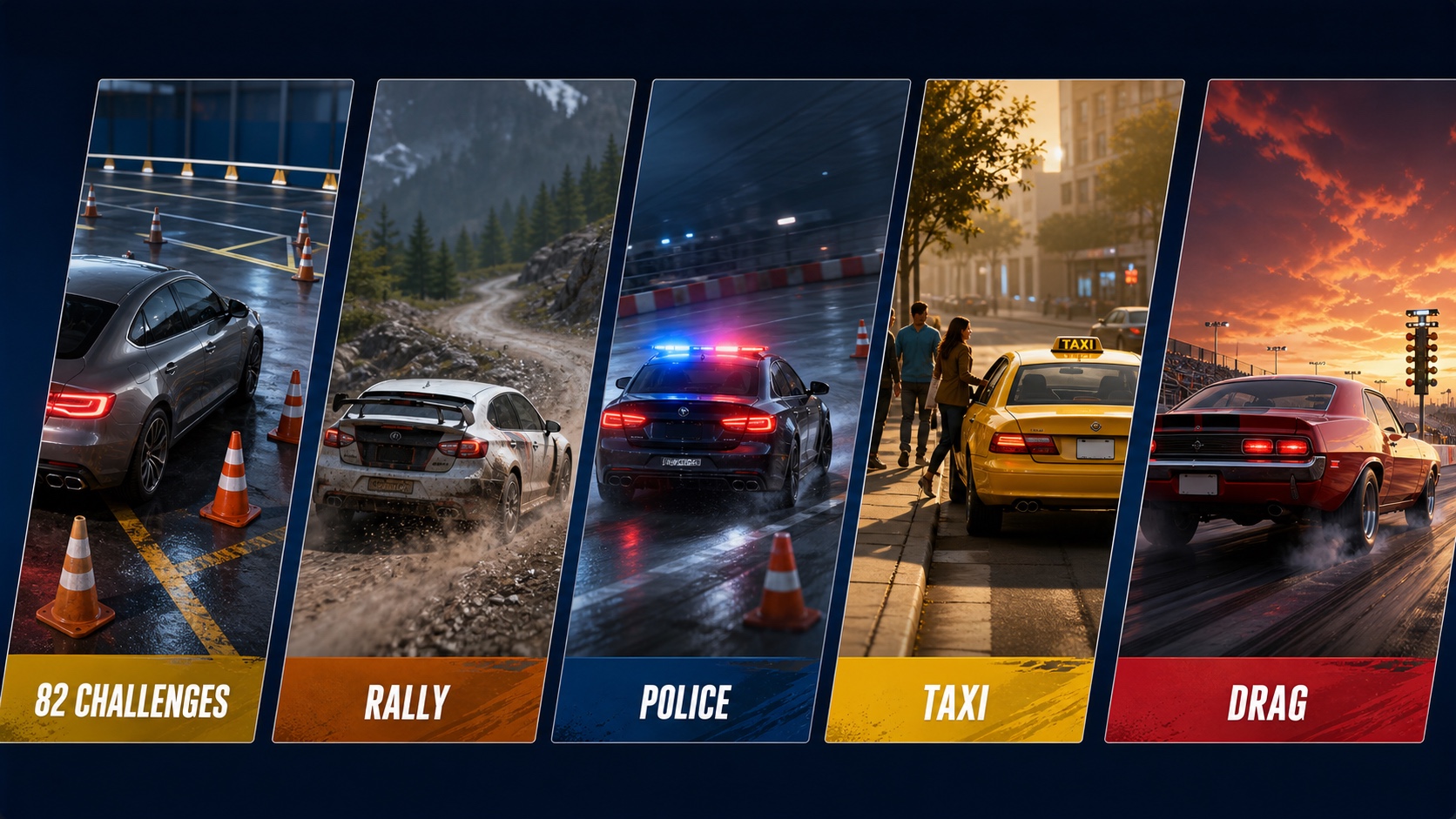
Editorial illustration: structured challenges and role-based modes prevent the open world from relying on free driving alone.
Multiplayer Is the Main Opportunity and the Main Risk
Real-player races, friend lists, free walking, and voice chat make the world feel inhabited. Coordinating a cruise or comparing a tuned car can be more engaging than driving only against scripted traffic.
Vehicle exchange adds another layer. The official listing confirms that players can exchange cars, but that should not be interpreted as protection for cash deals, account trades, or payments arranged through social media. Use only the mechanics the game actually provides. Do not send money, login details, verification codes, or identity documents to another player.
Voice chat deserves similar care. Mute and report users who are abusive, block unwanted contact, and avoid disclosing a real name, school, address, phone number, or daily routine. Parents should inspect multiplayer and payment settings before a child enters a public space.
An attractive customized car can carry social value inside the community, which makes scams and pressure more likely. A cosmetic preference is not an emergency. If another person demands an immediate trade or moves the conversation to an external platform, leaving is the safer choice.
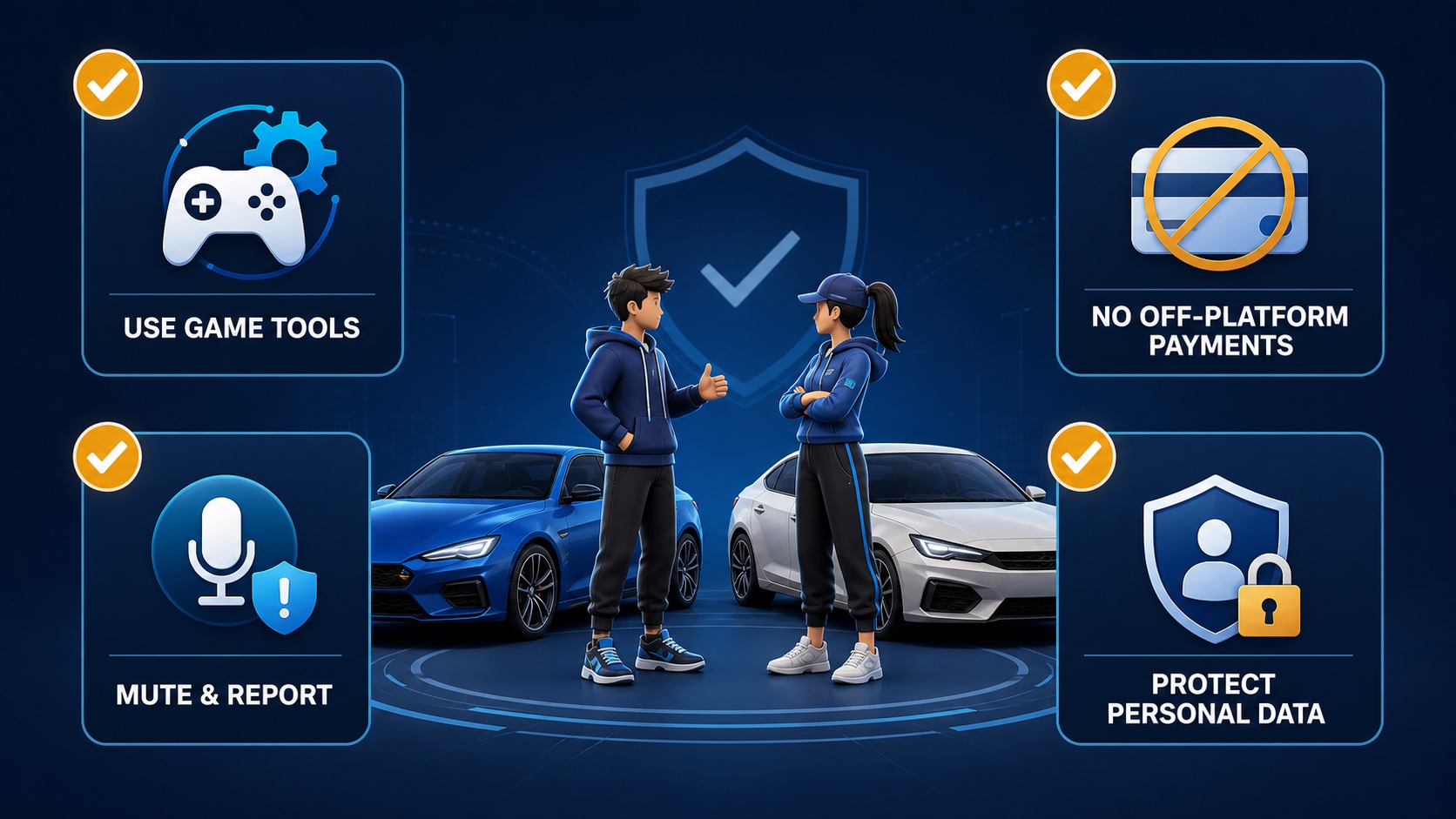
Editorial illustration: supported game tools, guarded personal data, and the ability to mute or report are essential parts of multiplayer play.
Visual Detail Has a Hardware Cost
Detailed interiors, an open map, traffic, avatars, and multiplayer synchronization all require device resources. Performance can vary with processor, memory, storage speed, heat, graphics settings, network conditions, and the number of active players nearby.
Start with a stable frame rate rather than the maximum visual preset. Steering feels less predictable when frames drop during a precise maneuver. Leave additional storage available for updates and temporary installation files, and avoid judging performance from only the first minute before the device warms up.
The June 2026 update mentions optimization and improved physics, which shows active work on these areas. It does not guarantee identical results on every Android model. Users should rely on the current store compatibility check and test settings on their own device.
Purchases and Progression
Google Play discloses in-app purchases. The listing does not make every paid item necessary, but the combination of a large car collection, customization, and multiplayer status can create pressure to spend.
Set a fixed entertainment budget before opening the store. Judge an offer by the item and terms actually shown, not by how another player presents it. Protect the account with a purchase password or biometric confirmation, particularly on a shared device.
Spending can shorten an acquisition path or change appearance; it cannot replace the low-speed control, tuning knowledge, and judgment that make a difficult maneuver consistent.
What the Game Does Well
- It turns parking practice into a broad open-world automotive sandbox.
- Manual transmission and clutch support add optional control depth.
- Tuning covers engine, turbo, gearbox, exhaust, fuel, and suspension systems.
- The listing includes 160 cars with interiors and 82 structured challenges.
- Rally, police, taxi, drag, drone, and livery modes provide different activities.
- Multiplayer, walking, friends, and voice chat make the environment social.
Where It Can Frustrate
- The number of systems can overwhelm someone seeking a simple parking lesson.
- Touch controls cannot reproduce the physical feedback of a real car.
- Open-world detail and multiplayer can strain modest devices or connections.
- Voice chat and vehicle exchange introduce moderation and scam risks.
- In-app purchases can compete with the satisfaction of gradual progression.
- Some side modes may feel lighter than a game dedicated entirely to that discipline.
Who Should Try It?
Car Parking Multiplayer 2 is best for players who enjoy cars as systems and social objects. It rewards someone willing to learn a vehicle, adjust controls, test tuning changes, and move between precision challenges and open-world activities.
It is less suitable for a user who wants a strictly linear parking course, a fully realistic professional simulator, or a private offline experience without social and economy layers.
Confirm the Android package ID com.olzhas.carparking.multyplayer2 and the developer shown on the current store page. Avoid modified packages promising free currency, unlocked vehicles, or protection from bans.
Final Verdict
Car Parking Multiplayer 2 succeeds because parking is the foundation rather than the boundary. Its manual controls, tuning systems, 160 listed cars, 82 challenges, and varied modes create room for both careful practice and expressive play. The June 2026 update also indicates a current product, adding an Italian environment and Rally Mode alongside physics and optimization work.
The social layer requires judgment. Vehicle exchange and voice chat can strengthen the community, but users should keep activity inside supported game tools, reject off-platform payments, and protect personal data. With those boundaries and realistic expectations about mobile hardware, the sequel offers one of the more ambitious automotive sandboxes on Android.

.jpg?x-oss-process=image/resize,w_80/format,webp)
.jpg?x-oss-process=image/resize,w_80/format,webp)


.webp?x-oss-process=image/resize,w_80/format,webp)