
Gorogoa on Android Review: Four Pictures That Become One Puzzle

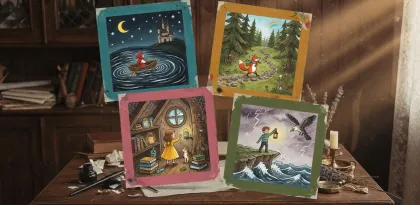

Gorogoa is a puzzle game made of pictures. Annapurna Interactive's Android listing says Jason Roberts drew thousands of illustrations, and that you arrange and combine panels to solve the puzzles. There is no combat, no timer printed in the store text, and no shop attached to the story. Google Play has shown the game at $4.99, rated Everyone, with an update on May 23, 2024, and version 1.2.1 reported by store trackers. AppBrain's public page lists no ads. Confirm the price on your own storefront before you pay.
The pleasure is spatial. Two pictures that look unrelated become one continuous place when you set them in the right order, or when you zoom until a frame inside a frame becomes a door. The listing calls this simple and complex at once. That is accurate as a buying description. The gestures are few. The meanings of those gestures keep changing.
Start by learning the frame, not the story
A first session should be spent discovering what a panel can do. You can move the four frames. You can zoom into a picture until a smaller picture fills the square. You can place two edges together so a road, a staircase, or a creature continues across the join. Before you try to understand the boy, the city, or the creature that gives the game its name, make one successful join on purpose and then undo it. You need to trust the interface.
The story is present, and Roberts's drawings carry it. The listing describes a personal narrative inside the puzzles. You do not need a plot summary to play, and a summary would spoil the way scenes return in a new scale. Let a repeated object mean "look closer" rather than "remember a wiki." This is an editorial habit, not a hint system the store promises.
If a puzzle stalls, change scale before you change theory. Many stops in this kind of panel game come from treating a picture as flat when it contains another picture. Zoom first. Then look at the edges.
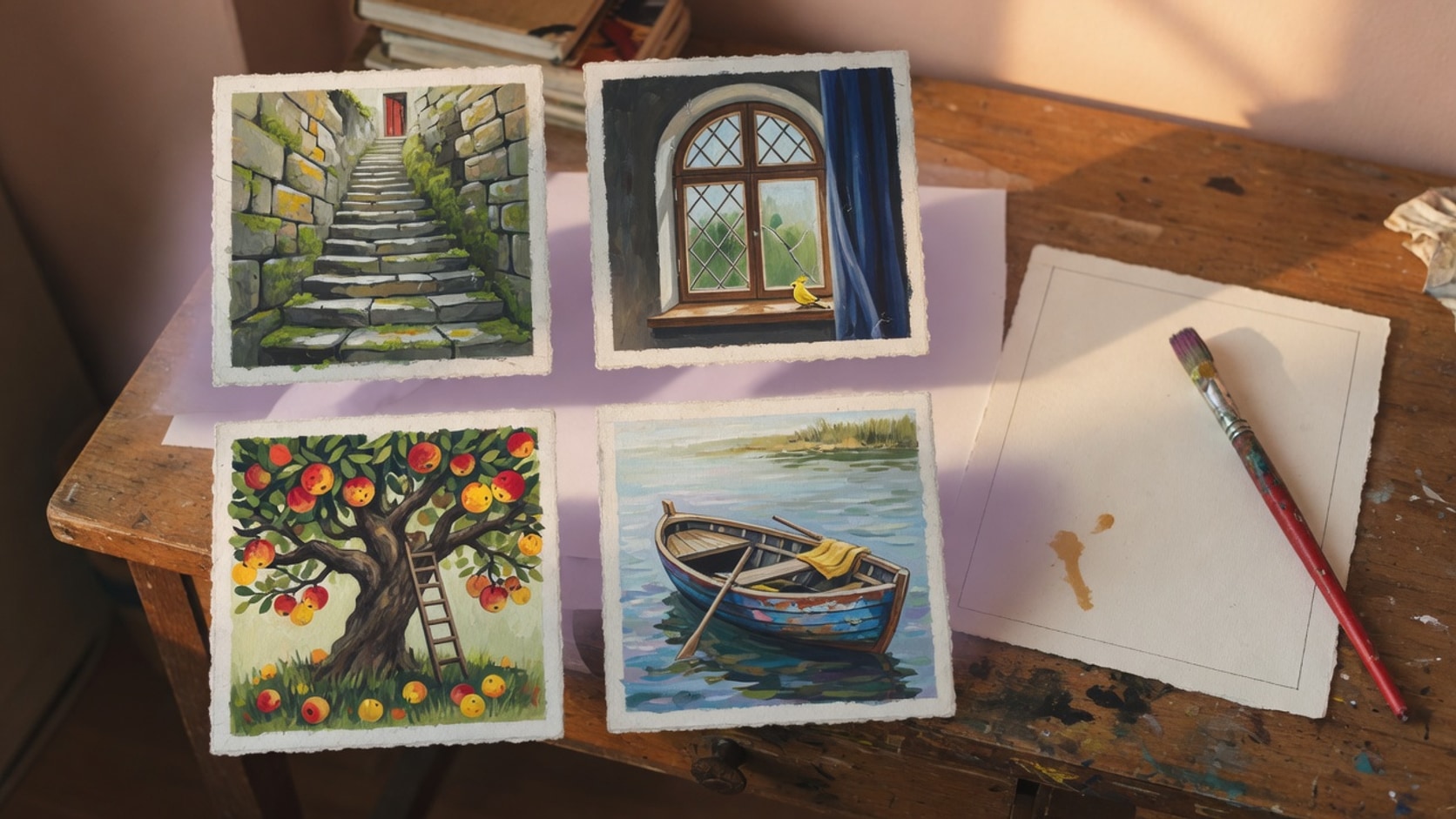
Concept illustration: the puzzle is the relationship between pictures.
Joining two scenes is a sentence
When two panels connect, you are writing a small sentence: this street continues into that street, this hand passes something through that window, this creature is large because the frame around it changed. The game's difficulty lives in noticing which sentence is legal. A beautiful alignment that does nothing is still information. It tells you those two images are neighbors in theme and strangers in structure.
Work slowly enough to see the drawing. The listing's claim of thousands of illustrations is a reason to buy the game and a reason not to rush it. Solving by frantic dragging will get you through some early frames and will miss the joke of a later one. Keep your fingers light. If you cover the art, you cover the clue.
Phone size matters more here than in a game with large buttons. A panel puzzle wants you to see all four frames and the detail inside one of them. A large phone or a tablet is the comfortable way. On a smaller screen, rotate, zoom, and accept that you will sometimes lose the wider arrangement. That limitation belongs to the device. The design assumes you can still recover the grid.
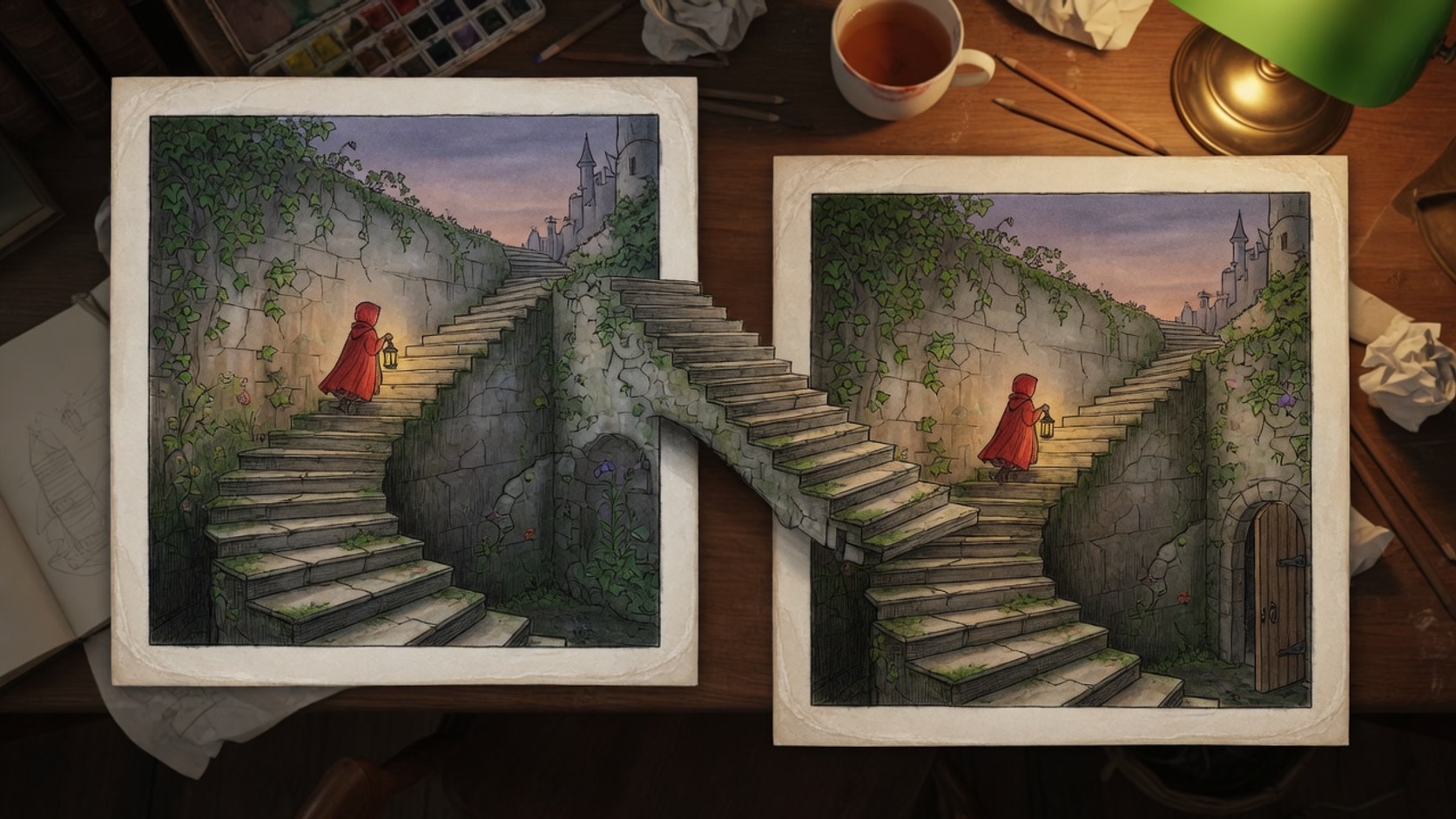
Concept illustration: a correct join makes one place out of two drawings.
Zoom is a move, equal to sliding
Players who come from hidden-object games hunt for small items. Gorogoa asks for a different zoom. You enter a picture until its contents become the panel you can slide. A bowl, a window, or a circular design may be a container for another scene. The editorial advice is to treat every strong shape as a possible frame. Circles and rectangles in the drawings are often the grammar.
Do not expect the game to label this. Annapurna's text stays at the level of "arrange and combine." The rest is yours to learn, which is why the first half hour can feel opaque and the second half can feel inevitable. If you bounce off the opening, the game has not yet shown you its verb. Give it one evening before you decide it is only a gallery.
There is no reason, from the store materials, to fear a paywall halfway through. The $4.99 listing is for the game as a single purchase. Version 1.2.1 and the May 2024 update are maintenance facts, not a content roadmap. You are buying a finished puzzle book.
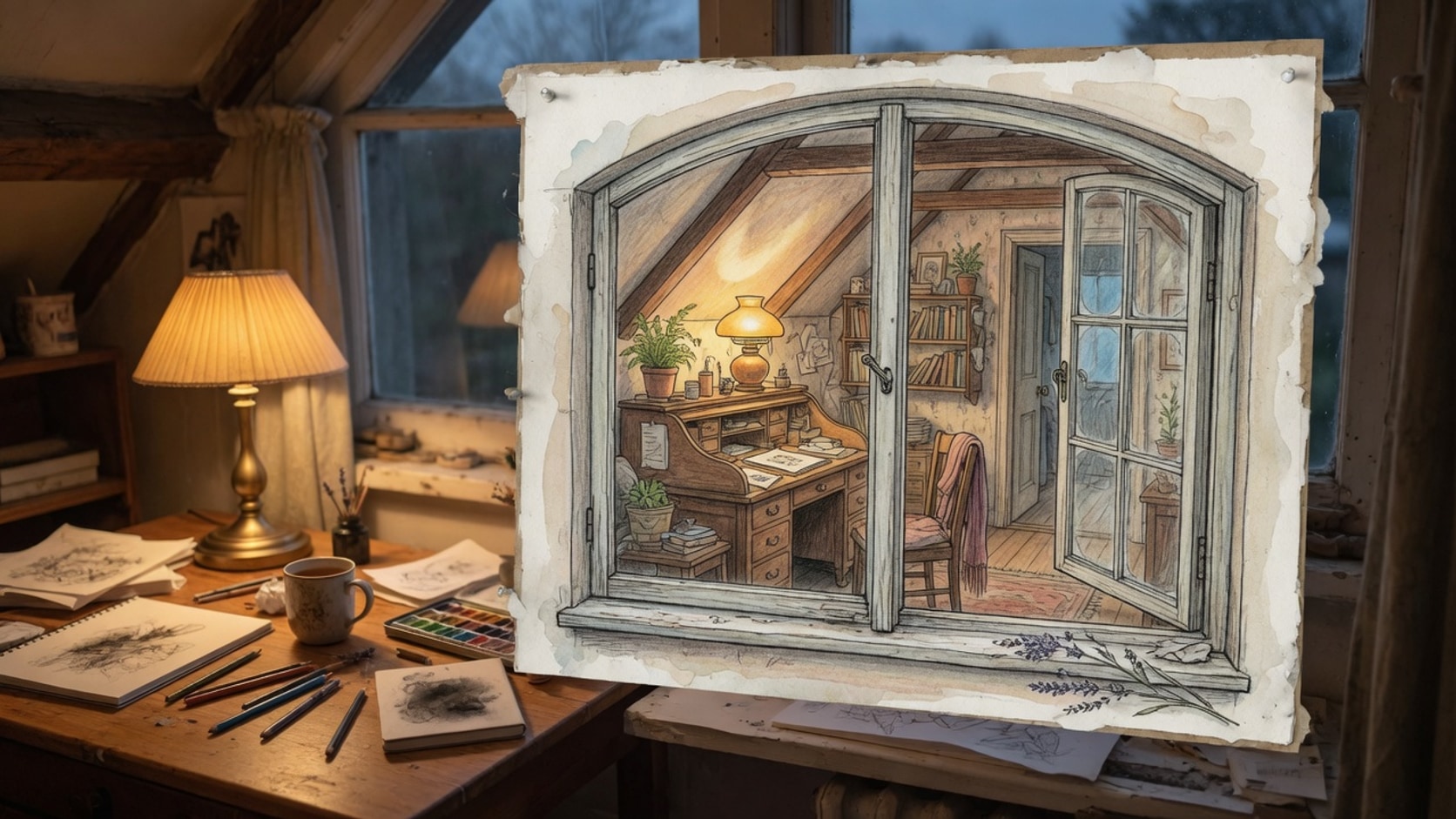
Concept illustration: zooming turns a detail into a room you can move.
A short game that does not want a guide
Gorogoa is short beside a live-service game and long beside a single comic. Outside accounts often describe an evening or two. This review will not turn those accounts into your expected playtime. What the listing does promise is a complete illustrated work. Replaying it is less about a score and more about seeing a join you remember.
Use a guide only after you have been still for a while. A picture puzzle spoils in one sentence, because the solution is an arrangement you cannot unsee. If you do look something up, stop at the next frame and return to your own eyes. The game has no leaderboard to protect.
It suits players who like drawings, quiet logic, and the feeling of a physical page. It suits them less if they want action, dialogue, or a puzzle that explains its own rules in text. The Everyone rating matches the tone of the listing. The difficulty is attention.
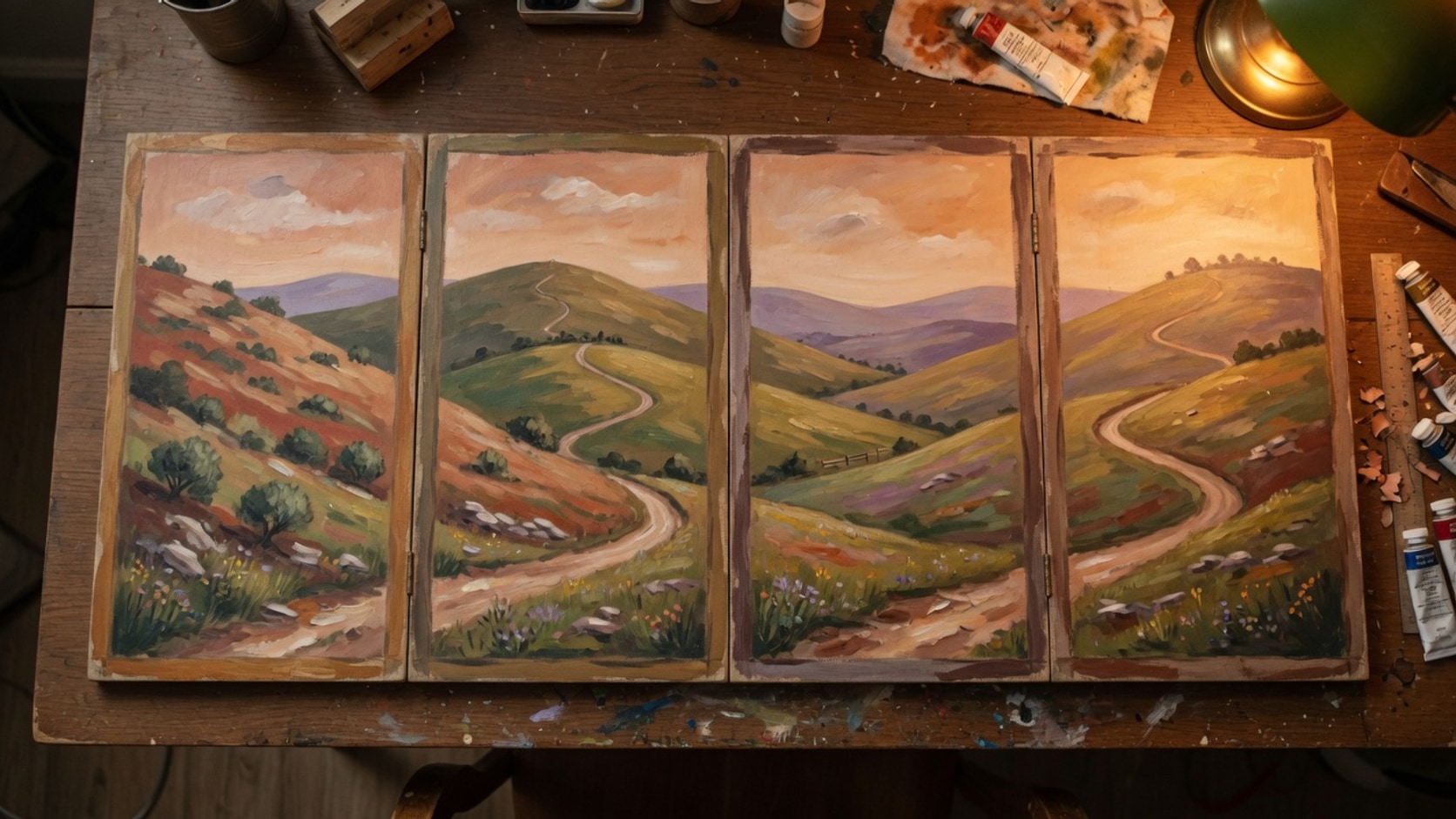
Concept illustration: the solved state looks like a single picture again.
Verdict
Gorogoa on Android is a premium panel puzzle whose rules are the edges and the depths of Jason Roberts's drawings. Annapurna sells it as a complete game, recently listed at $4.99, without an ad business attached in public store-data pages. Learn the frame, join with intention, and zoom as seriously as you slide. Players who enjoy that kind of looking will find one of the clearest arguments for paying once on a phone.


.webp?x-oss-process=image/resize,w_80/format,webp)