
Papa’s Freezeria HD Review 2026: A Classic Time-Management Game That Still Gets Busy

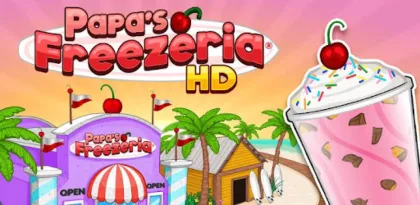

Papa’s Freezeria HD starts with a wonderfully simple fantasy: spend the summer working at a beachfront ice-cream shop on Calypso Island. The first few customers make the job look almost relaxing. Pour soft serve, add a mixable and syrup, run the cup through a blender, finish it with whipped cream and toppings, then collect a tip. Before long, however, new orders are arriving while two machines are still blending and another sundae is waiting for a careful spiral of sauce.
That transformation—from holiday job to controlled chaos—is the reason this older restaurant game remains compelling. Flipline Studios has made many larger and more elaborate “Papa’s” games, but Freezeria has one of the clearest production lines in the series. Every order passes through the same four stations, every mistake is visible, and every improvement in timing feels earned.
In 2026, the HD edition is best understood as a polished tablet version of a classic rather than a modern live-service cooking game. Google Play lists it at $2.99 in the US, with in-app purchases, more than 50,000 downloads, and a June 25, 2026 update for newer Android versions. It does not have the holiday calendars, daily specials, or sprawling systems found in later Papa Louie titles. What it offers instead is a focused, colorful management loop with 80 customers, more than 50 ingredients, 100 achievements, and no energy timer standing between the player and the next workday.

Four Stations, One Excellent Loop
Each day is divided across the Order, Build, Mix, and Top stations. At the Order Station, a customer explains exactly what belongs in the sundae. The ticket then follows the cup through the rest of the kitchen. At the Build Station, the player chooses a cup size, pours the correct amount of ice cream, and adds mixables and syrup. The Mix Station introduces time: the sundae must blend to the level marked on the ticket. Finally, the Top Station asks for whipped cream, sauces, sprinkles, and placed toppings in the proper order.
None of those tasks is difficult alone. The challenge comes from overlap. A customer may be waiting to order while a blender nears its target and a finished cup is losing points because it has not been served. Moving between stations becomes a small scheduling puzzle. Do you stop pouring to greet the newcomer, or finish the current cup first? Is there enough time to start a second order before the first blender needs attention?
The scoring system makes those decisions legible. Customers grade waiting, building, mixing, and topping separately, so a disappointing score usually points to a specific failure. A perfect-looking sundae cannot completely erase a long wait, and fast service does not excuse the wrong ingredients. This gives the game more texture than a simple race against a clock.
The best improvement strategy is to establish a consistent sequence rather than move frantically. Take two orders, build both cups, stagger their blending times, then top and serve them in arrival order. Later customer waves will disrupt that rhythm, but the basic routine creates space to recover.
The Build and Top Stations Reward a Steady Hand
Freezeria’s tactile appeal comes from making the food instead of selecting it from a menu. Pouring too little ice cream leaves the cup below its fill line; holding too long overshoots it. Toppings should be distributed evenly, and large ingredients need to be placed in the pattern shown on the ticket. These gestures are simple, yet they make a high score feel more personal than an automatic “cook” button would.
The HD version was designed around tablet touch controls. Its larger interface gives ingredients, tickets, and placement areas room to breathe. On a compatible large screen, dragging toppings and reading several orders feels natural. The same design can be less comfortable on a small phone: a finger may cover the exact spot being targeted, and reaching between interface elements can feel more awkward than in Papa’s Freezeria To Go!, which was redesigned specifically for smaller screens.
That distinction matters when choosing which version to buy. HD is not simply the To Go edition with sharper graphics. The two releases have different interfaces and content counts. Google Play describes HD as the large-screen option, while the To Go listing explicitly recommends that phone-oriented release for small displays. Players mainly using a tablet or Chromebook are the clearest audience for HD.

Mixing Turns Time Into a Resource
The blender is the most important source of tension. Once a cup is running, it becomes a background timer that continues while the player works elsewhere. Serve it too early and the texture is wrong; leave it too long and it becomes overmixed. The game eventually asks the player to manage several cups with different target times while new customers continue to enter.
Shop upgrades can reduce that mental load. Alarms help identify when a cup reaches the correct blend level, and faster equipment shortens parts of the process. These purchases are funded by tips, so cleaner service makes future service easier. It is a satisfying progression loop because the rewards directly address problems encountered during play.
Boosting a blender can also save time, but the tool is not unlimited. It can overheat, which prevents it from becoming a permanent shortcut. The mechanic encourages selective use: boost an urgent cup to restore the serving order, then let the system cool while handling everything else.
This is where Freezeria separates itself from more superficial cooking games. The machines are not just animation between taps. Their schedules interact with the rest of the room, and learning to predict those interactions is the real game.
Customers Give Repetition a Purpose
Papa’s Freezeria HD includes 80 customers, each with a distinct order and visual personality. Repeat visits gradually make those orders familiar. The player begins to recognize a regular before reading the entire ticket, turning customer knowledge into another form of skill.
Good service builds customer status and eventually earns awards. Closers appear near the end of a day and judge mistakes harshly, while the Food Critic can affect the shop’s standing. Their arrival changes the mood: an ordinary service can absorb a slightly uneven topping, but a demanding final customer makes precision important even when several tasks are unfinished.
The cast also supplies much of Flipline’s charm. Characters are exaggerated without being mean-spirited, and the bright island setting keeps stressful sessions cheerful. There is no complex narrative, but the rhythm of unlocking a customer, learning an order, and improving that customer’s status creates a lightweight story of becoming competent at the shop.
Progress unlocks more than 50 ingredients, expanding the visual variety of tickets without changing the basic rules. New syrups, candies, whipped creams, and toppings force the player to scan carefully, especially when similar colors sit near each other. The difficulty grows through a broader vocabulary rather than constant new tutorials.

Customization Is Modest but Rewarding
Players can choose Penny or Alberto, or create a custom worker with adjustable appearance options. Clothing can be bought or earned, and the lobby can be decorated with furniture and posters. Trim and countertop colors provide additional control over the shop’s look.
Decorating is not purely cosmetic. Thoughtful furniture placement can improve how patiently customers wait, connecting the front-of-house design to service performance. The system is simpler than the decoration layers in later Papa’s releases, yet it gives tips and minigame prizes value beyond kitchen upgrades.
Foodini’s minigames appear after workdays and award clothing or furniture. Games such as Saucy Shot and Mitch’s Mess provide a short break from assembling sundaes. They are light diversions rather than a second campaign, but that is appropriate: the daily kitchen loop remains the focus, and the prizes feed back into customization.
There are 100 achievements covering recipes, station performance, minigames, customer awards, and other milestones. Completionists therefore have plenty to pursue after the basic progression becomes familiar. The achievements also function as quiet suggestions, encouraging players to explore systems they might otherwise ignore.
An Older Game Without Modern Clutter
Freezeria HD shows its age in both appealing and limiting ways. On the positive side, it is unusually direct. There is no seasonal battle pass, mandatory account, competitive leaderboard ladder, or energy meter. The player buys the game, opens the shop, and can continue through as many days as desired. Google Play’s data-safety section currently states that the developer declares no data collected and no data shared with third parties.
The tradeoff is that later series features are absent. There are no rotating holidays, special recipes, coupons, stickers, delivery systems, or elaborate customer outfits. Anyone arriving from a newer title such as Papa’s Cluckeria To Go! may find the progression comparatively narrow. The island theme stays consistent instead of changing across a calendar.
That consistency is not automatically a flaw. Freezeria’s limited scope gives it clarity. Ingredients are introduced at a manageable pace, and nearly every reward supports the same central task. It is easier to learn, easier to return to after a break, and less burdened by feature maintenance. The game feels like a complete premium release from an earlier mobile era.

Compatibility and Buying Advice in 2026
The June 2026 Google Play update says the game was updated for newer Android versions, an important sign for a title whose design reaches back many years. Even so, prospective buyers should check the current Play Store compatibility indicator on the exact device they plan to use. Screen shape, Android version, input behavior, and store availability can vary by hardware and region.
Google Play currently labels the game for phones, tablets, and Chromebooks, but the product description continues to emphasize tablets. That is the practical guidance to follow. A large Android tablet offers the intended balance of spacious controls and portability. Chromebook support may also suit the layout, though touch input is preferable to treating every station like a mouse-driven desktop interface.
The listed US price is $2.99, but regional pricing can differ. Google Play also marks the title as containing in-app purchases. Buyers should review the live store page for the exact price and purchase options in their account. The core campaign, however, is presented as a paid game rather than a timer-driven free-to-play service.
For small-screen play, compare Papa’s Freezeria To Go! before purchasing. For the most modern and content-rich version of the concept on a computer, Papa’s Freezeria Deluxe is another distinct release. HD is the right choice when the desired experience is the classic tablet interface and its specific set of customers, achievements, decorations, and minigames.
Tips for a Smoother First Week
A few habits make the early difficulty curve much friendlier:
- Keep tickets in serving order unless a clear reason justifies changing it.
- Stagger blender starts so multiple alarms do not demand attention simultaneously.
- Greet a new customer before beginning a long topping sequence when possible.
- Learn the visual position of common ingredients instead of searching from scratch.
- Spend early tips on upgrades that prevent missed blend times or reduce repeated delays.
- Use the scoring breakdown to diagnose one weak station at a time.
- Favor accuracy over frantic movement; remaking or badly scoring an order costs more than a brief pause.
The game becomes easier when the player looks one step ahead. While taking an order, remember which blender will finish next. While topping, decide which cup will enter the mixer afterward. This habit turns several independent timers into one planned production line.

Verdict
Papa’s Freezeria HD remains one of the cleanest expressions of Flipline’s restaurant formula. Its four-station workflow is immediately understandable, but the overlapping orders, blender schedules, demanding closers, and precision topping keep it engaging. Upgrades solve practical problems, customers turn repetition into recognition, and customization gives successful service a visible reward.
Its limitations are equally clear. This is a tablet-first game with an older content structure. It lacks the holidays, specials, and layered progression of later Papa’s titles, and small-phone players may prefer the purpose-built To Go edition. The presentation is charming rather than technically modern.
For players who want a premium time-management game without energy systems or live-service pressure, those limits may be part of the appeal. The shop opens, the orders arrive, and the challenge comes from doing the work better—not from waiting for a meter to refill. More than a decade after the original idea, that loop still has excellent flavor.
Rating: 8.3/10
Reviewed using Android product information available in October 2026. Price, compatibility, ratings, and purchase options may vary by device and region.


