

Constitution of Pakistan کے بارے میں
Constitution of Pakistan
The Constitution of the Islamic Republic of Pakistan, often referred to as the 1973 Constitution, stands as the supreme legal document governing the nation. This foundational text was crafted under the leadership of Prime Minister Zulfiqar Ali Bhutto, in collaboration with various opposition parties within the country. After receiving approval from both houses of the Parliament on April 10, 1973, it was formally ratified on August 14th of the same year. As a cornerstone for Pakistan's governance, this constitution aims to provide a comprehensive framework for the nation’s laws, political ethos, and institutional architecture.
The Constitution delineates the boundaries and identity of the state, defining the roles of its people, fundamental rights, and the structure of its judicial system. It establishes the framework for the operation of the federal judiciary, led by the Supreme Court, which serves as the highest court of appeal. Additionally, it outlines the separation of powers among the three main branches of government: the legislative, executive, and judiciary. The bicameral legislature consists of two houses, while the executive arm is headed by the Prime Minister, who acts as the chief executive officer. The President of Pakistan, serving as a ceremonial head of state, represents the unity and integrity of the nation.
Chapter one through chapter three of the Constitution detail the operational guidelines for these branches, emphasizing checks and balances essential for democratic governance. The document further specifies that Pakistan operates under a federal parliamentary republic system, with Islam designated as the official state religion. A significant aspect of the Constitution is its integration of Islamic principles into the legal framework, ensuring adherence to the teachings found in the Quran and the Hadith (Sunnah).
Prior to the adoption of the 1973 Constitution, Pakistan had two earlier constitutions. The first constitution was established in 1956, marking the transition from dominion status to full sovereignty. However, it was abrogated after only two years when martial law was imposed. Subsequently, the second constitution was promulgated in 1962 during General Ayub Khan's presidency, reflecting his vision of modernization and centralization. Despite these predecessors, the 1973 Constitution remains pivotal due to its emphasis on democratic principles, human rights, and the balance of power between different governmental entities.
In summary, the Constitution of Pakistan not only lays down the legal groundwork but also embodies the aspirations and values of the Pakistani populace. It seeks to foster a just society where justice, equality, and freedom are upheld, aligning closely with Islamic values while addressing contemporary challenges faced by the nation. Through continuous adaptation and reinterpretation, the Constitution continues to play a crucial role in shaping Pakistan's destiny.
Gameplay
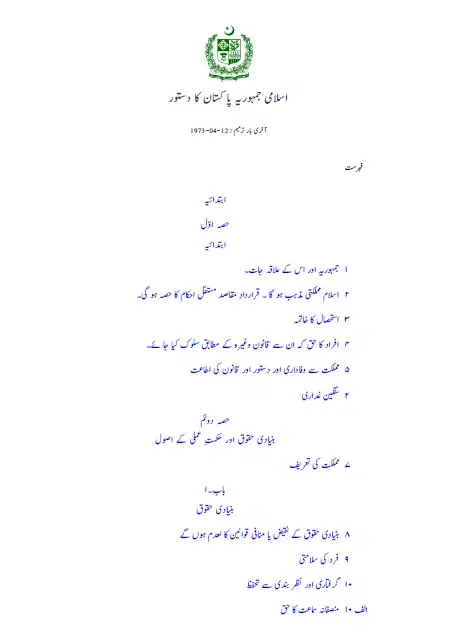
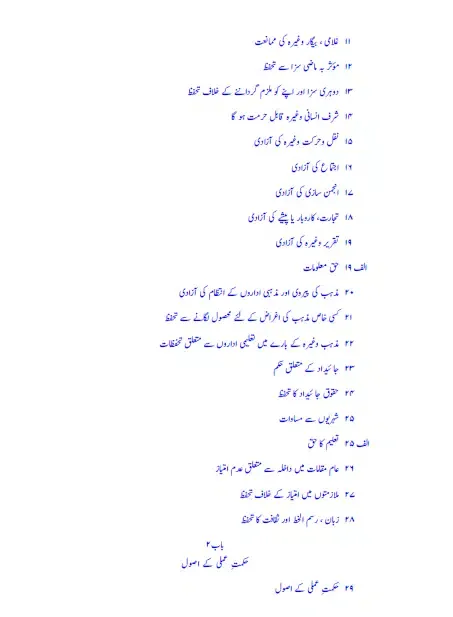
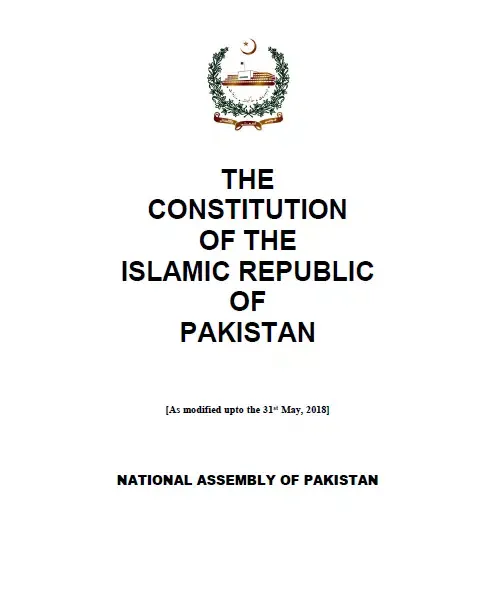
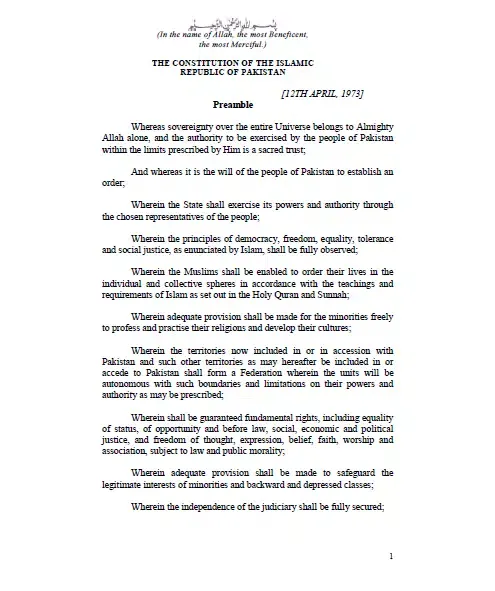
Constitution of Pakistan سکرین شاٹس
Constitution of Pakistan کی پرانی ورژنز





ایڈیٹر کی تجویز


Constitution of Pakistan جیسی ایپس
 Constitution of Pakistan
 Indian Constitution MCQ Quiz
 Constitution du Niger
 The 1992 Constitution of Ghana
 Kite Flying India VS Pakistan
 Pakistan Tourism App
 National Anthem of Pakistan
 Electric Bill Pakistan
 Urdu News - Pakistan News
 Honda Atlas Cars Pakistan Ltd
 India Vs Pakistan Kite Fly
 Pakistan National Anthem
appsworld77 کی طرف سے ایپس
Constitution of Pakistan FAQ
میں Constitution of Pakistan کو PGYER APK HUB سے کیسے ڈاؤن لوڈ کروں؟
کیا PGYER APK HUB پر Constitution of Pakistan کو مفت ڈاؤن لوڈ کرنے کی اجازت ہے؟
کیا مجھے PGYER APK HUB سے Constitution of Pakistan ڈاؤن لوڈ کرنے کے لئے اکاؤنٹ کی ضرورت ہے؟
میں PGYER APK HUB پر Constitution of Pakistan کے ساتھ کوئی مسئلہ کیسے رپورٹ کرسکتا ہوں؟
صارف کی تبصرے
+ جائزہ
سب سے مقبول


