
Slay the Spire on Android Review: Build the Deck You Need, Not the Deck You Imagined



An exciting card can make you picture a perfect future turn. Slay the Spire asks whether your current deck can survive long enough to reach it. That tension gives its card choices weight: you are assembling a way through the attempt in front of you, with incomplete information about the rewards still to come.
Mega Crit describes a single-player deckbuilder with changing routes, encounters and collectible relics. This review concerns the original Slay the Spire on Android, not its sequel or the tabletop adaptation. It evaluates documented systems and audience fit without claiming a personal win streak or mobile performance test. Official press kit and Android listing.
Judge a card by the problem it solves
The official description emphasizes choosing cards that work together. That sounds straightforward until the available reward supports a plan you have not yet built. A card can have an appealing effect and still make little sense among the cards you already hold. Official Android listing.
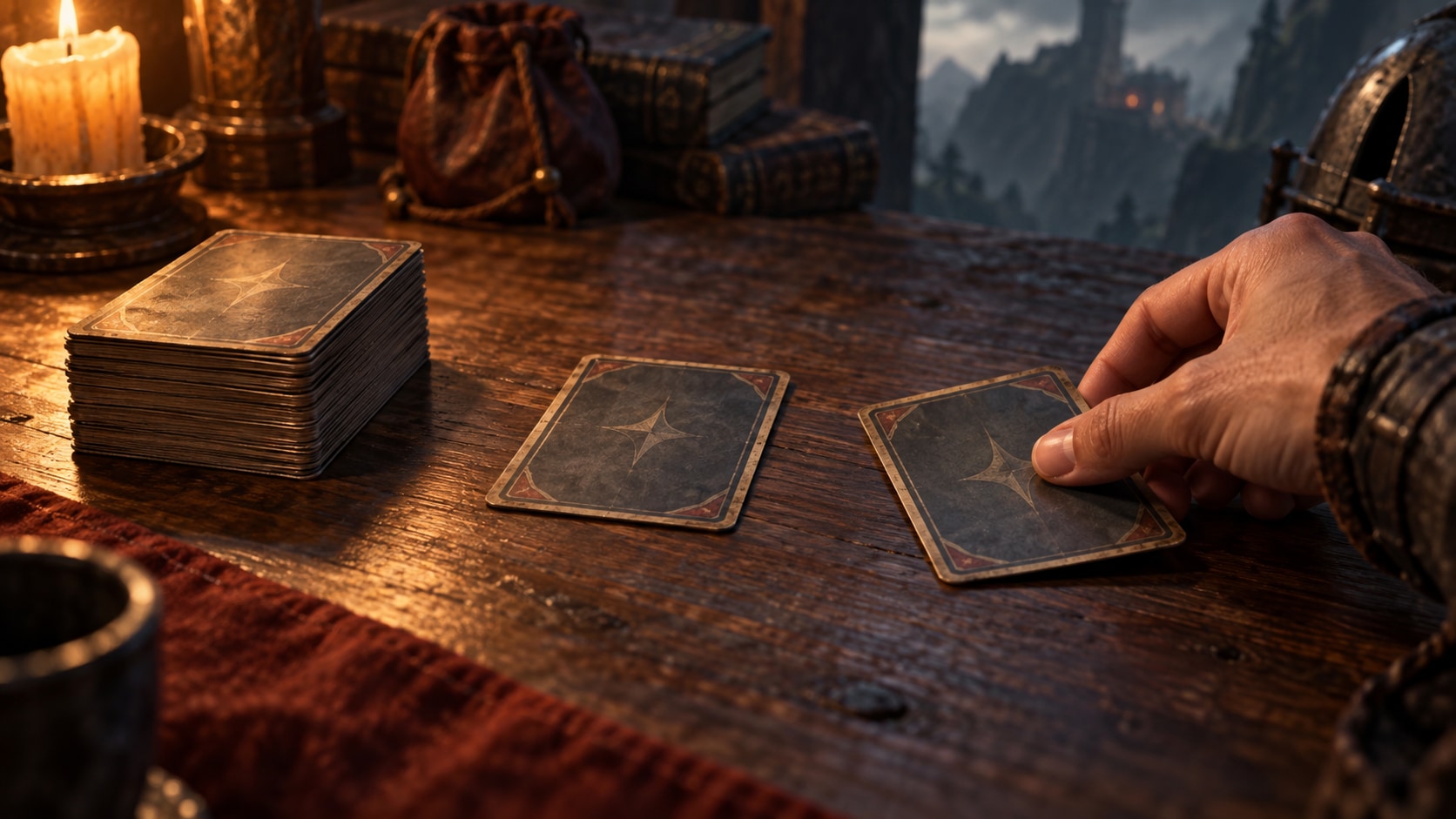
The face-down cards illustrate selective deck building. They do not reproduce game cards or describe their effects.
A useful way to evaluate a choice is to name an immediate weakness. You may struggle to finish fights before taking too much damage, or find that your plan relies on drawing a particular combination. The next card should improve something you can describe. Taking it because it might become impressive after several other discoveries is a more speculative decision.
Speculation is part of the fun. The caution is about noticing how much of your plan depends on things you do not have. An imagined combination can be so persuasive that you overlook a less glamorous option that helps right now. You need enough present strength to earn the chance to develop the future plan.
This makes deck building interesting beyond the surface pleasure of collecting cards. You are choosing the shape of later decisions. Adding an option changes what you might draw, and the value of that option depends on the rest of the collection. Readers who enjoy these relationships have a stronger reason to try the game than readers who only want to acquire rare-looking rewards.
A route is a sequence of commitments
The Android listing describes an ever-changing climb with safer and riskier paths, different enemies and bosses. A route therefore belongs to the strategy rather than serving as a menu between fights. Your current position affects which risks make sense. Official Android listing.

The fork visualizes risk and recovery. It is not an exact route map or encounter sequence.
Consider the next few decisions together. An attractive reward is harder to justify if reaching it leaves you unable to handle what follows. A conservative choice may preserve resources while delaying the improvement you need. There is no universal preference for safety or aggression; either can be unhelpful when it ignores the state of the attempt.
Health is useful to think of as part of that route plan. Preserving it has value because it leaves options open. Spending some of it can also be rational if the expected gain helps the rest of the climb. The difficult part is distinguishing a calculated risk from a hopeful guess after you have become attached to a reward.
You can learn from that distinction without solving the whole game in advance. After choosing a path, remember the reason you chose it. Later, compare the result with that reason. A loss does not prove the risk was foolish, but it can reveal that you misunderstood what your deck was ready to face.
Relics reward reading the conditions
The official store description explains that relics can strengthen a deck through interactions and may involve costs beyond spending gold. Mega Crit's press kit also confirms distinct character card sets, so a useful interaction in one context need not translate into the same advice everywhere. Android listing and official press kit.

The bronze ornament is editorial fantasy artwork, not a specific in-game relic.
Read an effect for the behavior it encourages. If it helps when you perform an action your deck already favors, the fit may be easy to understand. If it requires changing how you play, consider the cost of that change. An impressive reward can ask for more adaptation than the current attempt can afford.
This is where memorized rankings can disappoint a beginner. A recommendation may assume a character, a supporting collection or a level of knowledge that you do not share. Ask for the conditions under which the item is useful. Understanding those conditions lets you recognize a good opportunity in a new situation, which is more valuable than remembering its place on a list.
It also gives the game a satisfying form of replay value. You can encounter a familiar option and evaluate it differently because the rest of the attempt has changed. The new interest comes from context, rather than requiring the developer to provide an unfamiliar object after every fight.
Mobile convenience depends on readable decisions
The reviewed Android listing presents a paid purchase. Check the current price, compatibility and access options on your own account. Do not use the package's historical publisher name as a substitute for reading the current listing, and do not assume ownership on another platform transfers. Official Android listing.
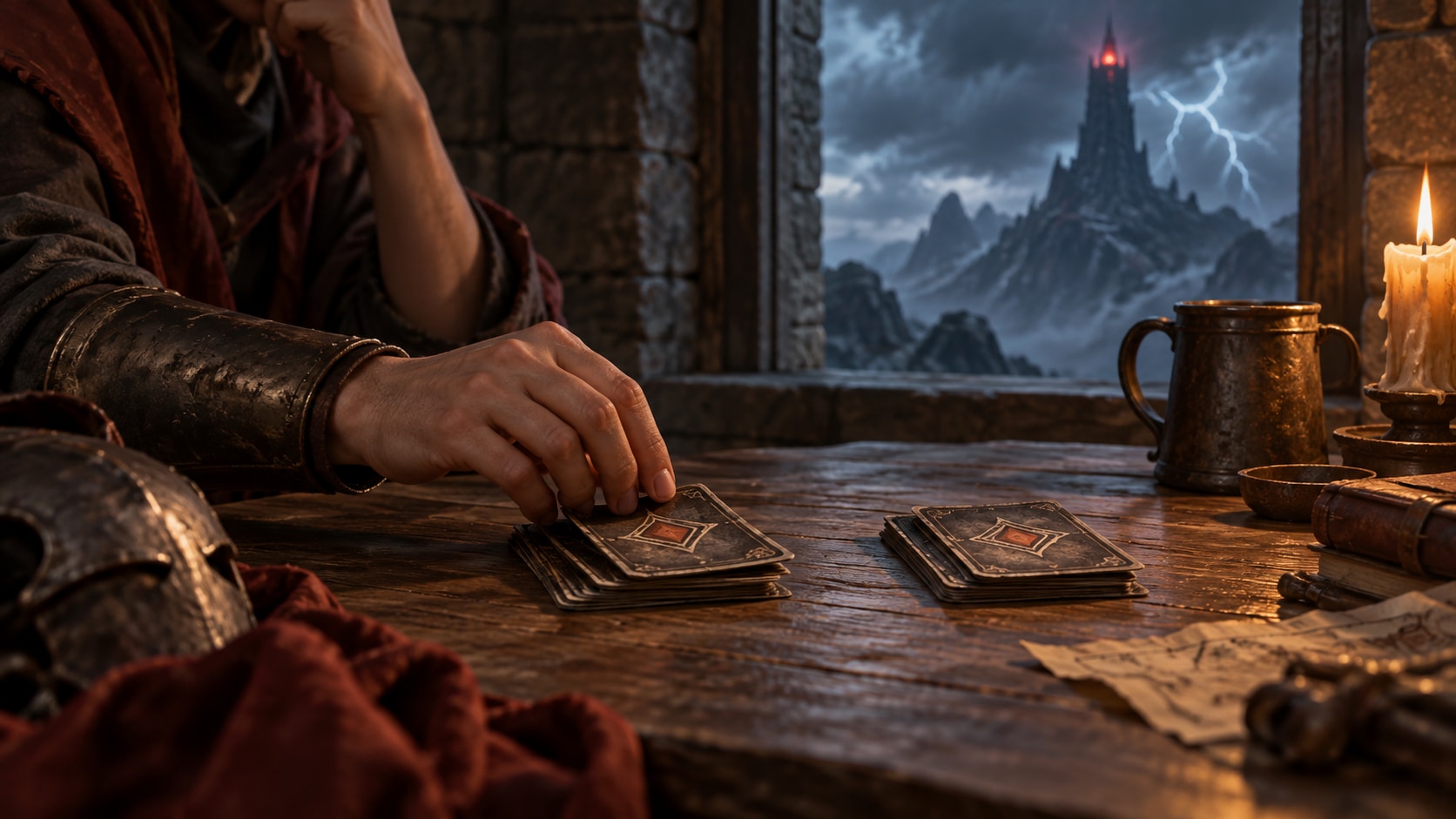
Rearranging the cards represents reviewing decisions; the scene is not a game-over screen.
On a phone, the important practical check is whether you can read card effects and distinguish selecting something from committing to it. A strategy game can tolerate time spent thinking, but confusion about the interface adds no useful difficulty. This review has not tested touch behavior or save reliability on a device, so it makes no blanket claim about either.
For a first attempt, favor understanding over speed. Read the effect you intend to use and compare the result with what you expected. If the result surprises you, investigate the rule involved before treating the outcome as bad luck. That habit gives you a foundation for later experimentation without requiring an extensive guide before you begin.
Verdict
Slay the Spire is a strong candidate for players who enjoy conditional decisions: a card is useful because of the deck around it, and a route is sensible because of the state of the run. The attraction lies in assembling a workable answer from what appears, then revising that answer as circumstances change.
It is less suitable if you want a permanent collection that grows without setbacks or if reading and comparing effects feels like administration. Check the mobile interface for comfort, keep this original edition distinct from the sequel, and give your first runs room to teach you something. An imperfect deck can still be worth understanding.
Editorial disclosure: Official sources checked on September 26, 2026. No personal win rate, purchase or device test is claimed. AI-generated realistic illustrations interpret deck building and risk; they are not official art, game cards or screenshots.


.webp?x-oss-process=image/resize,w_80/format,webp)