
Among Us Review: Social Deduction Still Works Best With the Right Group



Among Us turns a short list of chores into an argument about trust. Crewmates repair a ship and watch one another for suspicious movement. Impostors fake those same routines, sabotage key systems, and remove players without exposing themselves. A round can end through task completion, a successful vote, or an Impostor takeover.
The rules take minutes to learn. The quality of a match depends on communication, lobby settings, and the people involved. A good group creates tension from small details. A poor lobby can produce random accusations, early exits, or chat that drowns out the deduction.
Tasks Give Every Player a Plausible Story
Crewmates move through the map and complete short tasks while monitoring routes, bodies, cameras, and emergency events. Each task creates a reason to visit a room. Those routes also create evidence. You may see one player leave Electrical before a body appears, or notice that someone claims a task the current settings do not include.
Impostors use the same map to build an alibi. They can pretend to work, trigger sabotage, use vents where permitted, and isolate targets. Strong Impostor play relies on timing and believable movement. Constant aggression attracts attention and leaves fewer explanations for where you have been.
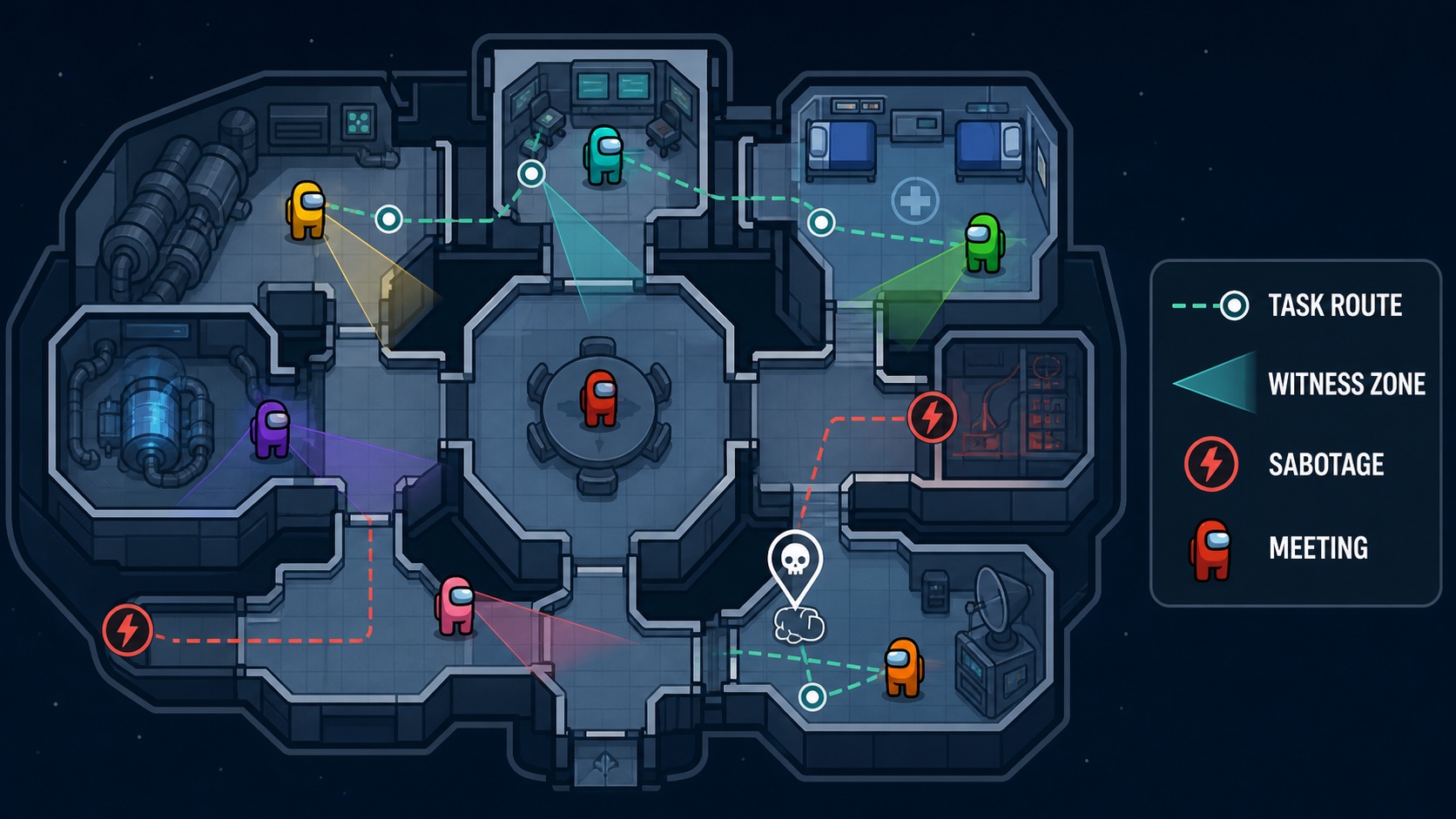
Editorial illustration: movement and task routes create the evidence that drives each meeting.
Meetings Turn Memory Into a Team Skill
A report or emergency meeting stops movement and opens discussion. Players compare locations, timing, task progress, and behavior before voting. The game does not verify most claims for you. Each person must remember what they saw and decide which details deserve trust.
Short statements help. Name the room, the direction of travel, and the last person you saw. Long speeches consume the discussion timer and make useful facts hard to isolate. Crewmates also need restraint. Voting on weak evidence can hand the match to the Impostors, while refusing to vote can waste a strong lead.
Voice chat with known friends produces a different game from public text chat. Friends can agree on rules that limit talking outside meetings. Public lobbies need stricter moderation and patience because players may use different languages or play styles.
Lobby Settings Change the Balance
Among Us supports online play and local Wi-Fi, with the current APKHub description listing groups of 4 to 15 players. The host controls many variables, including movement speed, discussion time, voting time, vision, task counts, role chances, and kill settings.
A balanced lobby gives both sides room to make decisions. Excessive speed removes the value of routes. Very short meetings reward loud guesses. Too few tasks make Crewmate progress trivial, while too many can turn a round into repetitive maintenance.
New groups should start close to the recommended defaults and change one variable after a few rounds. Keep a note of settings that produced close games. Random changes make it hard to tell whether the group improved or the rules tilted the result.
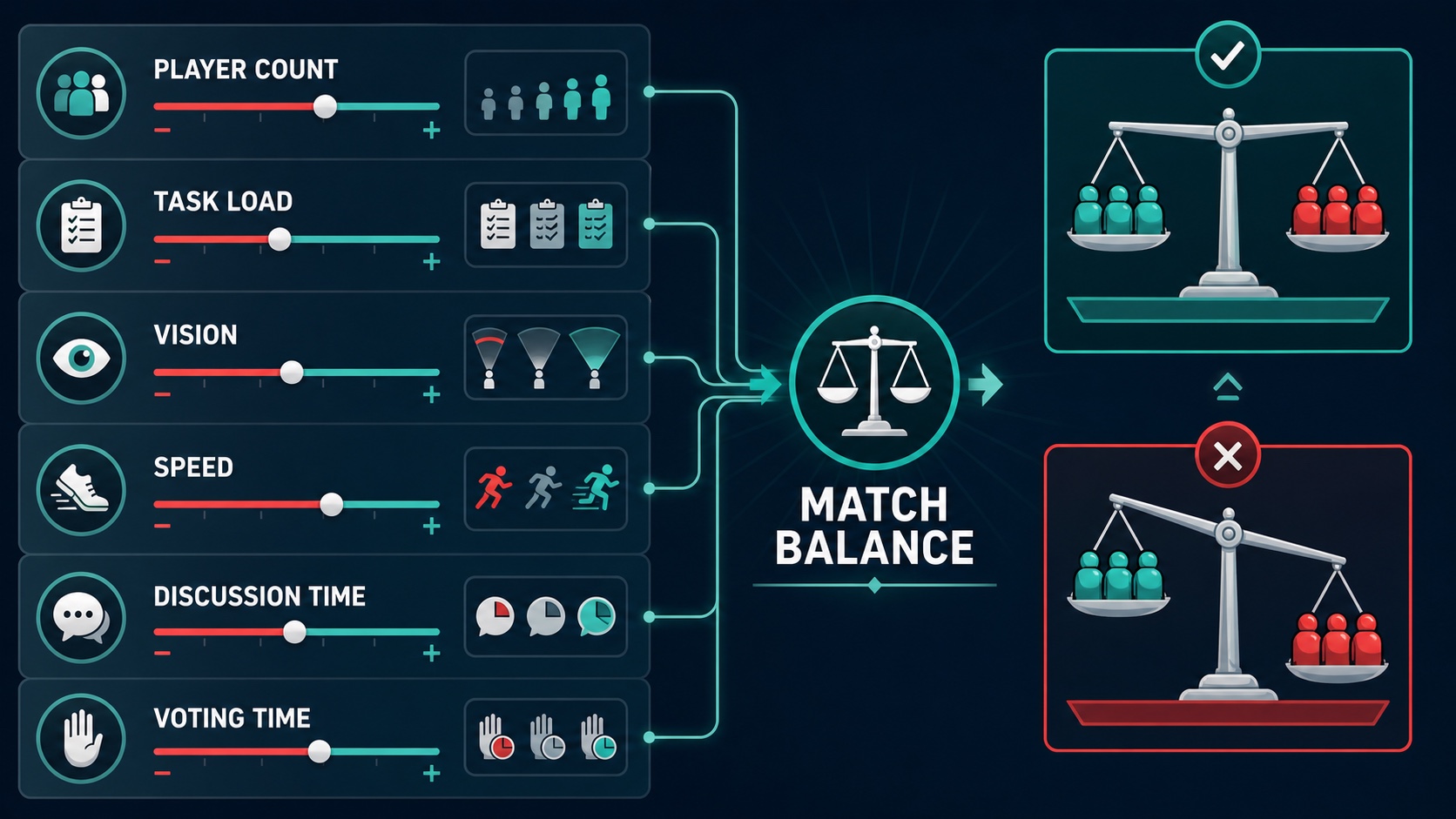
Editorial illustration: a fair match depends on settings that preserve information and counterplay.
Roles Add Variety and More Sources of Confusion
Modern Among Us includes role options that can give players abilities beyond the original Crewmate and Impostor loop. These roles add new claims and counterclaims, but they also increase the amount a newcomer must understand.
Introduce roles in small steps. A group that cannot track ordinary routes will gain little from several overlapping powers. Experienced players can use roles to break predictable strategies and create new evidence, provided the host explains the setup before the round begins.
Cosmetics and progression give players goals outside a single match. They do not replace the social game. The strongest reason to return remains the possibility that the same map and group will produce a different argument next time.
Public Play Needs Clear Safety Habits
Public lobbies expose players to strangers through names and chat. Use the available reporting, blocking, and lobby controls. Leave a room that contains harassment, explicit language, or requests for personal contact details. Younger players should use account and communication settings chosen with a parent or guardian.
In-app purchases may include cosmetic content or related bundles. Set purchase authentication on shared devices and read the item description before paying. Cosmetic urgency should not decide a household budget.
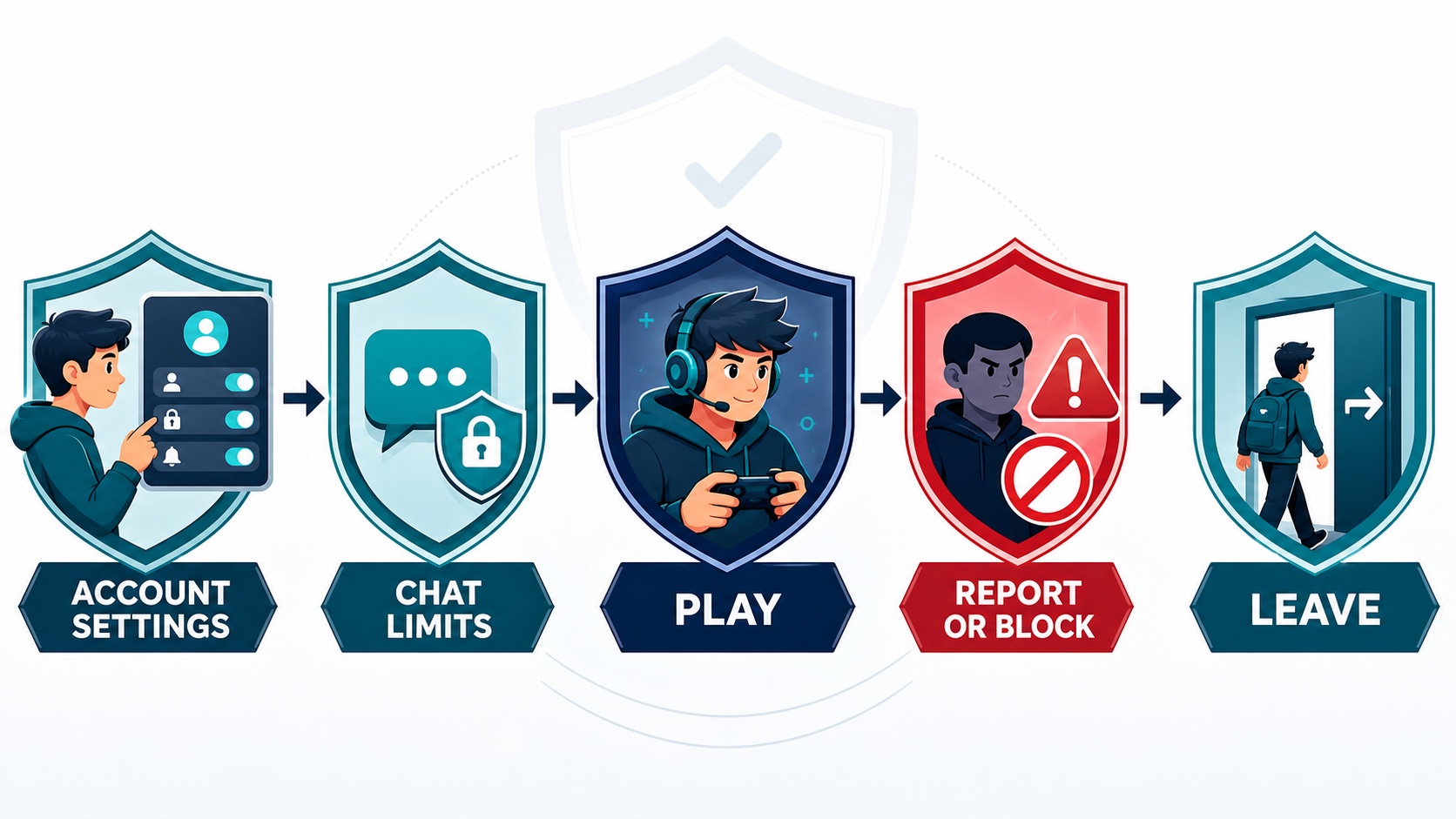
Editorial illustration: public play works better when players know how to limit contact and exit a bad lobby.
Strengths and Weaknesses
Strengths
- Clear rules support short sessions and mixed-skill groups.
- Maps turn movement and timing into usable social evidence.
- Host settings let a regular group tune the balance.
- Impostor and Crewmate play reward different forms of attention.
Weaknesses
- Public lobby quality varies with moderation and player behavior.
- Early elimination can leave a player waiting for the next round.
- Poor settings can erase the deduction layer.
- Extra roles raise the learning burden for new groups.
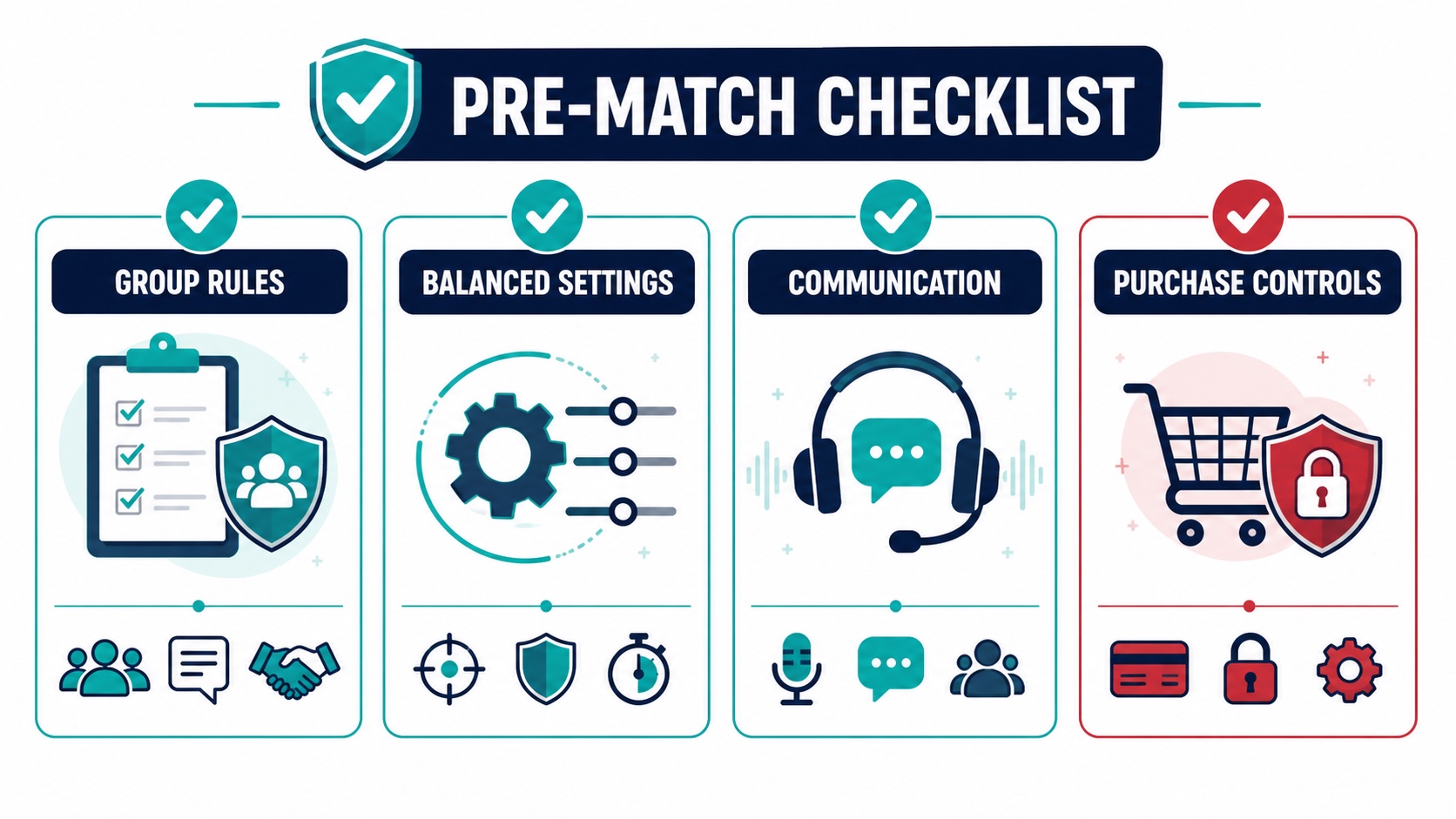
Editorial illustration: a short setup check prevents many weak or unsafe matches.
Final Verdict
Among Us remains a strong social game because it turns ordinary movement into evidence and asks players to defend a story under pressure. Its simple controls leave room for memory, deception, and group judgment.
The Android version suits players who want short multiplayer sessions and have friends or a moderated community. Solo players can use public matchmaking, but they should expect uneven communication. Start with restrained lobby settings, add roles after the group understands the base loop, and treat chat controls as part of setup.


.webp?x-oss-process=image/resize,w_80/format,webp)