
Free Fire Review: Fast Mobile Battle Royale Without the MAX Hardware Emphasis


Free Fire is the standard edition of Garena's mobile battle royale, built around short sessions, character abilities, four-player squads, and a large live-service ecosystem. The official store page describes 50-player matches that can produce a survivor in about 10 minutes, plus a fast 4v4 Clash Squad mode.
APKHub currently labels this package “Free Fire: The Chaos,” but that name belongs to an older event. As of August 5, 2026, Google Play uses “Free Fire: 9th Anniversary,” even though Garena's official announcement describes the anniversary campaign as running from June 24 to July 26. The durable product name is simply Free Fire.
That naming history illustrates the central trade-off. Free Fire changes frequently enough that event subtitles, lobby designs, and temporary mechanics can become obsolete within weeks. The underlying value comes from the fast battle-royale loop and the standard client's focus on broad mobile accessibility, not from whatever campaign name is attached today.
A Full Survival Arc in About Ten Minutes
The official structure places 50 players on an island and compresses landing, looting, movement, and the final encounter into a short session. This changes how much time each decision deserves.
A busy landing area creates immediate access to action and resources, but a failed opening ends a large share of the match. A quiet edge offers more time to prepare while increasing the risk of a difficult safe-zone route. Players must decide how much uncertainty they want before touching the ground.
Once landed, a practical loadout is more valuable than a perfect one that takes too long to assemble. Equipment, healing, and a safe route should be secured before searching every corner. As the playable area contracts, information and position begin to outweigh additional loot.
The short format is excellent for phones because a complete competitive story can fit into a break. It can also encourage repeated impulsive sessions. A player who intends to stop after one match should use a timer rather than relying on willpower after a narrow loss.
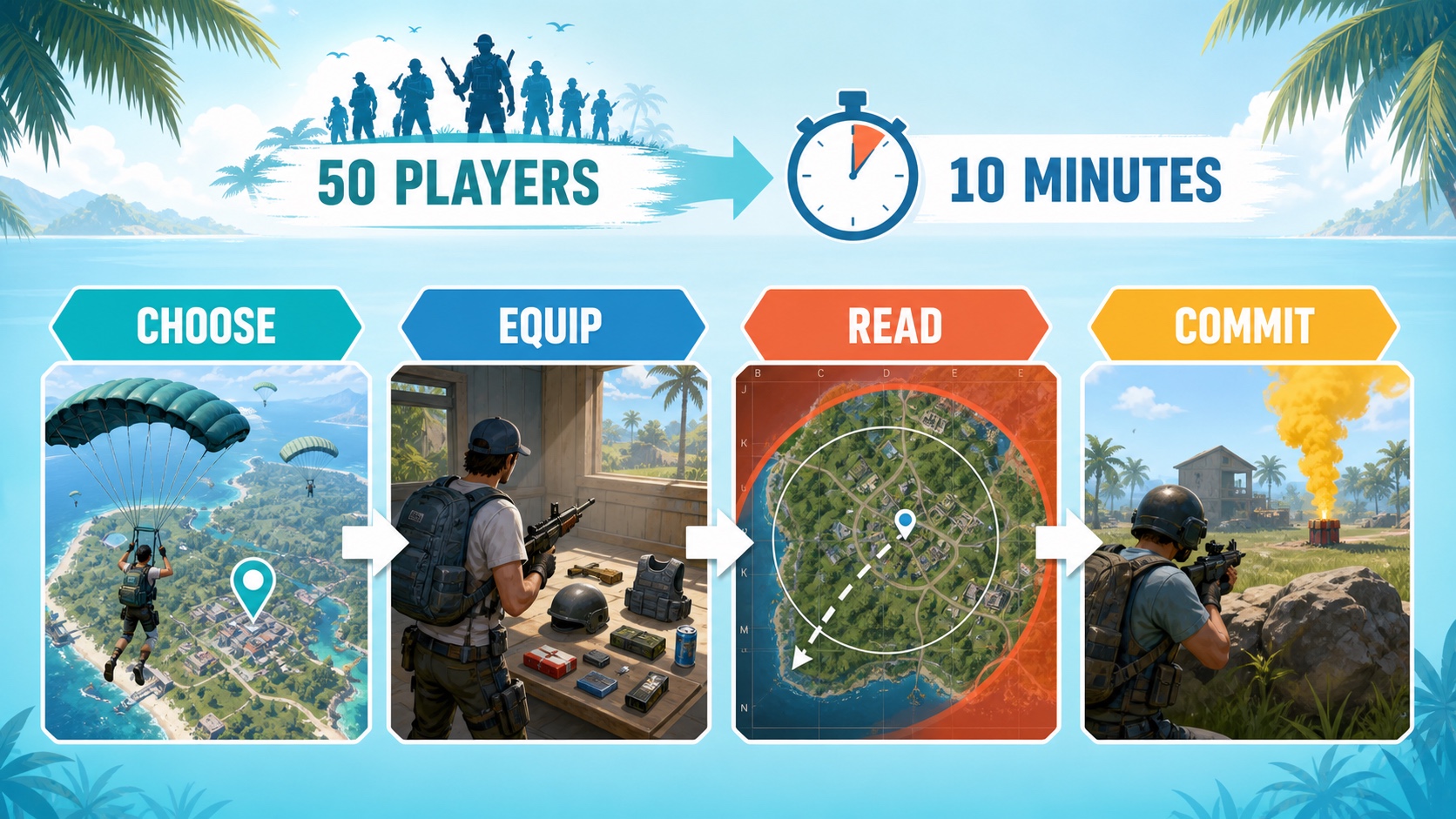
Editorial illustration: Free Fire turns landing, equipping, reading the zone, and committing to the final fight into a compact loop.
Standard Free Fire and MAX Serve Different Devices
Garena describes standard Free Fire as accessible across a broad range of smartphones. Free Fire MAX is positioned separately around Ultra HD resolution, richer effects, upgraded map and lobby visuals, and improved animation presentation.
That does not make the standard client a trial version. It is the more practical option when storage, graphics power, memory, heat, or battery life matters more than visual density. A stable frame rate on standard Free Fire can provide a better competitive experience than an ambitious MAX preset that repeatedly slows down.
The MAX client may be preferable on a capable phone with a strong display and sufficient free space. Firelink technology connects shared modes across the ecosystem, so the decision can be based on the device rather than social pressure.
There is no universal winner. Test sustained performance across several matches, not only the lobby. Watch temperature and battery use, and leave additional space for resource files and updates.
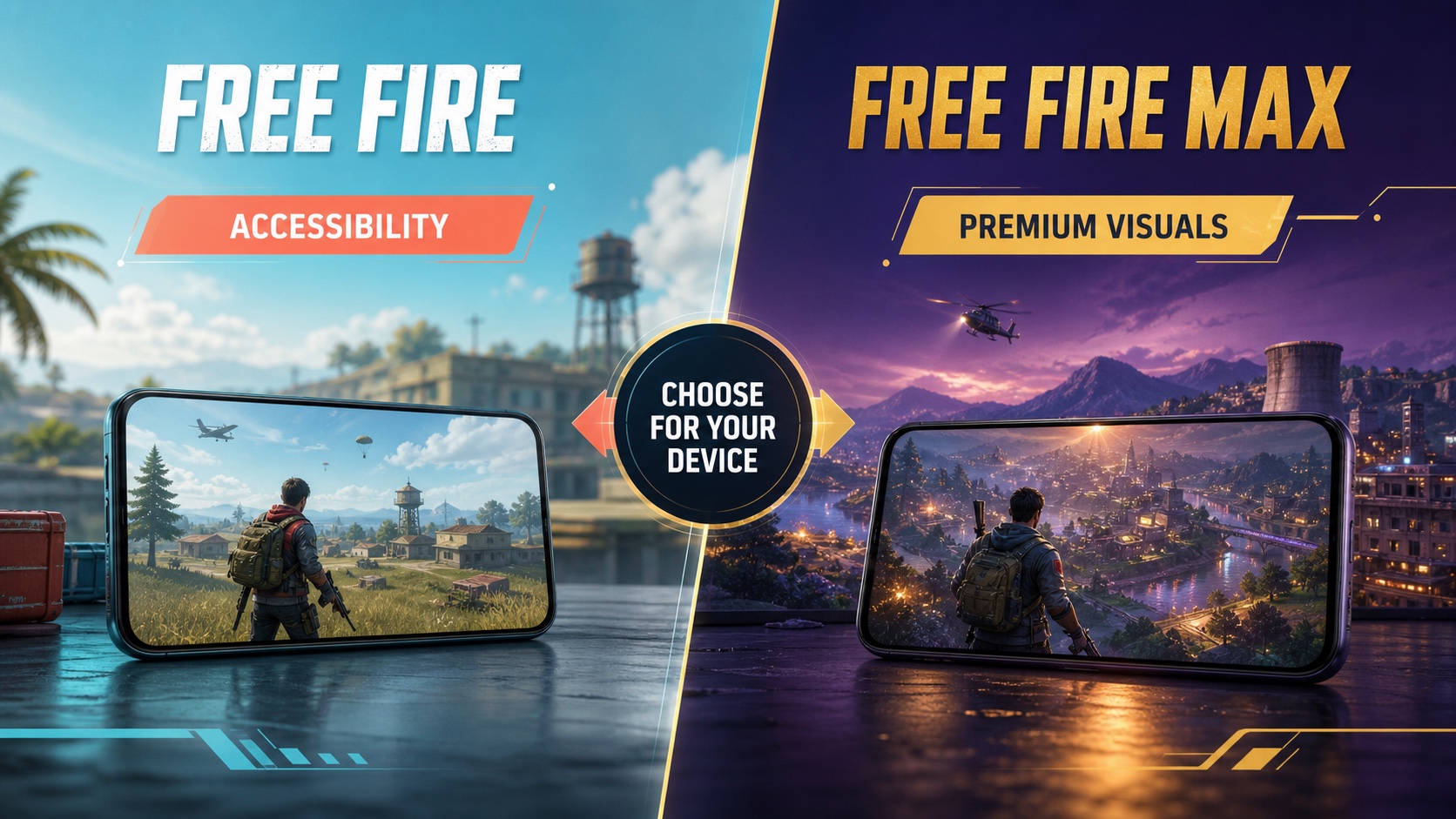
Editorial illustration: the standard and MAX clients prioritize different device needs while serving the same broader community.
Character Skills Add Strategy and Balance Questions
Free Fire characters have abilities that influence how a player moves, recovers, gathers information, or supports a team. This makes squad composition more expressive than selecting only a weapon and landing point.
A character skill should be understood as one part of a tactical plan. Position still matters. A poorly timed ability cannot make exposed terrain safe, and an expensive cosmetic cannot replace communication. Weapon choice must match the expected range and the player's control.
Live balance is important because abilities can interact in unexpected ways. A skill that dominates one version may be adjusted later. Build habits around reading cooldowns, recognizing effects, and adapting rather than treating one character as a permanent solution.
The current store page still displays Skill Boost and Weapon Awakening systems from the 9th Anniversary. Garena's published event window ended on July 26, while Google Play updated the listing on August 4 and retained the anniversary copy. Because those signals conflict, users should not assume every temporary system remains available. Check the current in-game notices before following an event guide.
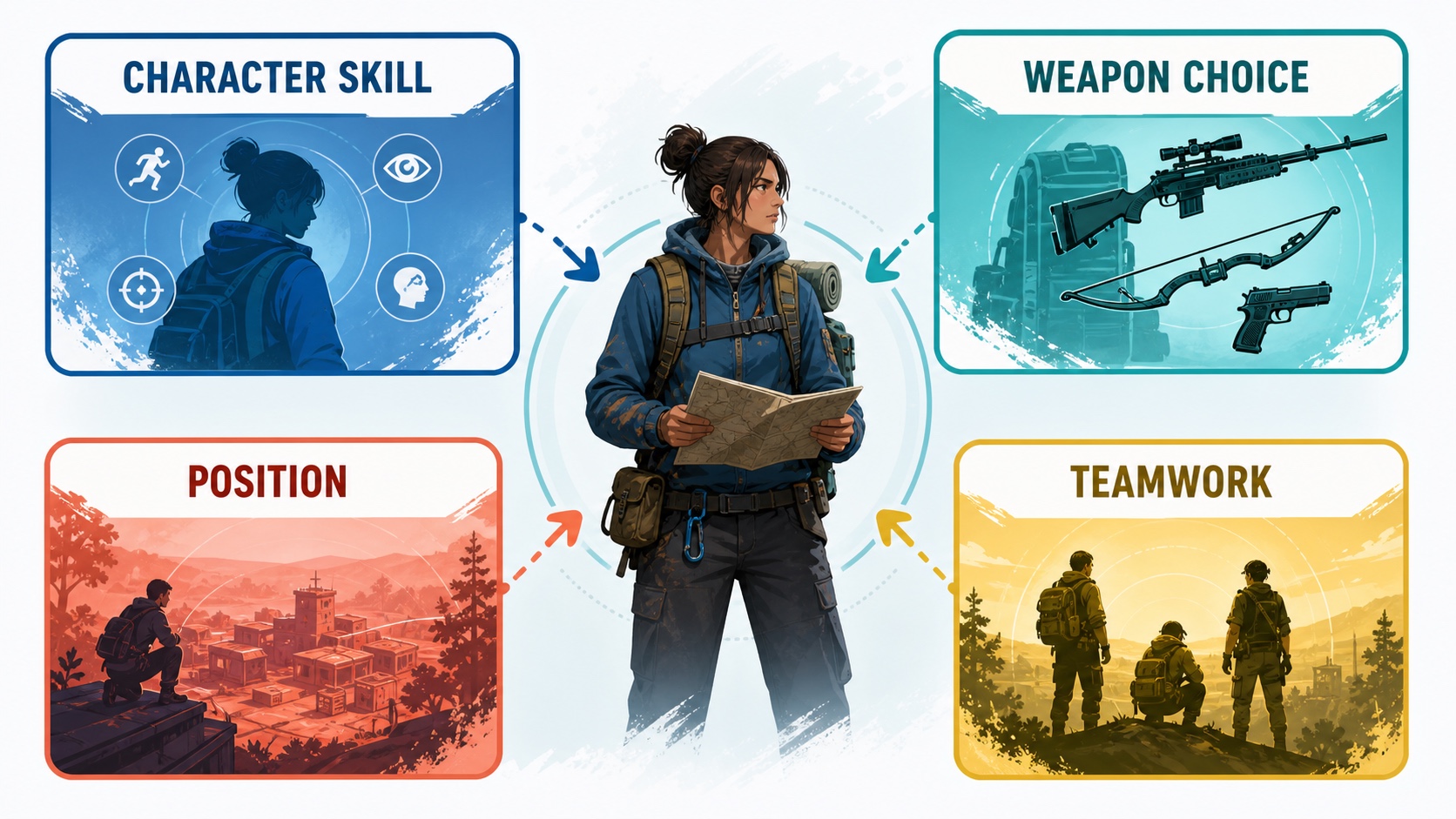
Editorial illustration: character abilities influence a match, but they operate alongside equipment, position, and coordinated decisions.
Squad Play and Clash Squad Use Different Time Scales
Battle-royale squads can include up to four players with in-game voice chat. A useful callout names an opponent, route, resource, or timing. Continuous chatter can hide audio cues and make a short decision harder.
Public voice chat also carries privacy and moderation risks. Do not share a full name, school, address, phone number, verification code, or account recovery information. Mute and report harassment instead of escalating it.
Clash Squad compresses teamwork into a fast 4v4 contest with an equipment economy. Repeated rounds make it a practical place to learn cover, coordinated pressure, and adaptation. Battle royale asks broader questions about landing and rotation; Clash Squad concentrates on execution inside a smaller problem.
Using both modes produces a more complete practice cycle. Clash Squad reveals mechanical habits quickly, while battle royale tests whether the squad can create a favorable encounter.
Event Names Are Not Product Names
“The Chaos” once described a specific update with unusual incidents, a revised NexTerra area, and the character Ryden. That copy remains on APKHub, but it should not define a current review.
The official Google Play title later changed to “Free Fire: 9th Anniversary,” and it still uses that name as of August 5, 2026. Garena dated the announced celebration from June 24 through July 26, so the storefront title alone cannot prove that every anniversary feature is still active.
Readers should identify the app by package, developer, and current official page. For Android, this package is com.dts.freefireth. Availability can differ by region, so a direct page may not open in every country even when the package exists elsewhere.
Avoid modified packages promising unlimited diamonds, unlocked skins, or protection from bans. A familiar event title does not make an unofficial file authentic.
Purchases and Data Use Need Current Checks
Google Play discloses in-app purchases. Event stores and character cosmetics can create urgency, especially when rewards are time-limited. Set a budget before entering the store, verify what is guaranteed, and protect purchases with authentication on shared devices.
The current data-safety declaration says no data is shared with third parties, while the app may collect personal information, financial information, and five other categories. It says data is encrypted in transit and deletion can be requested.
These are developer-provided declarations and may vary by version, region, and account use. They are not an independent privacy audit. Review the current page and privacy policy rather than relying on an old article.
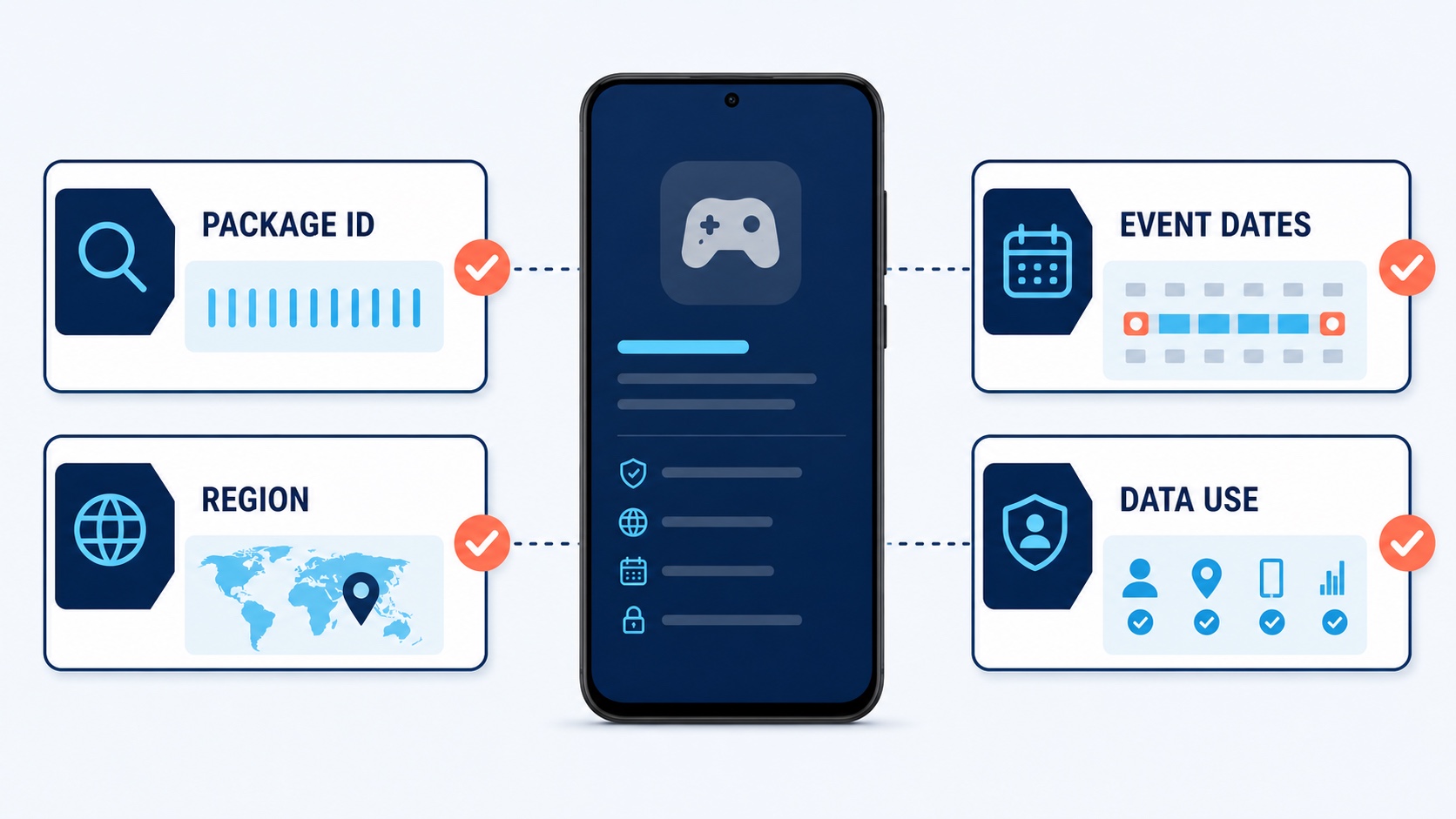
Editorial illustration: frequently changing event subtitles make package identity, regional availability, dates, and permissions the reliable checks.
What Free Fire Does Well
- The 10-minute, 50-player structure fits complete matches into mobile sessions.
- The standard client emphasizes practical access over maximum visual effects.
- Character skills add tactical variety and squad roles.
- Four-player voice squads support coordinated play.
- Clash Squad provides repeated 4v4 practice with a distinct economy.
- Frequent updates keep the ecosystem active and changing.
Where It Can Frustrate
- Event subtitles and temporary mechanics make old guides age quickly.
- Character balance can shift between updates.
- In-app purchases and time-limited rewards can create spending pressure.
- Voice chat exposes players to unwanted interactions.
- Regional availability varies, even for the same package ID.
- Fast matches can make it easy to play longer than intended.
Who Should Try It?
Standard Free Fire is best for players who want a short battle royale on a phone that may not benefit from MAX's premium graphics. It also suits groups that enjoy character abilities and a choice between open-map survival and compact 4v4 rounds.
Free Fire MAX may be preferable for users with capable hardware who prioritize presentation. Neither version fits someone seeking an offline fixed-rule shooter or a game without live events and optional purchases.
Final Verdict
Free Fire's durable strength is efficiency. It delivers a complete 50-player survival arc quickly, adds character skills and squad communication, and offers Clash Squad when players want repeated close combat. The standard client remains relevant because not every phone needs or benefits from the MAX visual layer.
Its changing event identity requires care. “The Chaos” is old, while the Google Play title and Garena's published anniversary window currently point in different directions. Judge the app by its package, official developer, live store page, in-game notices, and performance on your device—not by an event subtitle alone.


.webp?x-oss-process=image/resize,w_80/format,webp)