
MONOPOLY GO! Review: A Social Dice Game Built Around Events and Resource Timing



MONOPOLY GO! borrows the familiar board, property, token, and money language of MONOPOLY, then rebuilds it as a mobile progression game driven by dice rolls, city boards, sticker albums, tournaments, cooperative events, and attacks on other players. It is not a digital replacement for a traditional full-board match.
The current Google Play page was updated on August 10, 2026 and advertises rotating album and crossover content. Because those events expire, a useful review must separate the permanent roll-build-collect loop from temporary reward calendars.
This review uses the current official Android listing as the source for developer-controlled facts. MONOPOLY GO! is listed by Scopely, carries a Everyone rating, shows 100M+ Google Play downloads, and was updated on August 10, 2026. Store labels, event content, pricing, availability, and data disclosures can change by region or version.
Dice Are Energy, Not Just Random Numbers
Every roll spends a limited resource and moves the token toward money, shields, railroads, event tiles, or other outcomes. A multiplier increases both the potential reward and the rate at which dice disappear. The central decision is therefore not where the token moves—the roll controls that—but how aggressively to spend the remaining supply.
Board construction converts cash into landmarks and progression. Holding too much cash invites losses, while spending without an event objective can reduce the value of each upgrade. The best timing depends on active bonuses, available shields, and how close a board is to completion.
- Treat dice as a session budget.
- Use high multipliers only when the reward justifies the burn rate.
- Build when cash exposure is uncomfortable.
- Stop when the next milestone needs more dice than remain.
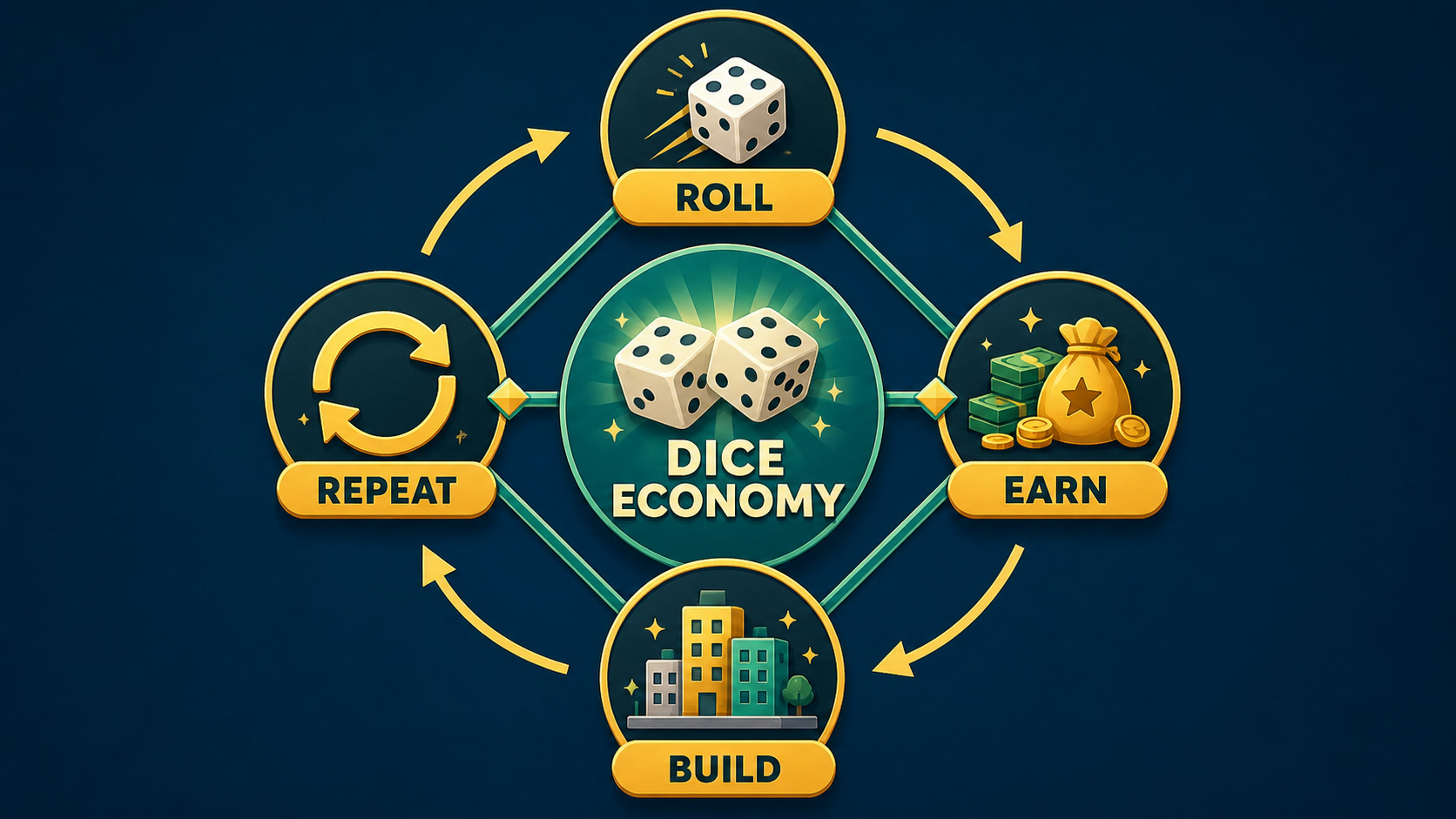
Editorial illustration: the durable core loop is easier to understand when each resource has one purpose.
Events Should Serve a Plan
Tournaments, Prize Drop, sticker albums, and frequent events create overlapping progress bars. Trying to finish all of them is the fastest route to exhausting dice or spending impulsively. Choose one main objective and use secondary rewards only when they align naturally.
Sticker trading can make the game more social, but exchanges should stay inside trusted channels. Do not share account credentials or payment details, and be cautious with unofficial marketplaces that promise rare stickers or cheap currency.
- Pick one event target.
- Check remaining time before spending dice.
- Trade only through trusted communities.
- Ignore a reward track that requires an unrealistic final push.
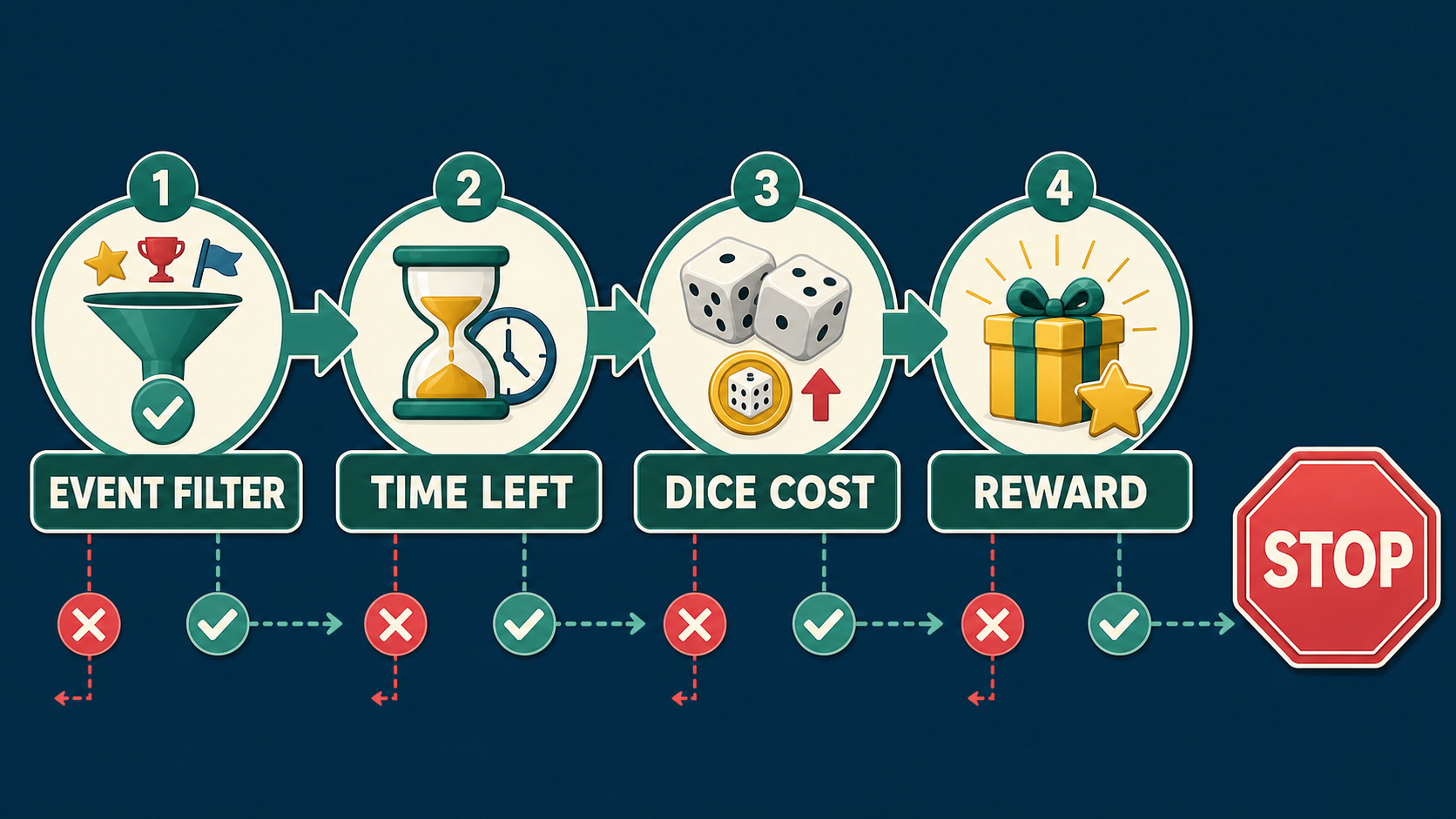
Editorial illustration: a short decision sequence is more reliable than reacting to every reward prompt.
Social Competition Changes the Mood
Bank heists, shutdowns, leaderboards, and cooperative events make friends part of the economy. These systems are playful when expectations are clear, but repeated attacks or missed partner goals can feel personal even though the mechanics are designed around them.
The game requires an internet connection and sells virtual items. Set a fixed entertainment budget before opening an offer, especially when a countdown timer or near-complete album makes the purchase feel uniquely urgent. Similar offers and events will return in different forms.
Important limits to keep visible:
- Roll outcomes reduce direct strategic control.
- Frequent events create urgency.
- Sticker completion depends partly on duplicate luck and trading.
- Social attacks may frustrate players who want cooperative-only play.
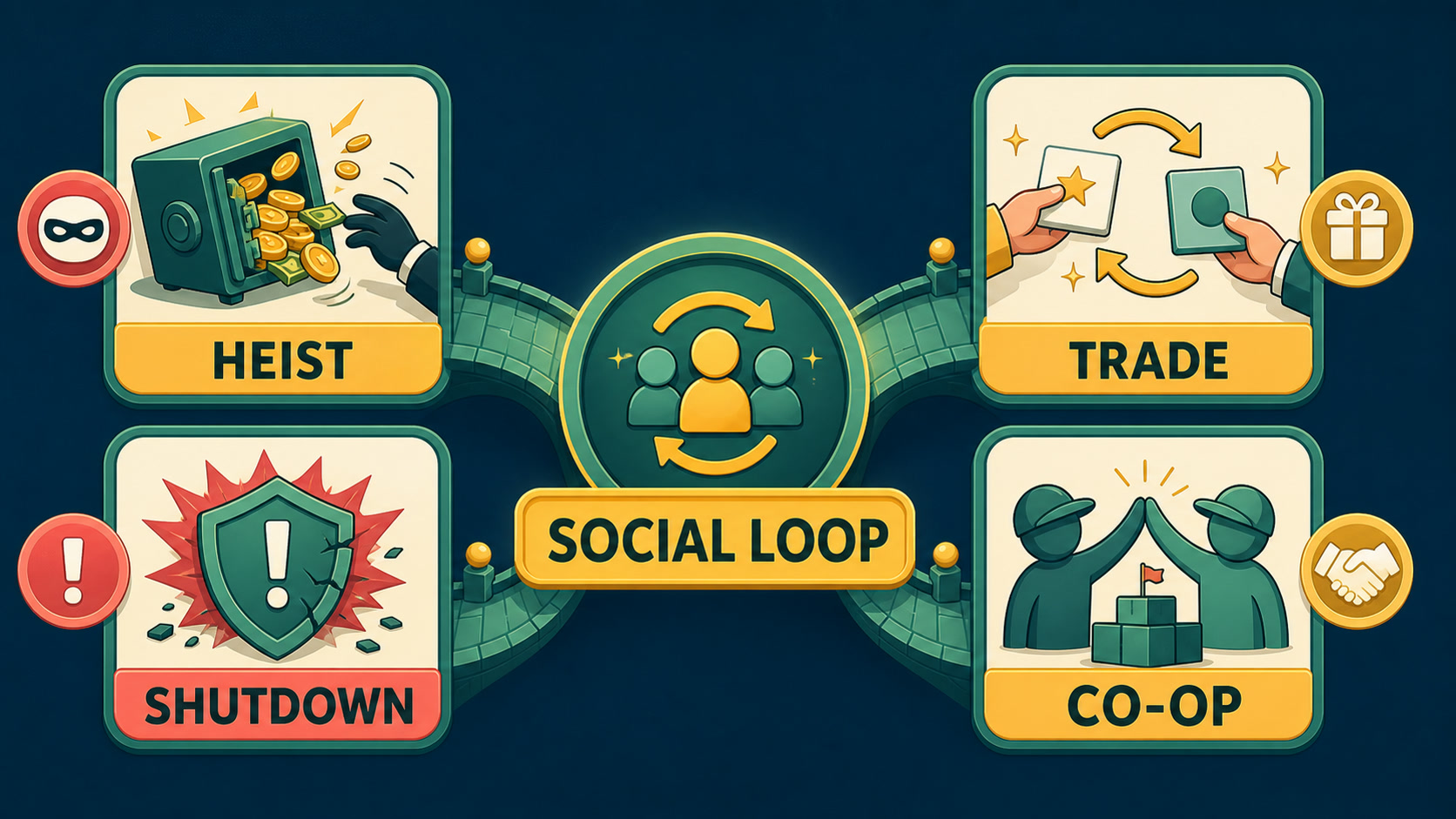
Editorial illustration: permanent progress and temporary pressure should remain separate decisions.
Who Should Play MONOPOLY GO!?
MONOPOLY GO! works for players who enjoy short social sessions, collection goals, and event calendars. It is a poor fit for anyone looking for the complete traditional board-game rules, deterministic strategy, offline play, or minimal monetization pressure.
Before a longer session, confirm storage space, battery condition, network requirements, current permissions, and account settings. MONOPOLY GO! currently includes optional in-app purchases and a required internet connection. On shared devices, enable purchase authentication and review notifications, subscriptions, randomized rewards, chat, or external links whenever those systems are present.
Strengths and Weaknesses
Strengths
- Accessible one-touch play.
- Frequent social and collection goals.
- Polished presentation.
- Short sessions are easy to start.
Weaknesses
- Dice scarcity controls session length.
- Events can feel relentless.
- Purchases are heavily contextualized by urgency.
- The classic board-game strategy is simplified.
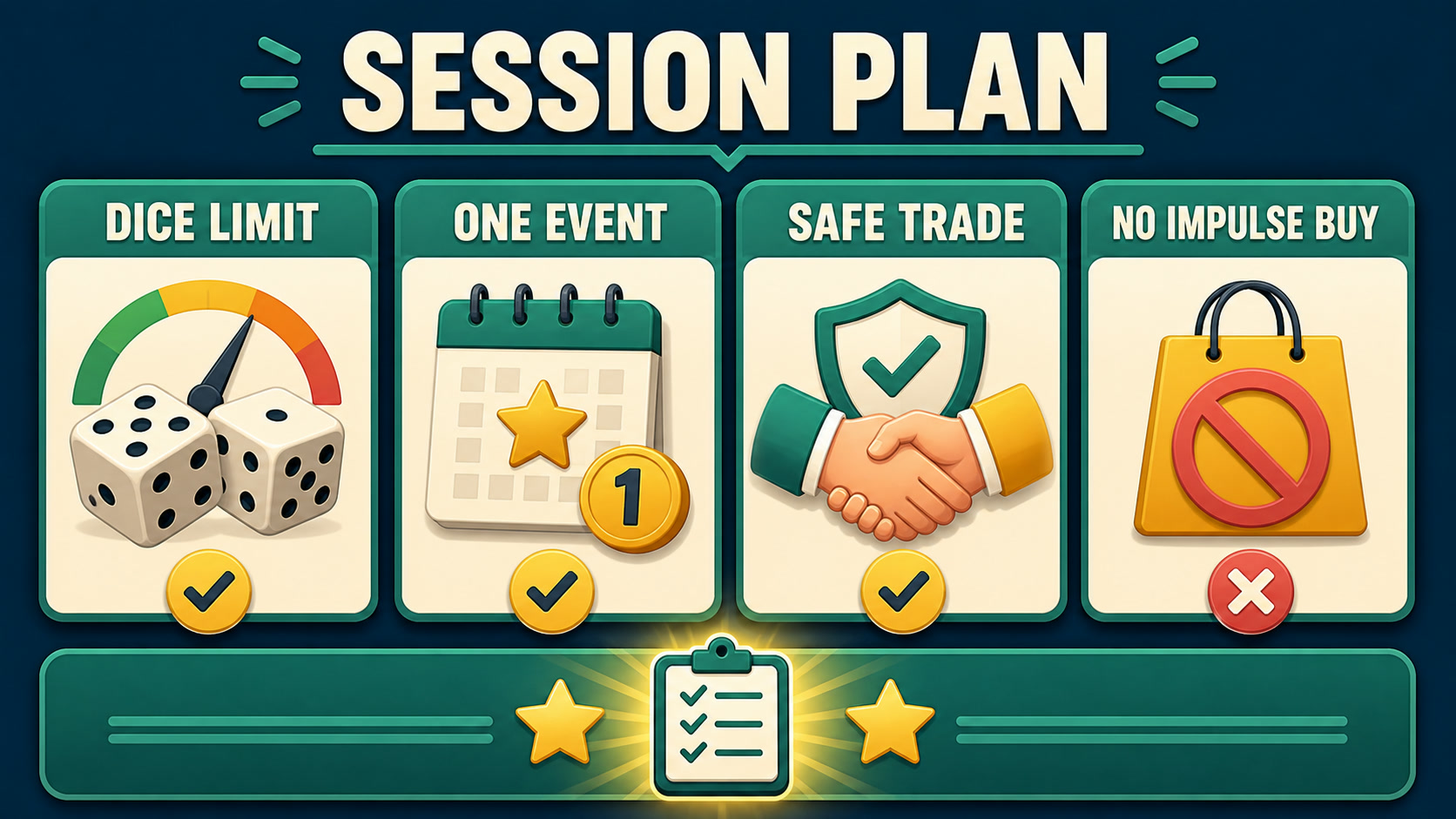
Editorial illustration: package identity, technical conditions, time, and spending boundaries belong in the same checklist.
Installation and Account Safety
Use the exact package identifier associated with this review: com.scopely.monopolygo. Similar titles and old yearly names can point to a different build. Before installing an APK, compare the package, developer identity, requested permissions, and signing information with a trusted previous version or the current official listing.
For MONOPOLY GO!, an APKHub listing is a third-party distribution record, not proof of developer authorization or current Google Play availability. Keep Android updated, avoid modified packages promising unlimited currency, and do not enter account credentials into unofficial companion tools. Back up any locally stored progress before replacing an existing installation.
Final Verdict
MONOPOLY GO! is best approached as a resource-timing and collection game. Decide how many dice and how much money a session may consume, choose one event goal, and leave incomplete reward tracks incomplete when the cost stops being enjoyable.


.webp?x-oss-process=image/resize,w_80/format,webp)