
OneState RP Review: A Busy Online City Needs Player-Made Goals



OneState RP places a large number of players in one shared city and asks them to choose a role. You can pursue lawful work, join the police, drive and race, build a criminal path, or treat the world as a social life simulator. The developer describes maps that can hold more than 500 players, a scale that makes other users part of the environment rather than an occasional opponent.
That population creates stories, conflict, and unpredictability. It also means your experience depends on server rules, player conduct, network conditions, and the role you decide to follow.
A Role Gives the Open World Structure
The map offers roads, jobs, vehicles, businesses, and locations. None of those systems gives every player the same campaign. Progress gains meaning when you choose a role and set a short objective.
A new player can learn the city through legal work before entering police or criminal conflict. Jobs teach routes and menus while reducing the cost of mistakes. After you understand the map, you can invest in a vehicle, join a group, or build a more specialized character.
Players who jump into conflict without learning the controls often lose money and time. Spend the first sessions on movement, driving, map use, and the economy. One reliable income path gives you room to experiment later.
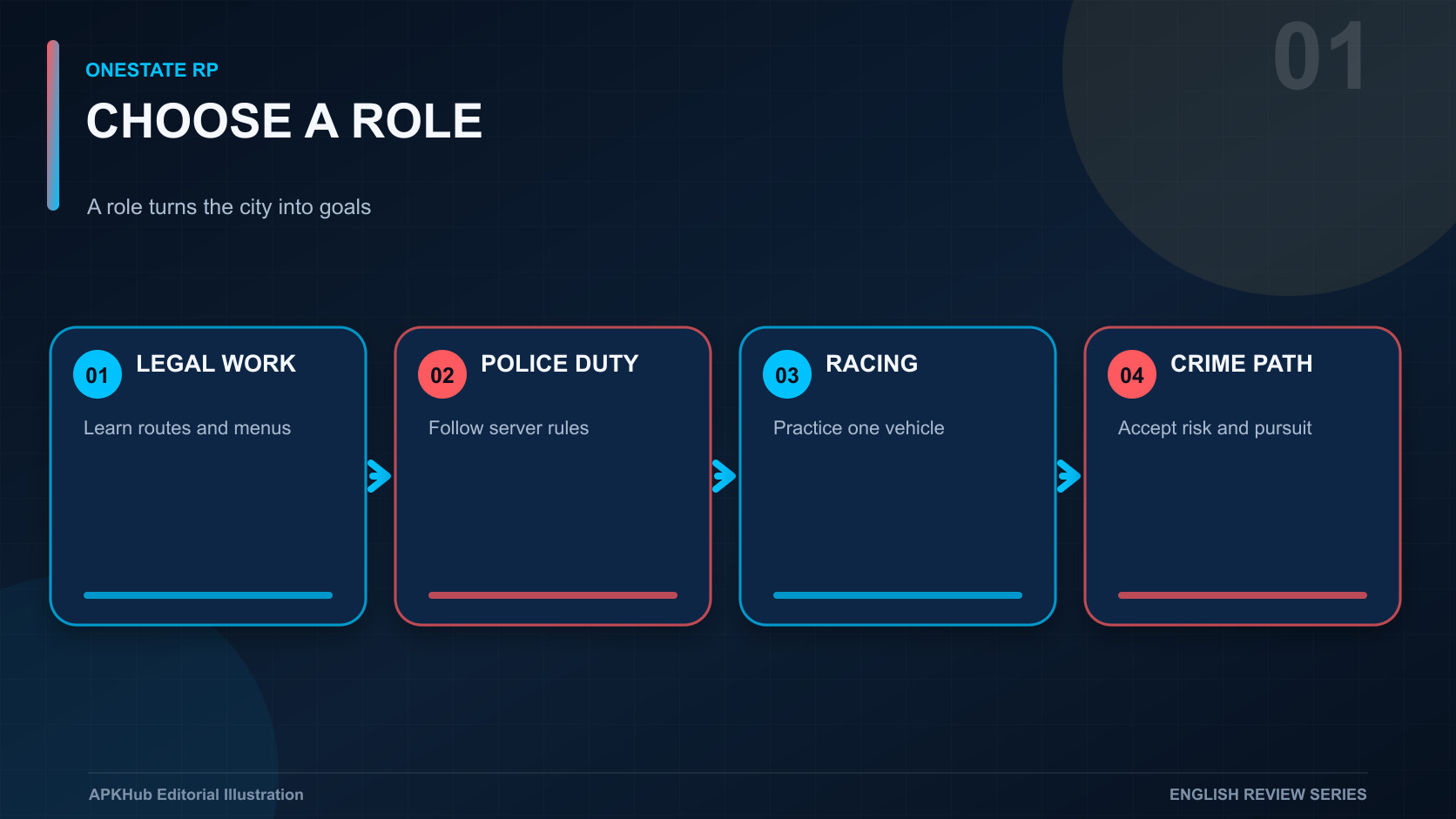
Editorial illustration: a chosen role turns the shared city into a set of useful goals.
Driving Connects Most Activities
Cars link jobs, races, pursuits, and social meetings. Vehicle handling matters because the city mixes traffic, other players, and network delay. A fast car cannot compensate for poor braking or an unstable connection.
Learn one vehicle before upgrading. Test steering, camera, and braking on a repeatable route. Racing and police work demand different setups, and cosmetic changes should not consume the budget needed for repairs or progress.
Server population changes road behavior. A crowded area may produce lag or unpredictable collisions. Move away from busy locations when testing controls, then return after you know how the vehicle responds.
Police and Criminal Roles Depend on Rules
Police play creates authority and responsibility inside the game. Criminal play creates risk and pursuit. Both sides need server rules that define acceptable behavior. Random harassment weakens role-play and can trigger reports or penalties.
Read the server guidance before joining an organization. Keep role-play conflict inside the game. Do not move arguments to private contact channels, threaten other players, or use outside payments for in-game deals.
Groups can improve the experience by sharing routes, roles, and protection. They can also pressure members into constant play or spending. Choose a group whose schedule and rules fit your limits.
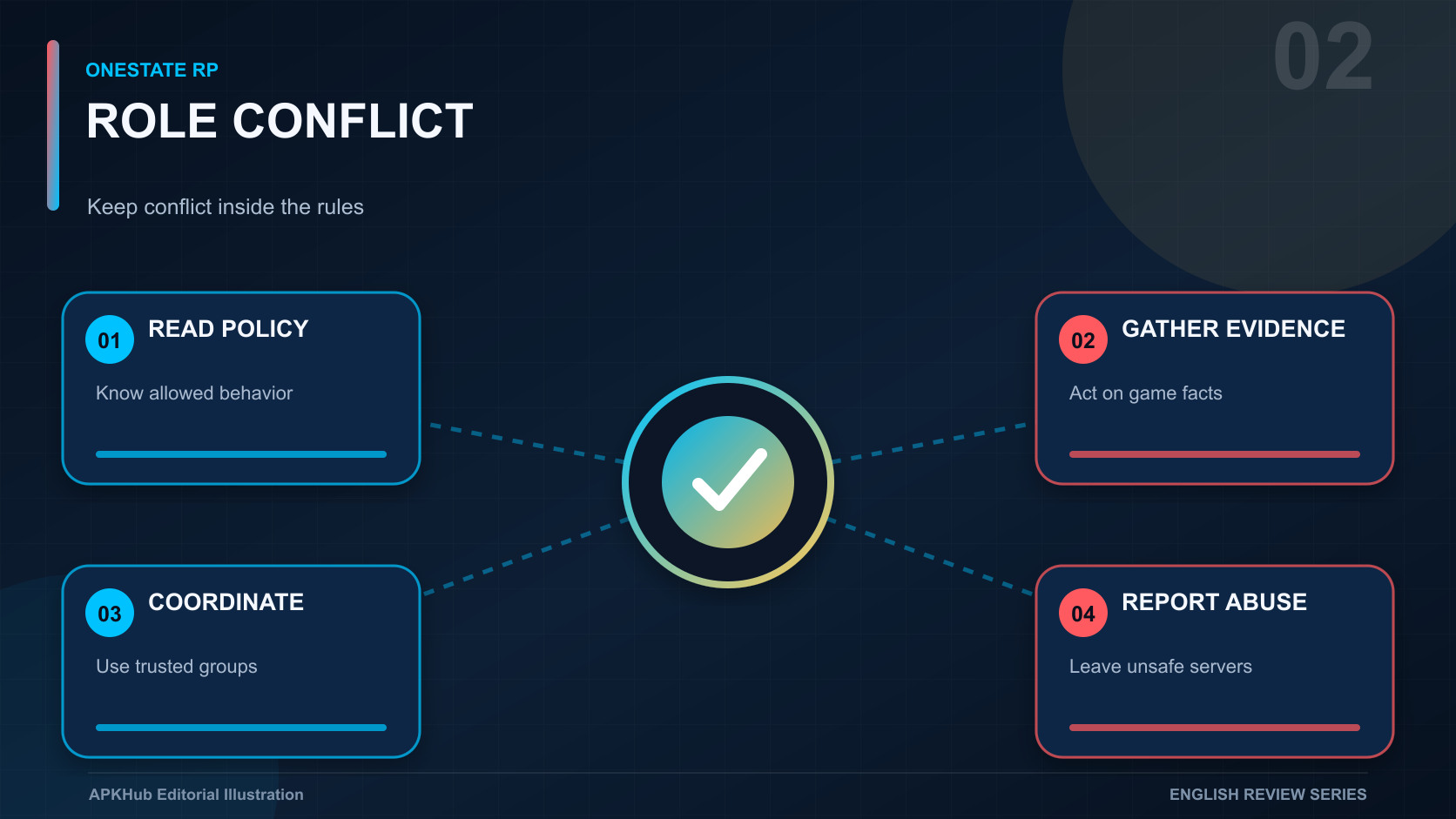
Editorial illustration: role conflict works when players follow the server's rules and reporting process.
The Economy Rewards Planning
Money and property goals create a long progression path. A practical plan separates income, required costs, and optional style. Buy the vehicle or equipment that supports the next job before spending on appearance.
Optional purchases may speed parts of progression or provide virtual items. Prices and bundles can change, so check the current store rather than relying on an old guide. Set a fixed budget and use platform purchase authentication.
The developer's claims about player capacity and world scale describe the intended service. Actual population, queues, events, and performance vary by region and time. A quiet server can feel empty, while a crowded server can strain the phone and network.
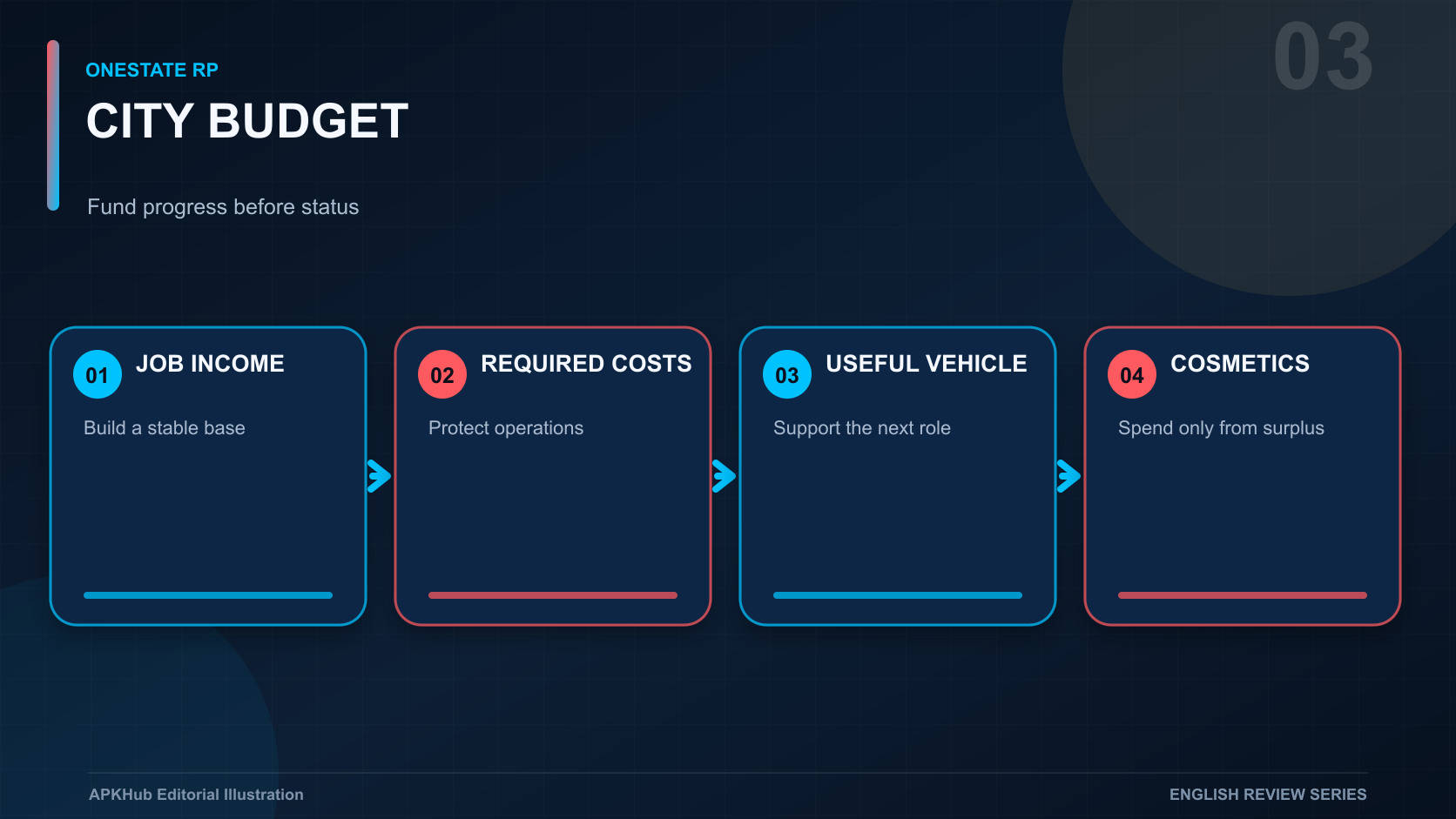
Editorial illustration: income supports more choices when you fund useful equipment before status items.
Strengths and Weaknesses
Strengths
- A shared city supports jobs, racing, police work, crime, and social groups.
- Large server populations create unscripted encounters.
- Vehicles and organizations give players long-term goals.
- Role choice supports several styles of play within one map.
Weaknesses
- New players face many menus, rules, and economic systems.
- Public player behavior can disrupt role-play.
- Crowded areas demand a stable connection and capable phone.
- Progress can encourage long sessions or spending pressure.
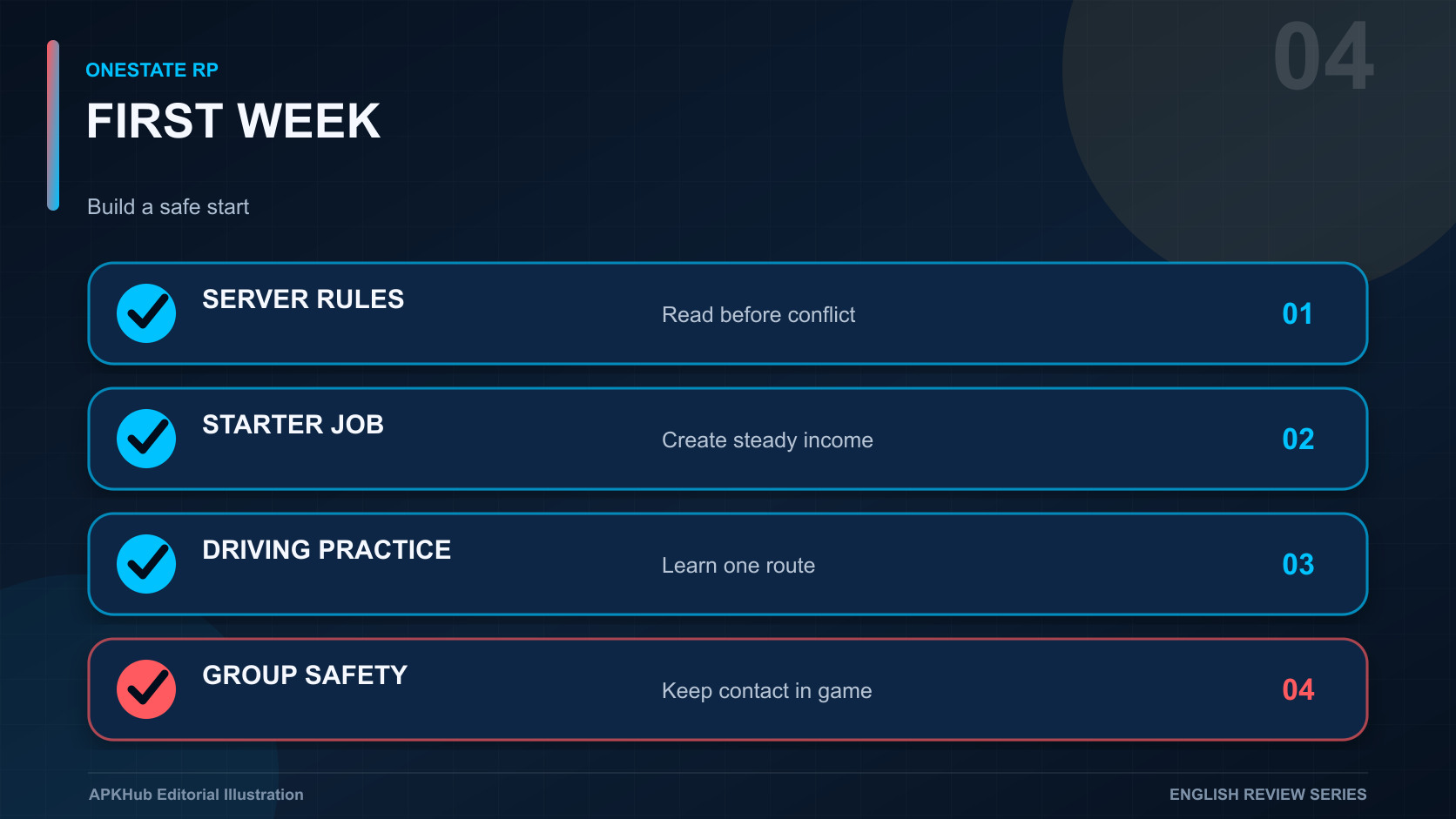
Editorial illustration: a safe first week starts with rules, income, and one dependable vehicle.
Final Verdict
OneState RP works for players who want a shared online city and can create their own objectives. The mix of jobs, vehicles, organizations, and conflict gives regular groups room to build ongoing stories.
The game asks for patience. Learn the economy before chasing status, read the server rules before entering conflict, and keep social contact inside trusted channels. Players who prefer a scripted solo campaign will find the city loose and unpredictable. Players who enjoy role-play can find a flexible long-term home.


.webp?x-oss-process=image/resize,w_80/format,webp)