
Toca Boca World Review: Open-Ended Creativity with Clear Choices for Families

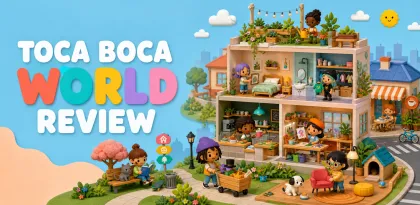

Toca Boca World is a digital playset rather than a game with levels, winners, or a final objective. Children create characters, decorate homes, move people and objects between locations, and invent stories at their own pace. The current Google Play listing explicitly says there are no time limits or high scores.
APKHub still uses the older title “Toca Life World: Build a Story,” while the official store now calls the app Toca Boca World. The Android package remains com.tocaboca.tocalifeworld, and the current developer is Toca Boca.
The app has a strong creative foundation and unusually clear social boundaries: it is single-player, has no chat or strangers, and contains no third-party advertising. Families still need to review optional purchases and privacy disclosures. A child-friendly design is not the same as an app with no commercial or data decisions.
The Story Is the Activity
Most games tell the player what to do. Toca Boca World provides locations, characters, furniture, clothes, pets, food, and props, then leaves the objective open. A café can be a restaurant, a music venue, a school project, or the setting for a quiet morning.
This structure supports imaginative role-play because an object does not need one correct use. Children can create a cast, decide what happened before the scene began, move the story to another location, and revise it whenever the result becomes boring.
There is no score to punish an unusual idea. The absence of a timer also allows a child to spend ten minutes arranging a room or immediately begin a chaotic story. That freedom is the central value.
Open-ended play can also feel directionless. A child who expects missions may ask what to do next. A parent can offer a prompt without controlling the outcome: open a small business, prepare a celebration, solve a lost-pet mystery, or design a room for a character with specific needs.
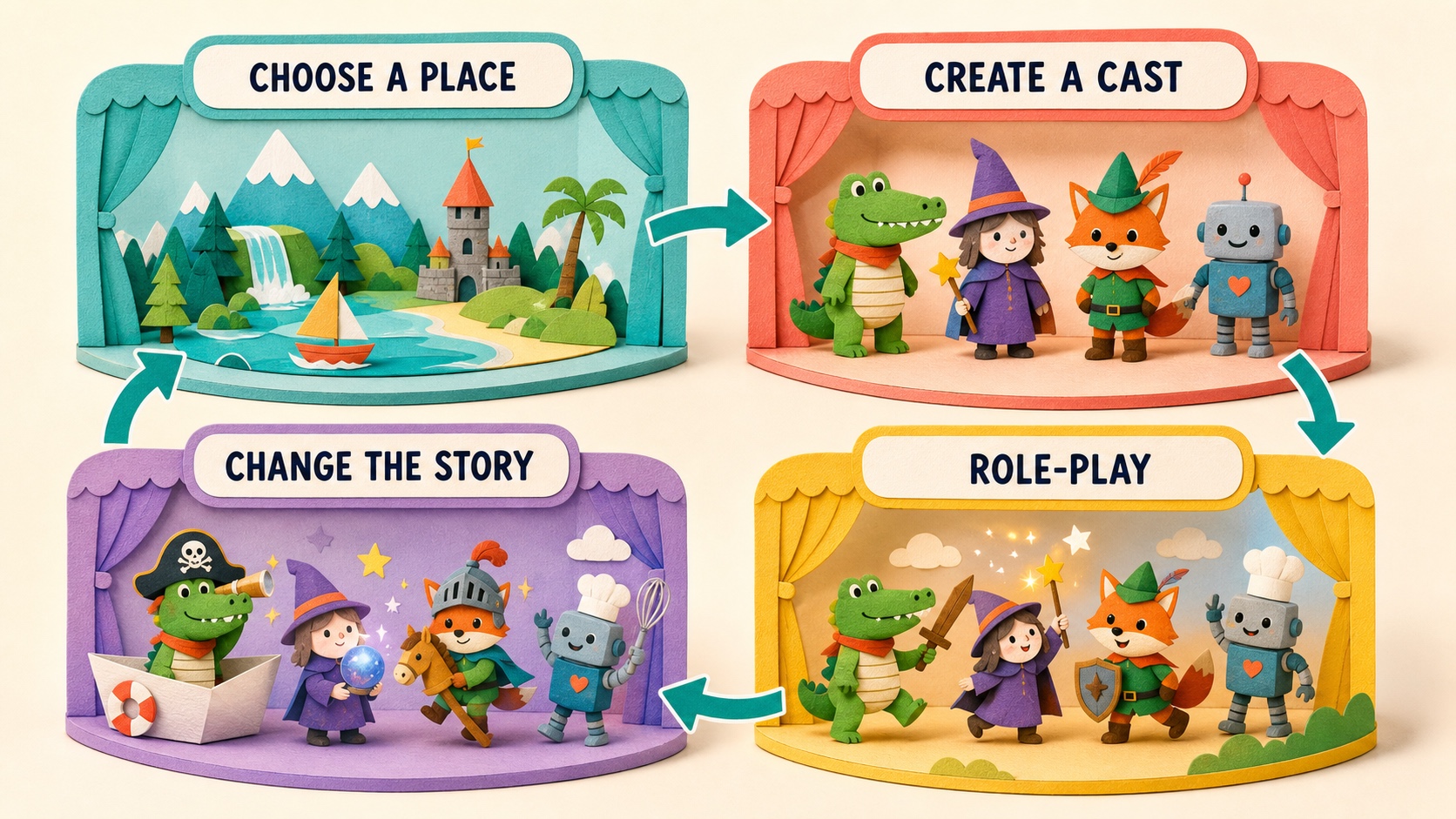
Editorial illustration: Toca Boca World provides a repeatable creative loop instead of a fixed path to victory.
Character Creator Turns Identity into a Design Choice
The Character Creator lets players combine hair, faces, outfits, and accessories. Its value is not only the number of combinations. Creating a character asks who that person is, how they want to appear, and what role they might play in a story.
Children can recreate familiar situations or invent people unlike anyone they know. Because the result lives inside an imaginary world, changing an outfit or hairstyle can become part of the narrative rather than a permanent decision.
The tool works best when adults avoid treating one appearance as the correct one. Questions such as “What does this character like to do?” or “Why did they choose that outfit?” invite storytelling without turning design into a test.
Home Designer Makes Space Part of the Story
Home Designer allows walls, furniture, colors, and objects to be arranged. A room can express a character's habits, mood, work, or relationships. Moving a chair or changing a wall color can matter because the space is a stage for future scenes.
The current listing says players can explore apartments, shops, and hangouts in Bop City, then move characters between homes, schools, shops, and hidden places. Locations are therefore connected parts of one miniature world rather than isolated levels.
Design can become repetitive if the goal is only to collect more objects. A useful constraint—build a tiny shared bedroom, a calm clinic, or a café that works in a narrow room—turns decoration into problem-solving.
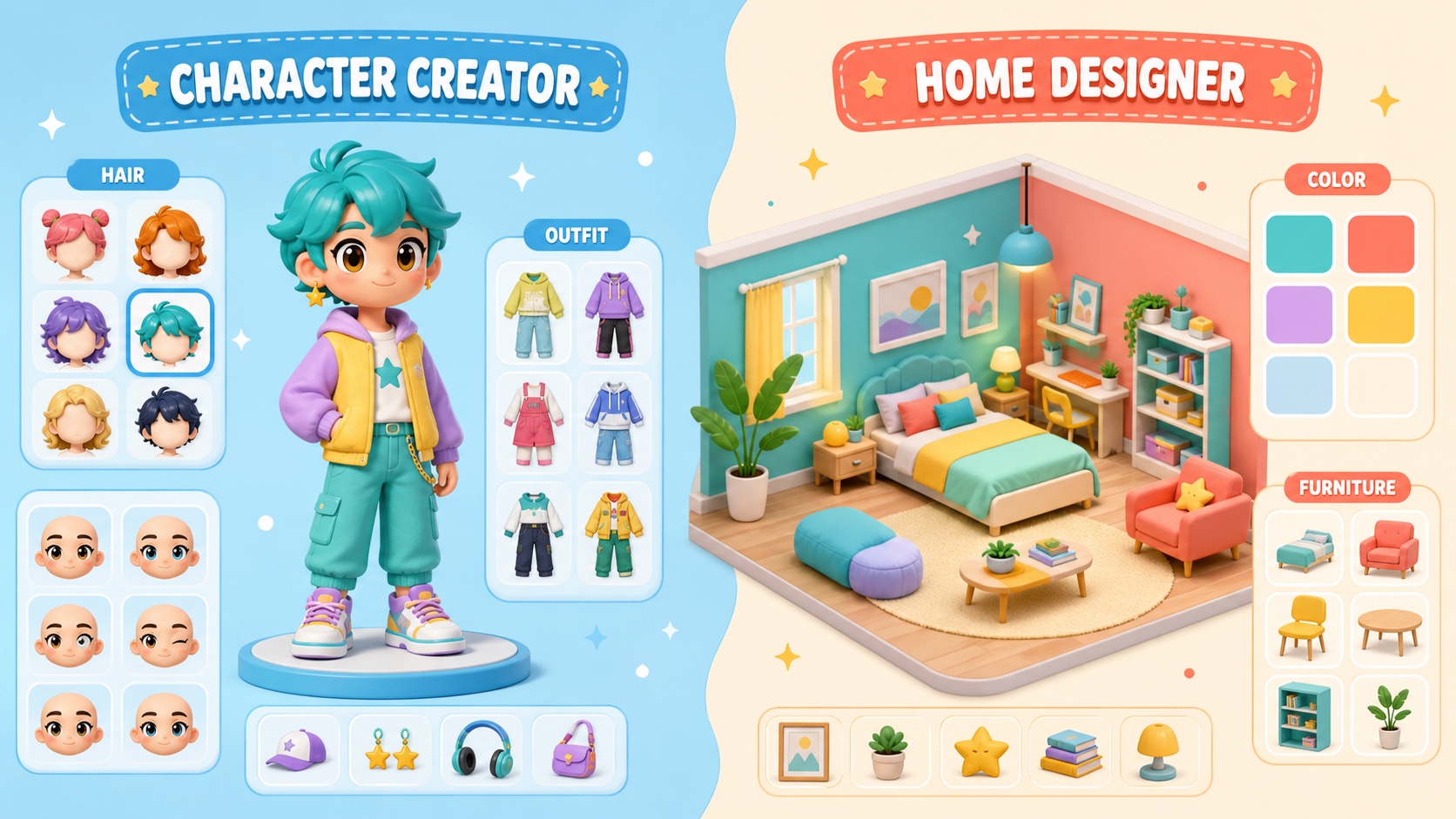
Editorial illustration: character and home tools connect personal expression with the stories that happen in each space.
The Included Experience Should Come First
Toca Boca World can be downloaded and played without purchasing every expansion. The current store listing highlights Bop City, Character Creator, Home Designer, hidden surprises, and free gifts available from the Post Office each Friday.
Optional packs add locations, furniture, outfits, pets, and other items through the in-app shop. More content can extend a child's ideas, but buying many packs before the included tools are understood can turn creative play into browsing a catalog.
Families should begin with the available world and identify a real limitation. If a child repeatedly wants to create hospital stories, a relevant location may add value. A random pack bought because a sale is ending may be forgotten quickly.
Set a spending limit, require purchase authentication, and check exactly what a pack contains. Event offers and collaborations change, so an article should not promise a specific pack will remain available.
Friday gifts are a pleasant reason to revisit the app, but they can also create a routine around collection. Missing a digital object should not feel like losing progress. Parents can frame gifts as optional creative material rather than an obligation.
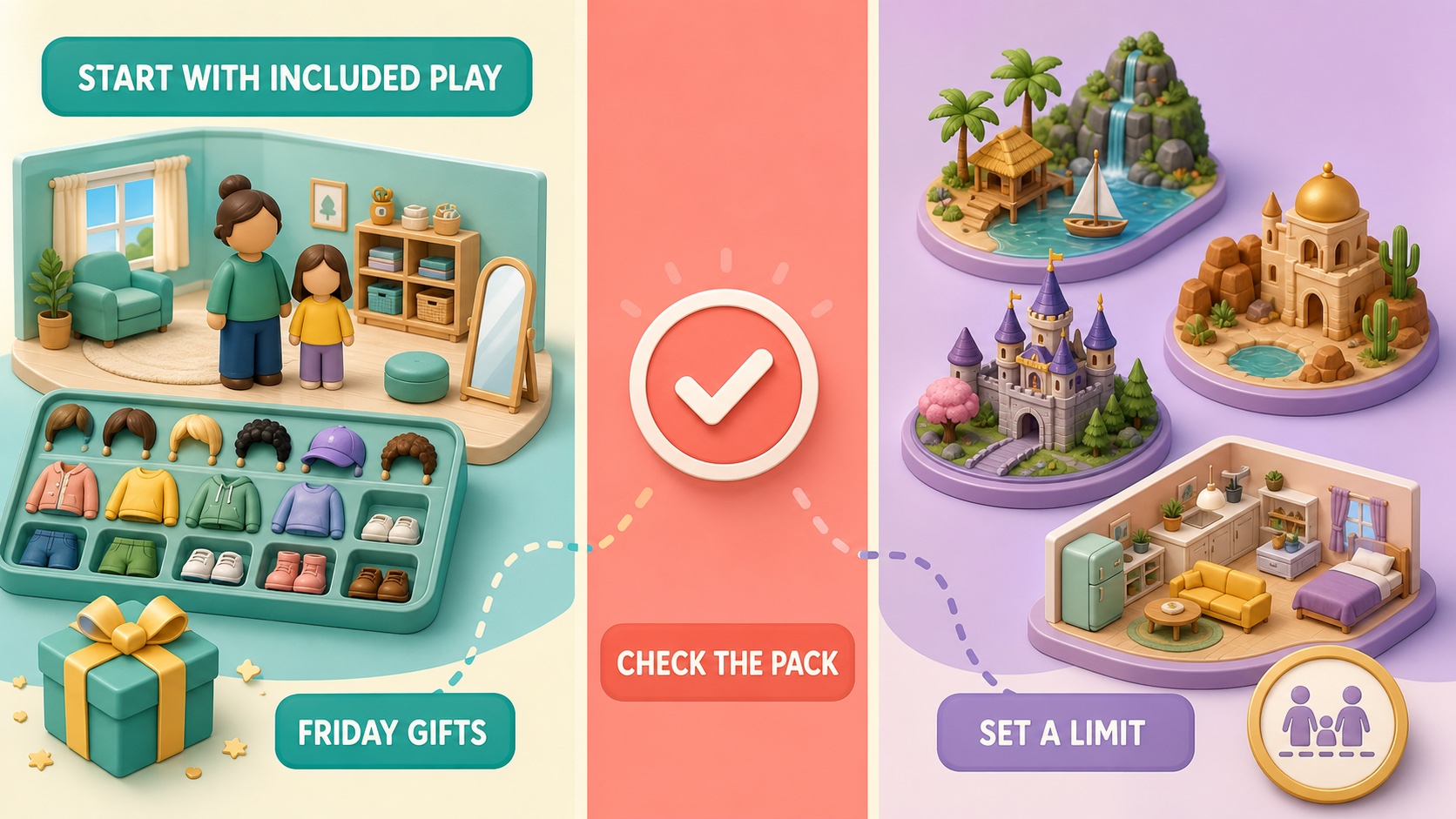
Editorial illustration: optional expansions are most useful after a family understands what the included world cannot provide.
Single-Player Design Removes Major Social Risks
The official listing says Toca Boca World is single-player, with no chat and no strangers. This removes direct messaging, public lobbies, and user-to-user voice communication—the features that often require the most active moderation in children's games.
The game also states that it has no third-party advertising, so play is not interrupted by outside ad networks or pop-up promotions. The in-app shop is still commercial content, and families should distinguish “ad-free” from “no purchases.”
Toca Boca describes the app as COPPA compliant. That is a specific regulatory claim from the developer; it does not mean every family should skip reviewing privacy settings and the current policy.
The Data-Safety Page Needs a Separate Reading
Google Play's current developer declaration says no data is shared with third parties. It also says the app may collect location, personal information, and four other categories, that data is encrypted in transit, and that data cannot be deleted.
Those statements may seem surprising beside the “safe universe” language. They are not necessarily contradictory: a single-player app can still collect technical, account, location, or purchase-related information without exposing a child to strangers. They do mean parents should read the detailed data-safety page and Toca Boca privacy policy.
Developer declarations are not independent audits and may change by version, region, and platform. Check the current page when installing, especially if a child uses an account tied to family payment methods.
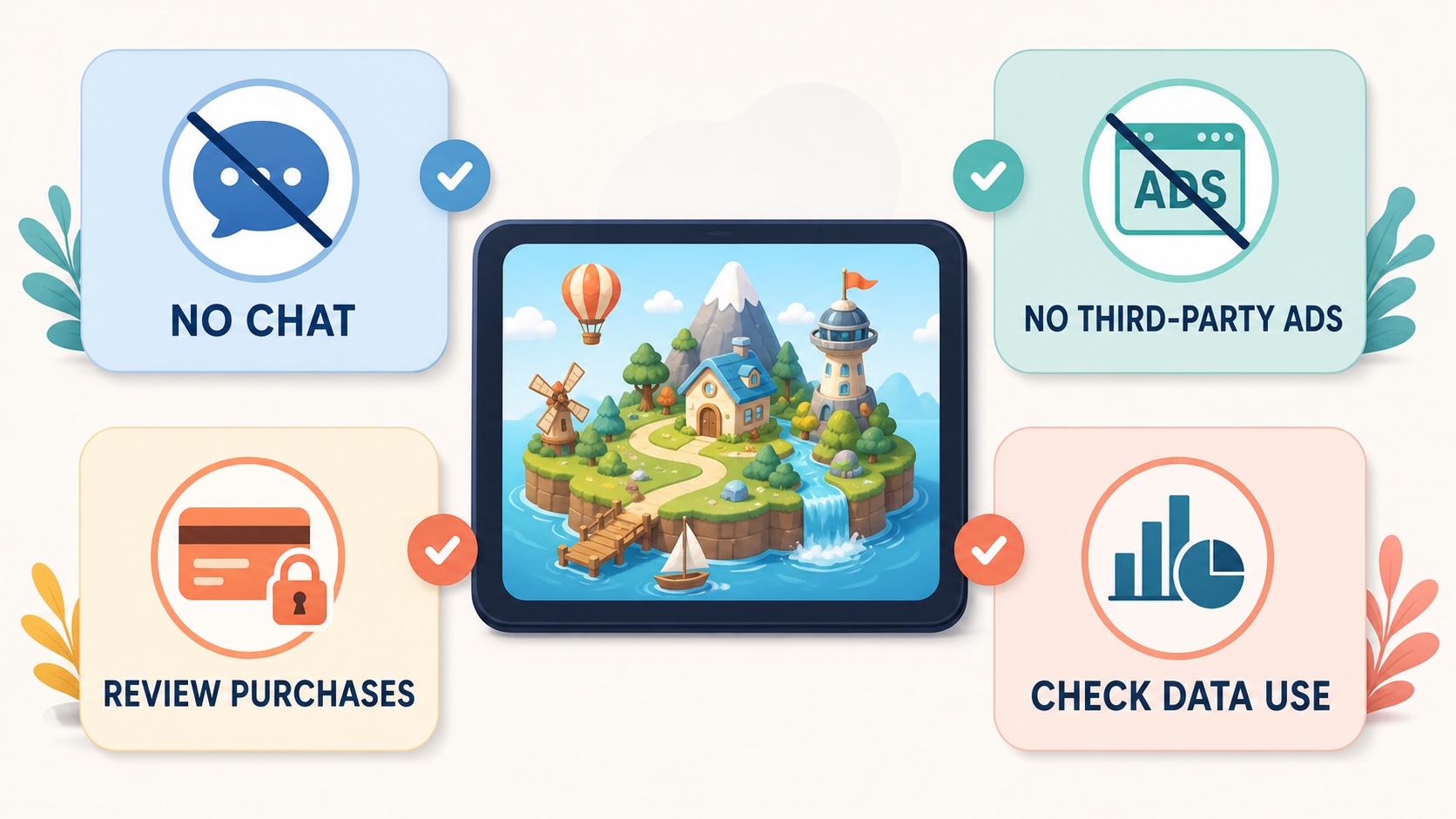
Editorial illustration: social safety, advertising, purchases, and data practices are four different questions.
Performance and Progress
The world grows as locations and items are added. More content can increase storage use and make older devices work harder. Leave free space for updates, close unnecessary background apps if loading becomes slow, and use the official store compatibility check.
User reviews sometimes report crashes or disappearing items, but individual reports do not establish a universal problem. Before using any reset option, read the current support instructions and understand what progress will be removed. Purchases may be restorable, while a locally arranged world can have different recovery limits.
Avoid unofficial modified packages promising all locations unlocked. They can introduce account, device, privacy, and progress risks.
What Toca Boca World Does Well
- Open-ended play encourages original stories rather than one correct solution.
- Character Creator and Home Designer connect identity, space, and narrative.
- No high scores or time limits allow children to set the pace.
- Single-player design removes chat and stranger interaction.
- No third-party ads keeps outside promotions out of play sessions.
- Included locations, tools, hidden items, and Friday gifts provide a starting point.
Where Families Should Be Careful
- Optional packs can create repeated spending pressure.
- Event offers and shop contents change quickly.
- “Ad-free” does not mean there is no in-app storefront.
- The current data declaration includes collection categories and says data cannot be deleted.
- Open-ended play may need prompts for children who expect missions.
- Large customized worlds can make progress loss more frustrating.
Who Should Try It?
Toca Boca World is best for children who enjoy dolls, decorating, pretend shops, character design, and stories that change as they play. It also works well for adults and children who want to build a scene together without competitive pressure.
It is less suitable for someone seeking puzzles, achievement progression, multiplayer, or a completely purchase-free catalog. Parents who require data deletion should examine the current privacy details before creating an account or making purchases.
Final Verdict
Toca Boca World succeeds by treating imagination as the main mechanic. Character Creator, Home Designer, Bop City, and moveable story props provide a flexible stage without scores, timers, chat, strangers, or third-party ads.
The family decision does not end there. Optional packs require a budget, and the current data-safety disclosure deserves careful reading. With purchase controls and an informed privacy review, the app can be a rich digital playset. Its best moments come from what a child invents with the available pieces, not from how many packs the family owns.


.webp?x-oss-process=image/resize,w_80/format,webp)