

Tentang Transitions Layouts
Description of Transitions Layouts Application
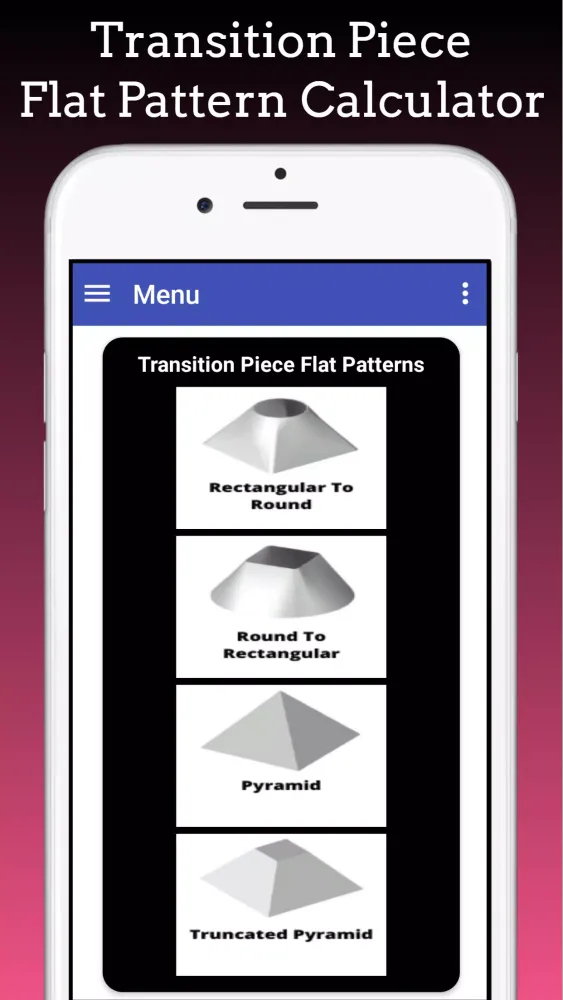
The Transitions Layouts application is a versatile tool designed for the development of various layout designs for fabrication purposes. It offers a range of functionalities that cater to different shapes and requirements.
Key Features
-
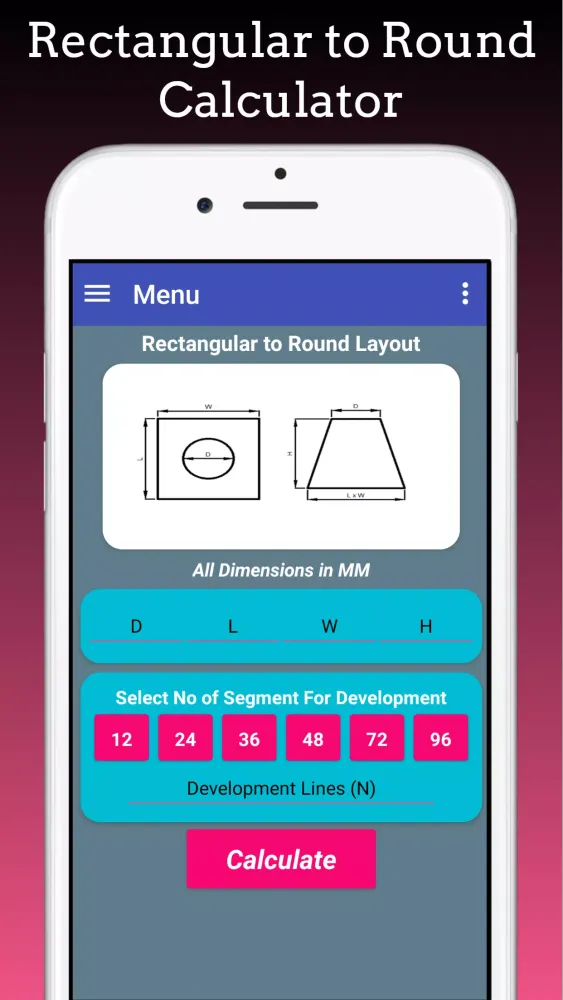
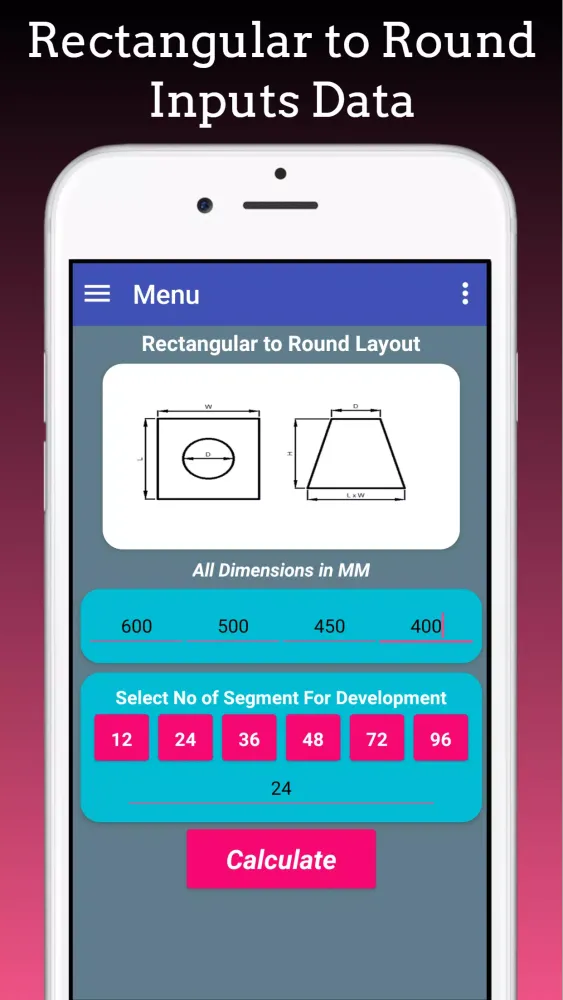
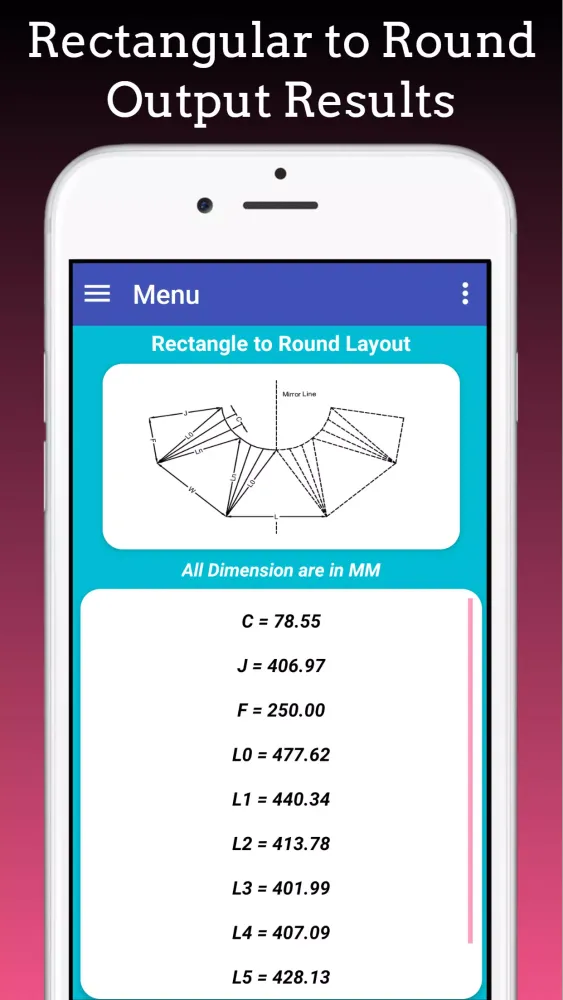
Square to Round or Rectangular to Round Layouts:
- You can create layouts where a square or rectangular base transitions into a round shape.
- Choose the number of joints and lines for development, with inputs including the dimensions of the base (length and width) and the diameter of the top circular shape.
-
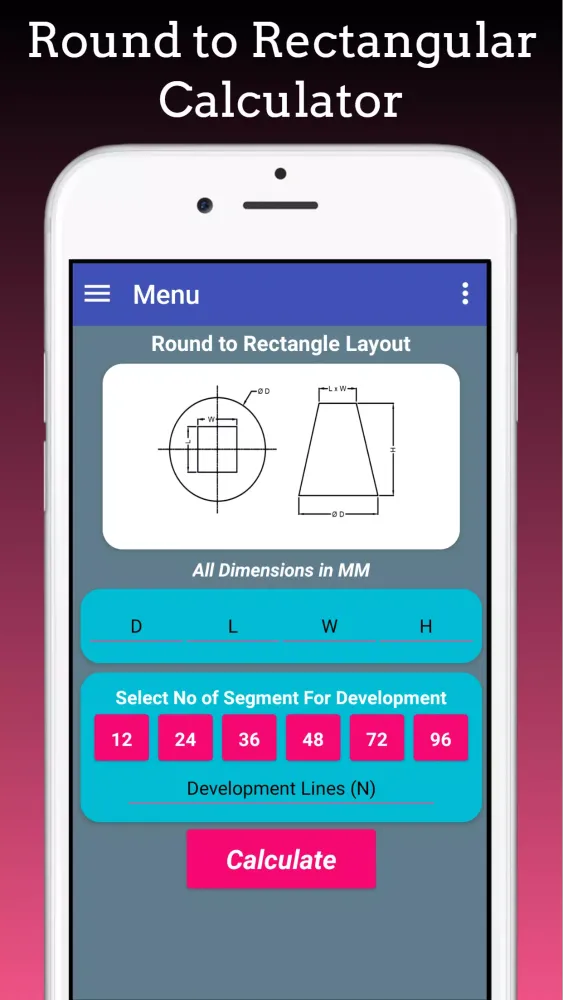
Round to Square or Round to Rectangular Layouts:
- Reverse the process and transition from a round shape to a square or rectangular one.
- Similar to the previous feature, select the number of joints and lines for development, and input the necessary dimensions.
-
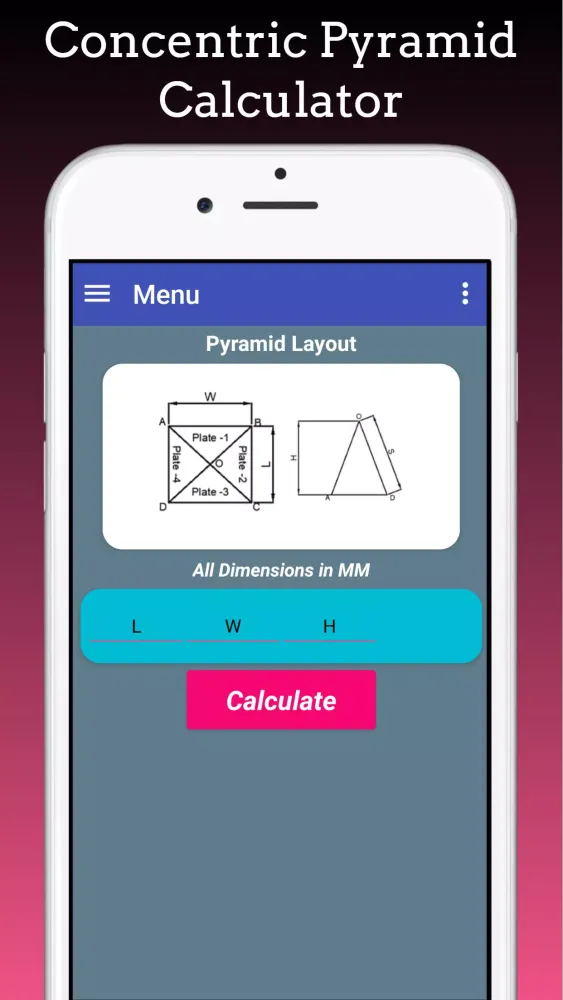
Pyramid Layouts:
- Generate layouts for pyramid shapes.
- Input the base length, width, and height of the pyramid, and the tool will provide a layout for two plates.
-
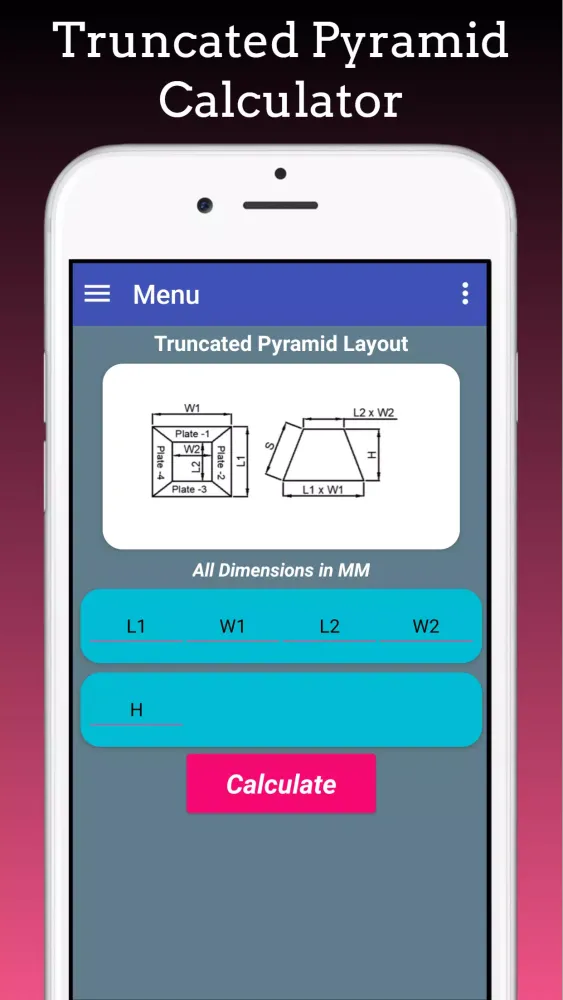
Truncated Pyramid Layouts:
- Develop layouts for truncated pyramids.
- Input the base length, width, top length, width, and height of the pyramid, and the tool will provide a layout for two plates.
Development Options
The application provides three main development options:
- 1 Part or 1 Joint Layout: Suitable for simpler designs.
- 2 Part or 2 Joint Layouts: For more complex structures requiring additional joints.
- 4 Part or 4 Joints Layouts: Ideal for intricate designs that need multiple joints.
Line Options
For layout development, the app offers several line options:
- 12 Lines
- 24 Lines
- 36 Lines
These options allow users to fine-tune their designs based on the level of detail required.
Applications
This application is particularly useful in:
- Fabrication Industry: For creating precise layouts for metalworking projects.
- Process Equipment Manufacturing: For designing components used in industrial processes.
- Sheet Metal Industry: For developing accurate layouts for sheet metal parts.
By utilizing these features, users can efficiently develop and visualize complex shapes and transitions, making the fabrication process smoother and more accurate.
Tangkapan layar Transitions Layouts
Versi Lama dari Transitions Layouts




Rekomendasi Editor


Aplikasi Seperti Transitions Layouts


Aplikasi oleh LetsFab


Transitions Layouts FAQ
Bagaimana cara mengunduh Transitions Layouts dari PGYER APK HUB?
Apakah Transitions Layouts di PGYER APK HUB gratis untuk diunduh?
Apakah saya memerlukan akun untuk mengunduh Transitions Layouts dari PGYER APK HUB?
Bagaimana cara melaporkan masalah dengan Transitions Layouts di PGYER APK HUB?
Ulasan Pengguna
+ Ulasan
Paling Populer


